• Thomas Learmonth o Erceldoune

By Erceldoune

~ Graeme Purves

By Erceldoune

Monthly Archives: August 2018

Can Scotland’s Parliament be persuaded to champion Regional Agency?

30 Thursday Aug 2018

Posted by Graeme Purves in The Land o Cakes

≈ Leave a comment

Tags

City Region Deals, Clydeplan, Planning (Scotland) Bill, regional agency, Scotland, Scottish Government, Scottish Parliament, Strategic Development Plans, strategic planning
Clyde Gateway

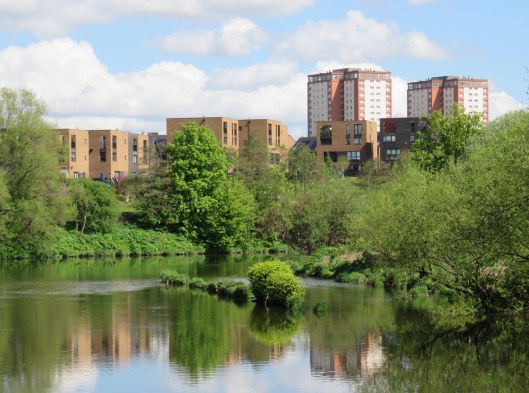
New housing in the Clyde Gateway – identified as a flagship area for urban renewal in the Glasgow and the Clyde Valley Structure Plan 2000

When the Scottish Parliament begins Stage 2 of the consideration of the Planning (Scotland) Bill in mid-September, one of the issues for debate will be the future of strategic planning.  The Scottish Government intends that the Bill should remove the statutory requirement to prepare strategic development plans for the four city regions of Glasgow, Edinburgh, Aberdeen and Dundee/Perth.  Green MSP Andy Wightman has tabled an amendment to the Bill which would have the effect of retaining that provision.

In its evidence to the Local Government and Communities Committee in March, Clydeplan, the strategic development planning authority for the Glasgow city region, made a robust and persuasive case that the statutory provision for strategic planning at the regional level should be retained.  It pointed out that strategic planning had been central to the regeneration of Glasgow and the Clyde Valley through periods of significant structural change over a period of 70 years.  Strategic development plans for the area had been an effective component of the planning system, guiding local plans and decision-making, demonstrating the value of joint working and the commitment of constituent local authorities and wider stakeholders over an extended timescale.

Clydeplan pointed out that in England a statutory duty to co-operate had not proved to be a sufficiently effective tool for addressing cross-boundary regional issues, while in 2015 the Planning (Wales) Act had introduced strategic development plans for Cardiff, Swansea and the A55 Corridor, based on the model which currently exists in Scotland.  To remove strategic development plans in Scotland would run counter to prevailing best practice in planning internationally, particularly in Europe, where there has been a move towards planning at the scale of integrated functional regions reflecting housing markets, travel-to-work and economic catchment areas as part of the drive to deliver sustainable development.

Like others who gave evidence to the Committee, Clydeplan expressed concern that the Scottish Government’s intention that the role of local authorities in strategic planning should be reduced to assisting with the preparation on the National Planning Framework would lead to an undesirable level of centralisation, undermining the collaborative partnerships which have been working successfully at the regional level up until now.

Clydeplan argued that rather than removing an important mechanism of regional agency, the Scottish Government should be enhancing and building upon existing strategic development plan processes and their established governance and joint-working structures in rolling out a regional partnership model across the country.

In its Stage 1 report on the Bill in May, the Local Government and Communities Committee noted significant concerns about the future of regional spatial planning, which it noted had “a long history in Scotland and has attracted interest and commendation from elsewhere.”  It concluded that it was not clear from the evidence heard that removing the current provisions for strategic development plans would lead to simplification, to streamlining, to cost savings or to more effective planning at a regional scale.  It recommended that the current statutory framework for regional planning should not be repealed unless a more robust mechanism is provided to that currently proposed in the Bill.

In its response to the Local Government and Communities Committee, the Scottish Government doubled down on its determination to remove the statutory underpinning of strategic planning at the regional scale.  Rather than setting out its case for centralising strategic planning at the national level, the Government fell back on the argument that what it proposes is in line with the recommendations of the independent review panel established in 2015, and reiterated its assertion that the change is required to simplify and streamline the system.  Little was offered in terms of the more robust mechanism the Committee was looking for.  The Government simply undertook to amend the Bill at Stage 2 to introduce a clearer duty for local authorities to work together in strategic planning, something which, as Clydeplan has already pointed out, has not worked particularly well in England.
Slamannan Plateau

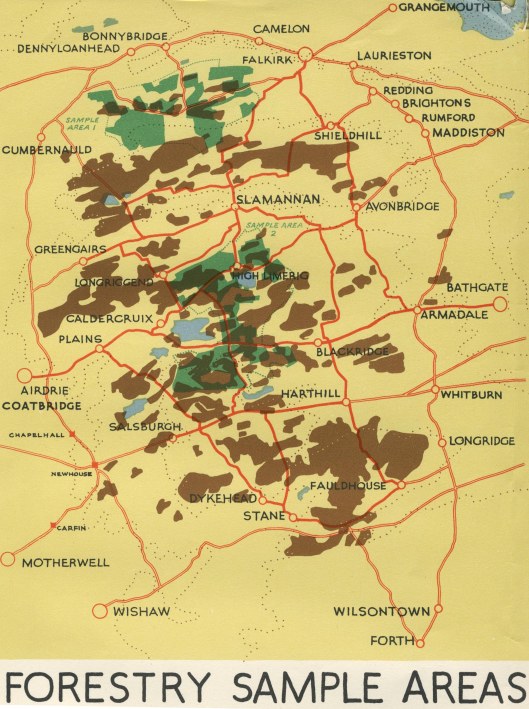
 The Central Scotland Green Network and the Central Scotland Forest have their origins in the proposals for strategic environmental improvement and reforestation contained in the Clyde Valley Plan (1946) and the Regional Plan for Central and South-East Scotland (1948).

In an article published in Bella Caledonia in March 2017, I outlined the regional planning tradition established under the wartime administration of Tom Johnston and how it had evolved over the subsequent 70 years.  The Scottish Government states that it respects the long history of regional spatial planning in Scotland, but argues that the context has changed dramatically since regional plans emerged in the post-war period and even in the period since the 2006 Act.  It neither explains in what way the context has changed, nor why that change renders strategic development plans obsolete.

As recently as 2014, the Scottish Government accepted the findings of a review of the strategic development plan system by Kevin Murray Associates which concluded that “the system is still bedding in, it is not broken, nor is its potential yet fully optimised.”  It is not clear what has caused it to have such a dramatic change of mind.  A number of developers called for the abolition of strategic planning in their submissions to the independent review panel, but the sector was not unanimous on the matter and there was no broad groundswell of support for the change.

The case which the independent review panel made for the abolition of regional development plans was scant and far from persuasive.  It acknowledged that the city-region remains a critical scale for planning, but argued that the role of planners at the regional level should be confined to the co-ordination of development with infrastructure delivery in accordance with the strategy set out in the Scottish Government’s National Planning Framework.  No rationale was offered for the incorporation of regional strategy into a document with a national focus prepared under the direction of Scottish Ministers.  The centralisation and loss of regional agency involved were simply not addressed.

There is a suspicion that the Scottish Government’s desire to do away with strategic development plans stems from its preference for mediating its relationships with local authorities on development matters through City Region Deals, untrammelled by the discipline of strategy. The process of preparing strategic development plans is subject to statutory requirements in relation to public consultation, environmental assessment and examination.  The process of City Region deal-making is much less transparent and less open to scrutiny.  SNP politicians appear only recently to have become concerned about the opportunities it might afford for pork-barrelling.

A range of civic and professional organisations have expressed concern about the Scottish Government’s intention to remove the statutory requirement to prepare strategic development plans and the Government seems disinclined to provide the robust alternative which the Local Government and Communities Committee is looking for.  It is to be hoped that safeguarding the regional agency which has contributed so positively to Scotland’s development over the last 70 years is a cause which can command a majority in our Parliament.

____________________________________________________________________________________________

This article was published in Bella Caledonia on 15 August 2018
Cool Scots and Banal Unionism

28 Tuesday Aug 2018

Posted by Graeme Purves in The Land o Cakes

≈ Leave a comment

Tags

Banal Unionism, Cool Scots, Edinburgh International Festival, Gerda Stevenson, Karine Polwart, Margaret Macdonald, Scottish Culture

Margaret Macdonald

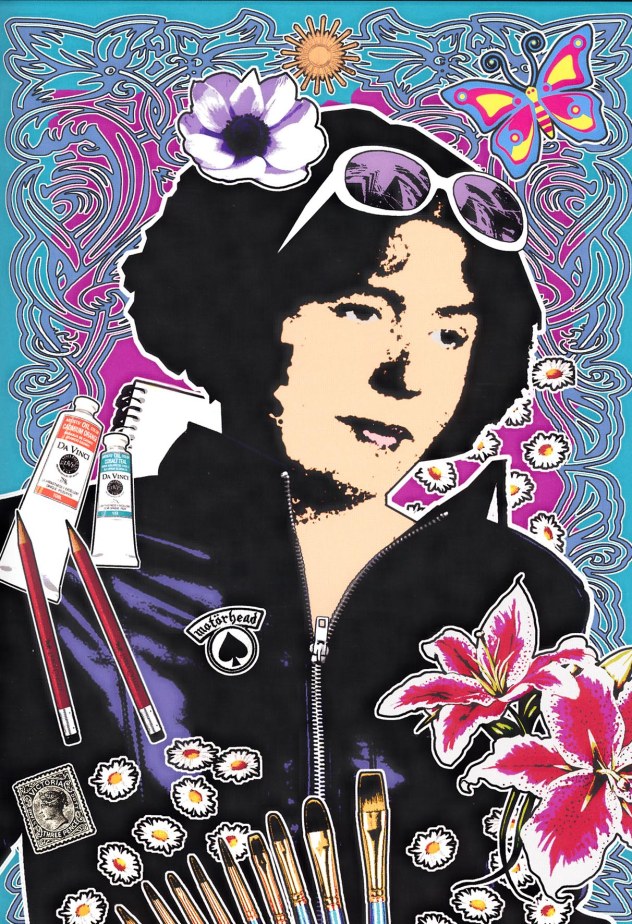
Artist and Designer, Margaret Macdonald (1864 – 1933), from Greg Moodie’s ‘Cool Scots’, Luath Press 2018

As another Edinburgh Festival season draws to an end (despite the best efforts of the City of Edinburgh Council’s Marketing Team and the Ross Development Trust), it is worth pausing to take stock of the place of Scottish culture within this gaudy jamboree. For those prepared to push through the serried ranks of stand-up comedians, resist the syrupy blandishments of Gyles Brandreth & Son and look beyond the tacky funfair attractions being offered by pop-up bar barons and public school hucksters, there were some real native gems to be found.

Edinburgh International Festival Director Fergus Linehan is of a different stripe to his predecessor.  The Light on the Shore programme has featured and celebrated the best of contemporary Scottish musical talent and helped to re-establish Leith Theatre as a live music venue.  The Le Vent du Nord and Julie Fowlis concert made a welcome link between Glasgow’s Celtic Connections and Edinburgh’s Festival.  In the first half, Fowlis was supported by a strong line-up of musicians, including Duncan Chisholm and Patsy Reid.  Her poise, vocal accomplishment, facility in several languages and easy rapport with the audience were really impressive.  In the second half, the Quebecois band, Le Vent du Nord, delivered a much more masculine performance.  Indeed, the testosterone levels on-stage were in danger of detracting from their considerable abilities as singers and musicians.  At times, it felt uncomfortably like being trapped in a lift with a team of lumberjacks.

Later in the week, Karine Polwart had an international audience in the palm of her hand with her Scottish Songbook concert.  Since her award-winning stage show and album, Wind Resistance, Polwart has been at the top of her game.  Ably supported by Inge Thomson, her brother Steven and Louis Abbot, she delivered a well-chosen set of Scottish pop favourites from the last fifty years.  Most were from the 1980s and ‘90s, the work of bands and artists such as Deacon Blue, Big Country, the Proclaimers, Gerry Rafferty, Jimmy Somerville and Annie Lennox.  The concert complemented the Rip it up exhibition currently running at the National Museum of Scotland.  At the concert and in an article she wrote for The Guardian, Polwart emphasised the significance of place and drew attention to the post-industrial sensibility of many of the songs originating in the Central Belt of her youth.  Readers who are unlikely to have balked at the concept of ‘Brit-Pop’ commented sniffily that pop music is international and knows no borders.

Meanwhile in Charlotte Square, Neal Ascherson opened the Edinburgh International Book Festival with a spell-binding account of wartime Greenock, the setting of his novel The Death of the Fronsac.  He stressed the cosmopolitanism of the time, with the streets suddenly filled with servicemen in the uniforms of many countries, and notably the Poles.  The subsequent discussion focused on the impact of the Poles on Scottish society.  A member of the audience behind me referred to meeting a man in Poland who had happy memories of the time he had spent in Galashiels.  My grandfather was a grocer in Galashiels.  He was an air raid Observer during the Second World War and regularly played cards with some of the Polish soldiers stationed in the town.  They called my aunt Muriel, who was a teenager at the time, “the gypsy” – and they were right!  Her grandmother (my great-grandmother) was one of the Yetholm gypsies.

Another tour-de-force at the Book Festival was art historian Roger Billcliffe’s perfectly judged and beautifully illustrated presentation on ‘The Four’ – Charles Rennie Mackintosh, Margaret Macdonald, Frances Macdonald and Herbert MacNair – artists at the centre of the Glasgow Style of the late 19th Century.  Although Billcliffe’s book is titled Charles Rennie Mackintosh and the Art of the Four, he was keen to stress that Mackintosh should not be seen as the leader of the group.  MacNair was the first to exhibit and Frances Macdonald often took the initiative, with the others falling in behind.

The provocation by Professors Colin Kidd and Gerard Carruthers drawing on their book Literature and Union was an altogether more idiosyncratic affair.  The danger of the event taking on the character of a meeting of the Better Together Reading Group was acknowledged by Kidd himself.  The two professors are clearly uncomfortable with the fact that the dominant narrative in Scottish literary studies is a nationalist one.  Hugh MacDiarmid (dismissed as essentially a vanity publisher), Neil M. Gunn, Murray Pittock and that dangerous firebrand David Daiches are variously to blame, apparently. Carruthers and Kidd see themselves as bold revisionists out to recapture Scottish literature for the Union.  Kidd has coined the term ‘Banal Unionism’ to describe the “inarticulate acceptance of Union” and on that basis he is keen to claim James Hogg’s The Private Memoirs and Confessions of a Justified Sinner as the great novel of the Union.  For Carruthers, the clinching argument demonstrating Scotland’s essential Britishness is that he used to enjoy watching British war films with his dad.  So did I!  But isn’t it remarkable how heavily British identity relies on referencing the Second World War these days?

Up at the Quaker Meeting House Gavin MacDougall had put together another excellent programme of discussions based on Luath Press’s current catalogue under the ScotlandsFest 2018 banner.  At the event entitled Capturing the Image, the painter Sandy Moffatt and satirical cartoonist Greg Moodie ranged over the revival of Scottish portraiture, the drinking habits of art college staff, graphic techniques, Muriel Spark as a sitter, the banned J.K. Rowling comic strip, the Milne’s Bar poets and the Dundee arts scene.  In this year’s Thomas Muir Memorial Lecture round at the Lighthouse bookshop on West Nicholson Street, Gerda Stevenson drew on Quines, her recent collection of poems celebrating the achievements of Scottish women.  Music composed for the event was provided by Ewen Maclean and Phil Alexander in partnership with acclaimed traditional singer Fiona Hunter, who also appeared with the Grit Orchestra at the Playhouse Theatre.  Back at the Book Festival, James Robertson, Sheena Wellington, Calum Colvin and Gordon Maclean celebrated the life of singer, songwriter and musician, Michael Marra.

The evidence from this Festival season is that Scotland’s cultural scene is as healthy as it has ever been, invigorated by the debate over our constitutional future, confident in the celebration of its diversity and fully engaged with social and political developments at home and abroad.  The prospect of Scotland slipping back into Banal Unionism seems remote.

____________________________________________________________________________________________

A version of this article was published in Bella Caledonia on 27 August 2018.


Subscribe

  • Entries (RSS)
  • Comments (RSS)

Archives

  • March 2025
  • March 2022
  • December 2021
  • March 2021
  • November 2020
  • August 2020
  • May 2020
  • February 2020
  • February 2019
  • October 2018
  • August 2018
  • May 2018
  • April 2018
  • July 2017
  • April 2017
  • February 2017
  • January 2017
  • September 2016
  • July 2016
  • May 2016
  • March 2016
  • December 2015
  • November 2015
  • August 2015
  • June 2015
  • May 2015
  • November 2014
  • October 2014
  • August 2014
  • July 2014
  • June 2014
  • May 2014
  • April 2014
  • March 2014
  • June 2013

Categories

  • Frank Mears
  • Reviews
  • Spatial Planning
  • The Land o Cakes
  • Travellers' Tales

Meta

  • Create account
  • Log in

Blog at WordPress.com.

  • Subscribe Subscribed
    • By Erceldoune
    • Join 29 other subscribers
    • Already have a WordPress.com account? Log in now.
    • By Erceldoune
    • Subscribe Subscribed
    • Sign up
    • Log in
    • Report this content
    • View site in Reader
    • Manage subscriptions
    • Collapse this bar
 

Loading Comments...