• Thomas Learmonth o Erceldoune

By Erceldoune

~ Graeme Purves

By Erceldoune

Monthly Archives: March 2021

A Wood for South Uist

07 Sunday Mar 2021

Posted by Graeme Purves in The Land o Cakes

≈ Leave a comment

Tags

Loch Druidibeg, South Uist, Woodland Restoration

A report from 1994 on work to restore an eccentric estate plantation on an exposed site in the Western Isles for educational and amenity purposes. Scottish Natural Heritage ‘de-listed’ Loch Druidibeg as a National Nature Reserve in 2012, though it remains a Special Protection Area and a Site of Special Scientific Interest. It is now owned by local community-owned company Stòras Uibhist and managed as a community nature reserve in partnership with RSPB Scotland.
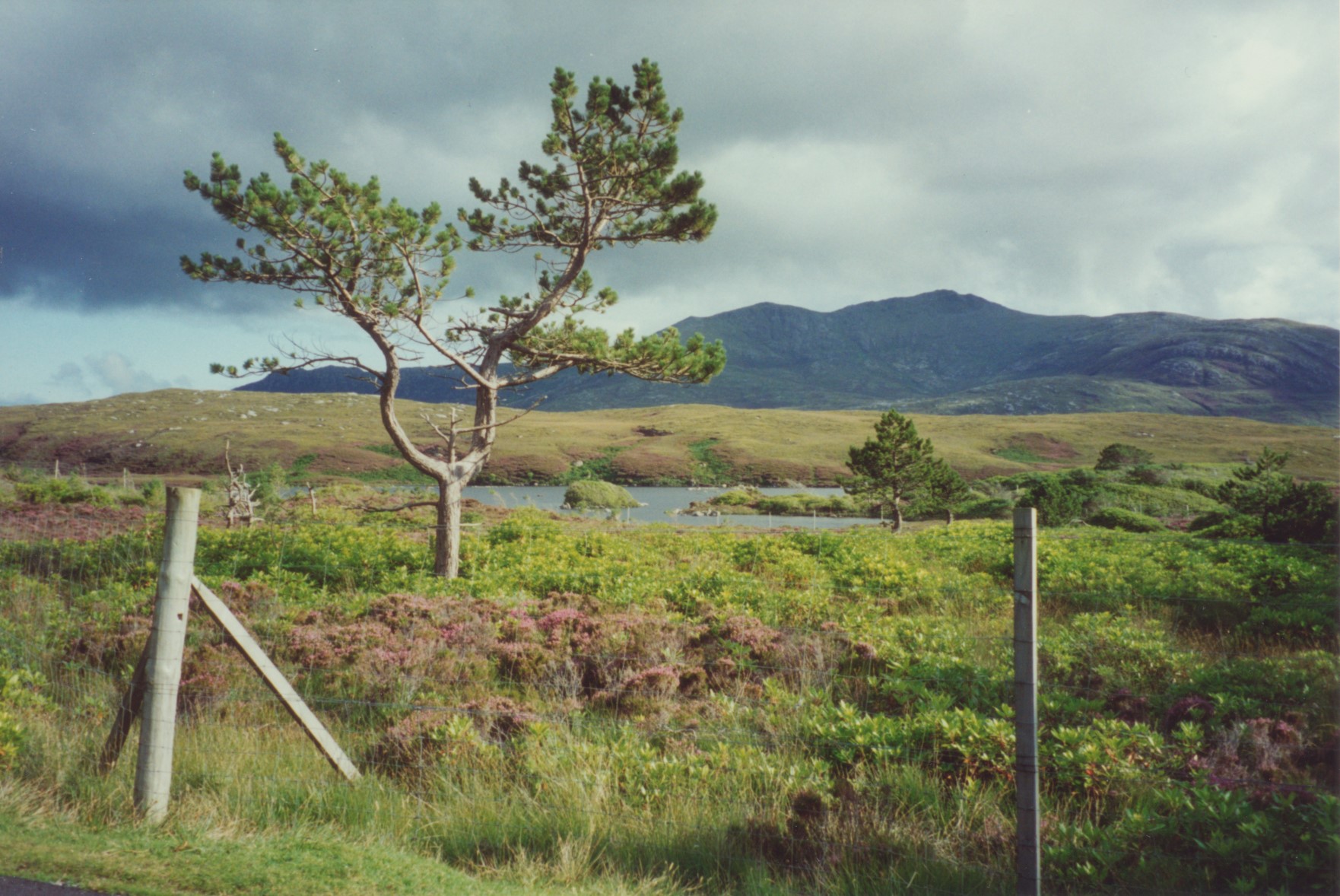
Surviving pines from the original estate plantation

The western seaboard of the Outer Hebrides offers what must be one of the most challenging environments for woodland restoration in Scotland.  The very high levels of exposure on the Atlantic coast severely limit the potential for tree growth.  Over the centuries, the low scrub woodland which once covered the islands has been almost entirely removed.  Climatic conditions, burning and intense grazing pressure have prevented regeneration and today native trees are restricted to a handful of locations on the rugged but more sheltered East Coast where a few woodland remnants survive in burn gorges, on islands in lochans or on inaccessible crags.  Now the first steps are being taken to restore something of what has been lost.  Scottish Natural Heritage Area Officer, Gail Churchhill, has prepared plans for the restoration of a neglected plantation on the Loch Druidibeg National Nature Reserve for educational and amenity purposes.

Loch Druidibeg Reserve
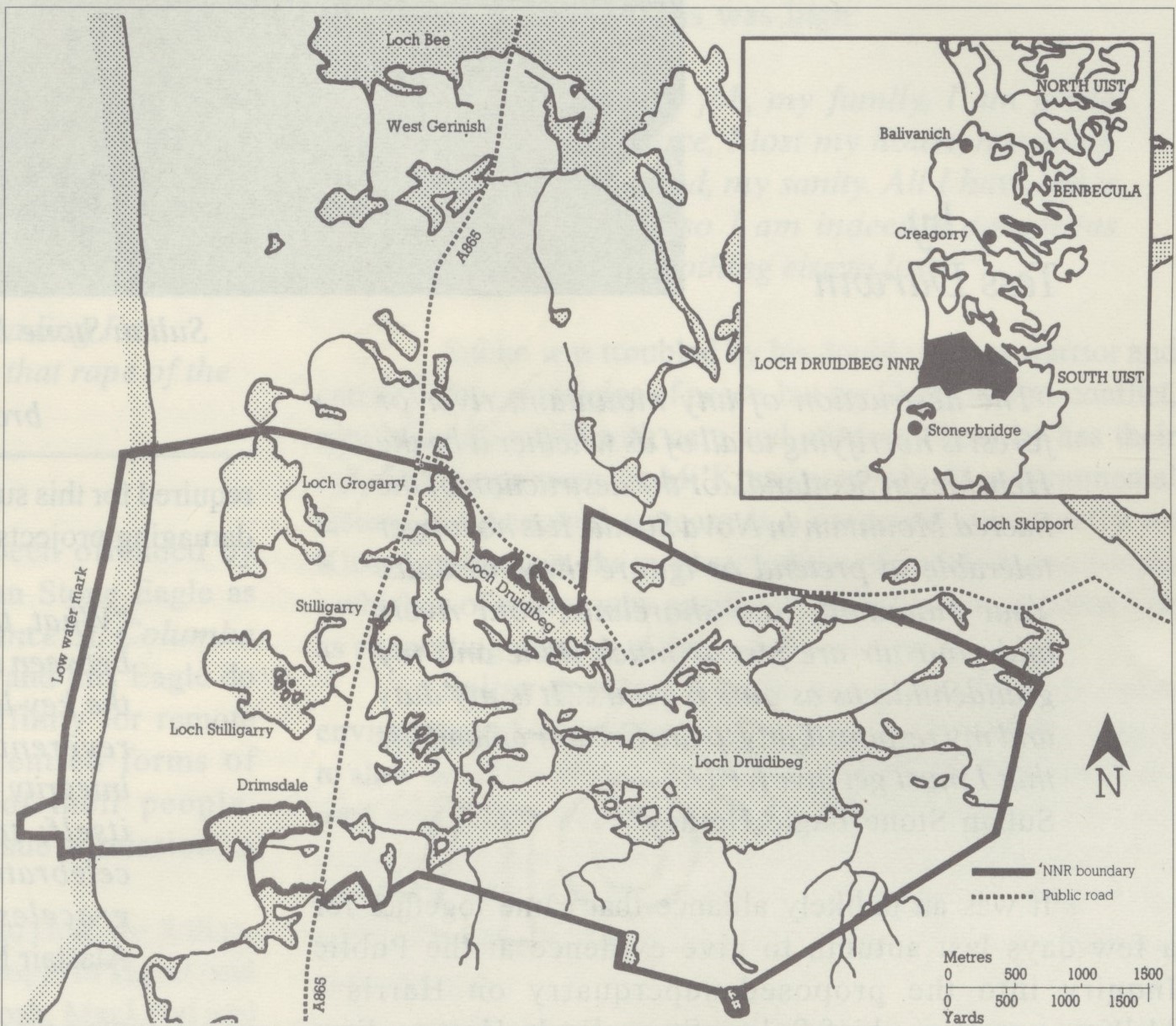
Loch Druidibeg Nature Reserve

The Loch Druidibeg Reserve in the north-west of South Uist stretches for four miles inland from the Atlantic coast, encompassing a complex of shallow lochs and surrounding moorland.  It provides an excellent example of the progressive gradation from the lime-rich machair of the coastal plain to the acid moorland of the interior.  The Reserve was established in 1958 to protect an important breeding site for greylag geese and is a valuable habitat for many types of waterfowl.

The plantation was established prior to the creation of the Reserve as policies for an estate lodge which was never built.  It contains an eccentric mix of Lodgepole Pine, Scots Pine of unknown provenance, Sitka spruce, Chile pine, Norway maple and Rhododendron ponticum.  In the intervening period native species such as birch, alder, hazel, rowan and aspen have been planted or become established and it is now an important site for woodland birds which are otherwise scarce in the Hebrides.

Local crofters enjoy grazing rights on the Reserve and in 1975 red deer of Rum stock were reintroduced to the island by South Uist Estates.  In the 1980s, Scottish Conservation Project volunteers were contracted by the Nature Conservancy Council to erect a deer fence to protect the plantation from grazing pressure.

The Rhododendron Problem

The presence of Rhododendron ponticum on the site presents SNH with a severe and intractable management problem.  As elsewhere on the West Coast, the species has proved extremely invasive.  It has already engulfed large areas of the plantation and is spreading onto adjacent land and some of the islands in Loch Druidibeg.  In September, a team of a dozen SCP volunteers began “rhoddy bashing” in the northern part of the plantation.  It is hoped that sufficient funds can be found to maintain the momentum and Gail Churchill will be keeping a careful photographic record to monitor progress.

The plantation is a popular spot with local people and visitors (particularly when the rhododendrons are in flower in early summer!) and for children brought up in a treeless landscape it has a particular appeal.  The emphasis is therefore on enhancing its educational and amenity value rather than on ecological restoration in its purest sense.  The exotic tree species will be left in place and the rhododendrons will not be eradicated altogether.  The intention is to alter the balance in favour of native tree species within the plantation itself and prevent further encroachment onto the surrounding moorland.

Community Involvement

The plantation will figure prominently in SNH’s local educational programme and community participation in its management will be encouraged.  School parties will be able to visit to learn about woodland ecology and local children will be involved in planting more native trees.  The only local sources of native seed are the few woodland fragments on the eastern side of the island and SNH is currently negotiating to protect one such site (an SSSI) by fencing off part of a gorge on the southern slopes of Beinn Mhor.


This article was published in Reforesting Scotland 12 in Spring 1995.
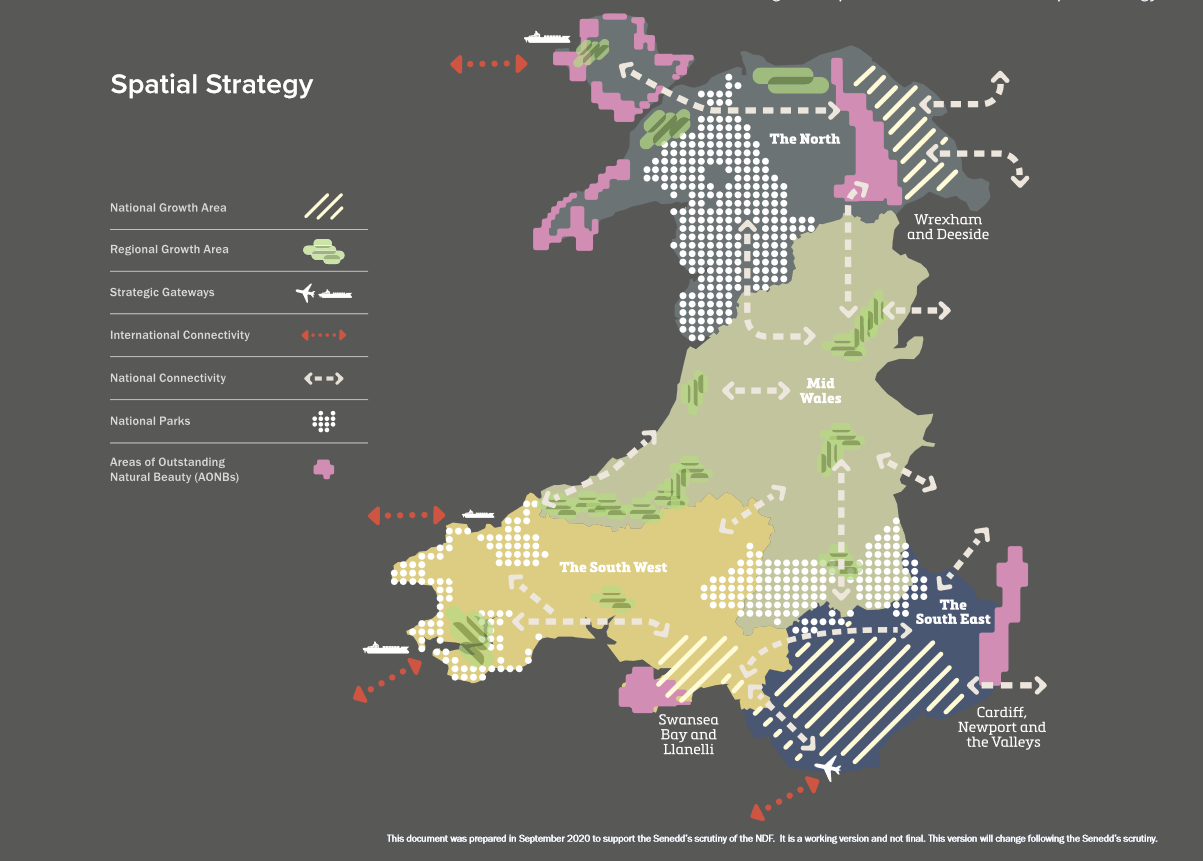

Spatial Planning for Recovery in Wales and Scotland

07 Sunday Mar 2021

Posted by Graeme Purves in Spatial Planning, The Land o Cakes

≈ Leave a comment

Tags

COVID-19, housing delivery, Place-Making, Post-Pandemic Recovery, Rural Repopulation, Scotland, Spatial Planning, Wales

As the initial consultation on Scotland’s fourth National Planning Framework (NPF4) draws to a close, the Welsh Government is preparing to publish the final version of the National Development Framework for Wales, Future Wales: the National Plan 2040.  Some of the issues raised during the Senedd’s final scrutiny of Future Wales are also of relevance for NPF4.  This blog compares approaches being taken by the two devolved administrations to highlight some strategic planning challenges.

Post-Pandemic Recovery

Along with taking forward the pressing Climate Change agenda, one of the major challenges in both countries will be economic and social recovery from the effects of the COVID-19 pandemic. While the Scottish Government’s post-COVID Economic Recovery Implementation Plan reflects the neoliberal narrative set out in the Higgins Report, Towards a Robust, Resilient Wellbeing Economy for Scotland, Scottish Ministers do appear to recognise some role for strategic planning in recovery.  The Implementation Plan indicates that NPF4 will be brought to Parliament in September.  It also states that the Regional Land Use Partnerships should have a role in regional economic development as well as meeting climate change goals.  In his foreword to the Position Statement on NPF4 published in November, Planning Minister Kevin Stewart states that the experience of the pandemic has highlighted the importance of a good local environment, with good access to open space and amenities, but post-pandemic recovery is not developed as a theme in that document.

In a report Go Big – Go Local published in October, the UK2070 Commission warned that the pandemic may exacerbate regional inequalities and have disproportionate impacts on the elderly and opportunities for young people. It recommended that strategies for recovery should place emphasis on investment in infrastructure with a view to building resilience and strengthening connectivity.

During committee scrutiny of the draft Future Wales in the Autumn of last year, the Welsh Minister for Housing and Local Government, Julie James, argued that the strategy it set out is sufficiently robust and flexible to respond to the societal changes arising from the pandemic and that experience over the past year had validated its focus on climate change, place-making and resilience.  However, the Senedd’s Climate Change, Environment and Rural Affairs Committee has pressed for more.  Drawing on the work of the UK2070 Commission, it has called for Future Wales to include a clear statement reflecting the lessons learned from COVID-19 and explaining how the framework will help to further post-COVID recovery.  It has pressed for explicit recognition of the potential contributions of investment in infrastructure, housing, connectivity, heat networks and natural capital, and increasing capacity in the foundation economy.  There may well be similar calls in Scotland.

The Regional Dimension of Recovery

While the Higgins report played down the role of the public sector, particularly local authorities, in recovery, some of its recommendations were very much in tune with the thinking of the UK2070 Commission.  It called for an investment-led recovery.  It recognised the need to address regional disparities in Scotland and advocated a regionally focused model of economic development.

Future Wales has a strong regional dimension.  The Welsh Government will rely on strategic development plans for North, Mid, South-East and South-West Wales to take forward key aspects of policy development and implementation.  How enthusiastic the Scottish Government will be about a strong regional dimension to recovery strategy remains to be seen.  It has blown hot and cold over regions over the past decade.  In 2014 it reaffirmed its commitment to strategic development plans at the regional level, yet the planning review initiated by Alex Neil in 2015 led to a proposal to end regional agency and centralise strategic planning in the National Planning Framework.  As a result of opposition in the Scottish Parliament, the Scottish Government was obliged to accord a role to Regional Land Use Partnerships.  The Position Statement for NPF4 states that “Our strategy will be informed by emerging regional scale spatial and economic strategies.”

The Chief Secretary to the Treasury, Stephen Barclay, announced in January that the UK Shared Prosperity Fund is to be disbursed from London.  This creates a real danger that Scottish discretion on spatial priorities will be significantly curtailed. The Scottish Government may count itself fortunate that its attempt to abolish regional strategic planning failed.  Without it, its flank might have been even more exposed to UK Government interventions than it is.  It will be important for the Scottish Government to build strong relationships with local authorities and work closely with regional partnerships on spatial strategies.

Barclay’s announcement makes it even more important to be clear about the relationship between strategic spatial planning and growth deals.  They reflect different ideological perspectives, and there is potential for them to pull in different directions.  The Position Statement on NPF4 states only that regional spatial and economic strategies “will align with city and regional growth deals.”  There is no indication that growth deals should reflect spatial strategies.  In Wales, the Senedd’s Climate Change, Environment and Rural Affairs Committee has recommended to the Welsh Government that “Future Wales should explicitly state the need for a reciprocal and iterative relationship between strategic development plans and growth deals over time.”  Stakeholders should insist on the same relationship between spatial strategies and growth deals in Scotland.

Place-Making and Housing Delivery

There is contrast between the Welsh and Scottish Governments in their approach to place-making and housing delivery.  Future Wales accords the public sector the lead role in urban development, regeneration and the delivery of affordable housing, though the Welsh Government remains coy about specific delivery mechanisms.  In the NPF4 Position Statement, the public sector and local authorities barely get a mention.  The Scottish Government appears to prefer a developer-led model, with the role of planning authorities being merely to provide developers with “a steady pipeline of land.” While there is a lot of aspirational rhetoric about place-making in the Position Statement, the Scottish Government shows little inclination to empower the public sector to take the necessary lead.  Better places and 20-minute neighbourhoods are public policy objectives, but we are given no hint as to the mechanisms which will be used to deliver them.  There is no reference, for example, to the work the Scottish Land Commission has been doing on land value capture and sharing for several years now.

Rural Repopulation

Finally, it is interesting that the repopulation of rural areas has re-emerged as an objective of spatial planning in Scotland and Wales, something we have not really seen since the strategic plans for post-Depression and post-War recovery in the middle of the last century.  In autumn 2018, Community Land Scotland successfully promoted an amendment to the Planning (Scotland) Bill which requires the NPF to consider the potential for rural resettlement.  The NPF Position Statement says that rural repopulation will be a key theme for emerging regional spatial strategies for the South of Scotland, Argyll and Bute, Western Isles, Orkney and the Highlands.  The Welsh Senedd’s Climate Change, Environment and Rural Affairs Committee has called for Future Wales to include further locational guidance on addressing rural depopulation.  It has also pressed for the Welsh framework to recognise opportunities for people to live and work sustainably outside towns and cities.


This article was originally published as a blog for Built Environment Forum Scotland (BEFS) in February 2021.


Subscribe

  • Entries (RSS)
  • Comments (RSS)

Archives

  • March 2025
  • March 2022
  • December 2021
  • March 2021
  • November 2020
  • August 2020
  • May 2020
  • February 2020
  • February 2019
  • October 2018
  • August 2018
  • May 2018
  • April 2018
  • July 2017
  • April 2017
  • February 2017
  • January 2017
  • September 2016
  • July 2016
  • May 2016
  • March 2016
  • December 2015
  • November 2015
  • August 2015
  • June 2015
  • May 2015
  • November 2014
  • October 2014
  • August 2014
  • July 2014
  • June 2014
  • May 2014
  • April 2014
  • March 2014
  • June 2013

Categories

  • Frank Mears
  • Reviews
  • Spatial Planning
  • The Land o Cakes
  • Travellers' Tales

Meta

  • Create account
  • Log in

Blog at WordPress.com.

  • Subscribe Subscribed
    • By Erceldoune
    • Join 29 other subscribers
    • Already have a WordPress.com account? Log in now.
    • By Erceldoune
    • Subscribe Subscribed
    • Sign up
    • Log in
    • Report this content
    • View site in Reader
    • Manage subscriptions
    • Collapse this bar
 

Loading Comments...