• Thomas Learmonth o Erceldoune

By Erceldoune

~ Graeme Purves

By Erceldoune

Author Archives: Graeme Purves

The Merchants of Milna

22 Sunday Nov 2015

Posted by Graeme Purves in Travellers' Tales

≈ Leave a comment

Tags

Brac, Dalmatia, Milna, Mrduja, The Most Serene Republic of Venice

Dalmatian Coast 104

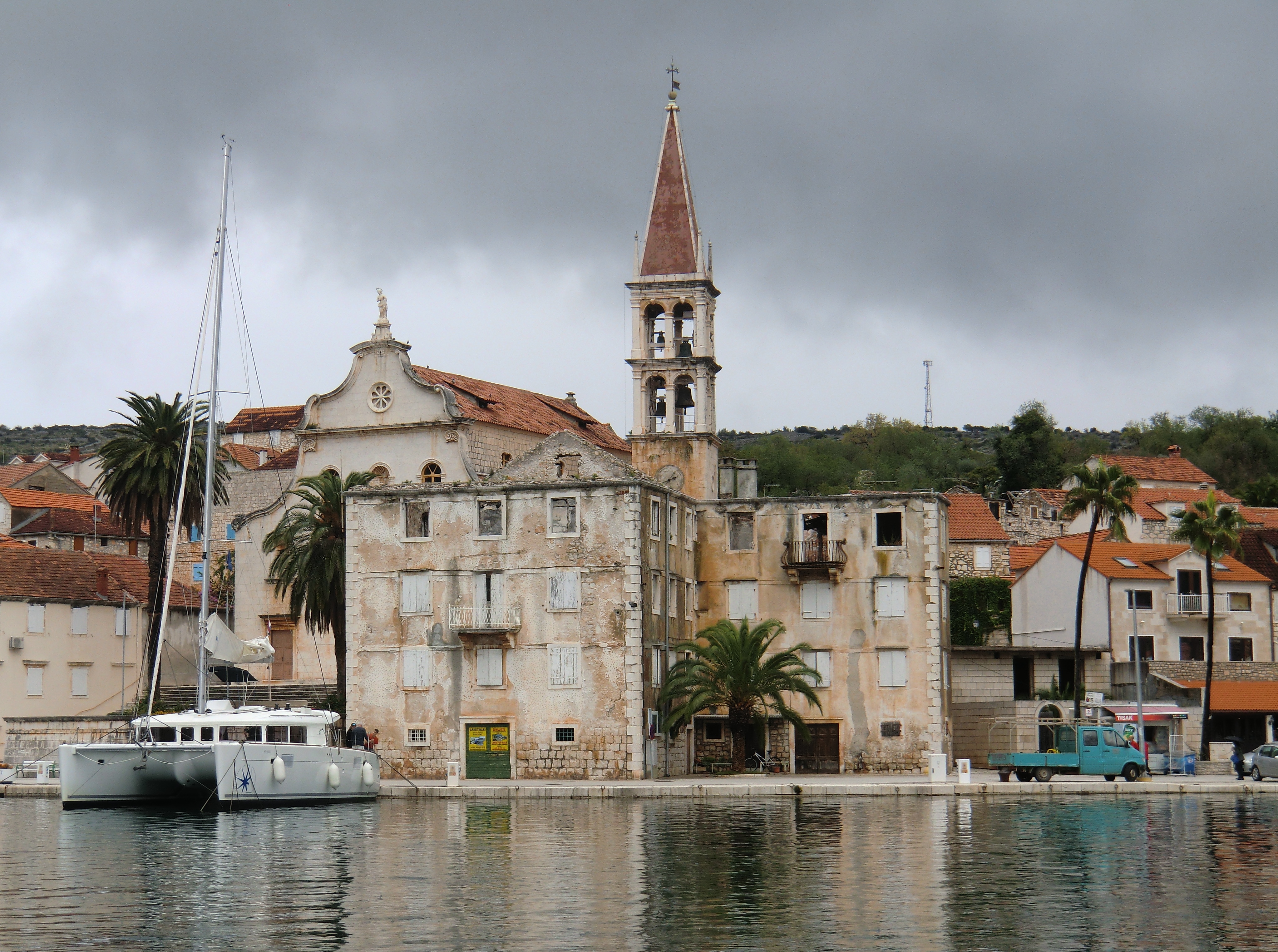
The port of Milna on the island of Brac

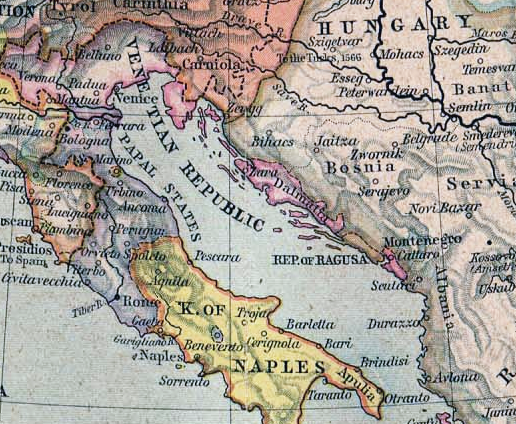
From the 13th Century, the Dalmatian coast began to fall under the dominion of the Most Serene Republic of Venice.

In the little port of Milna on the island of Brac the people became concerned that prosperity was passing them by and, after much deliberation, they concluded that the cause lay in a deficiency of wisdom.  All agreed that the best wisdom was to be found in the great city of Venice, so they sent two of their merchants to the capital to buy some. After some searching, they found a wealthy merchant who traded in wisdom and they agreed a deal.  The merchant handed them the wisdom in a small box and warned them not to open it until they were safely back in Milna.

Dalmazia1560

The Venetian Republic and its Dalmatian colonies, 1560

The merchants of Milna expressed surprise that sufficient wisdom could be contained in such a small box, but the the Venetian merchant told them not to worry.  He instructed that on their return to Milna they should immediately assemble all the townspeople.  When they opened the box, they would find that there was more than enough wisdom for everyone.

On the way home, all went well until a violent storm forced them to seek shelter on the small island of Mrduja, just short of the safety of their home harbour. Crouched miserably over their little fire under the shelter of the trees they were overcome with curiosity and decided to open the box for a quick peek. Immediately. a little mouse leapt out and scurried off into the forest.  In the morning, the merchants continued their journey to Milna and reported what had happened.  On hearing the news, the townsfolk jumped into their boats and set off for Mrduja to search for their lost wisdom.

Mears Drawings Sold at Auction

11 Wednesday Nov 2015

Posted by Graeme Purves in Frank Mears

≈ Leave a comment

Tags

Charles Denny Carus-Wilson, Elgin, Frank Mears, Invermoriston, Peebles, Ramsay Traquair, Scottish National War Memorial, Stirling

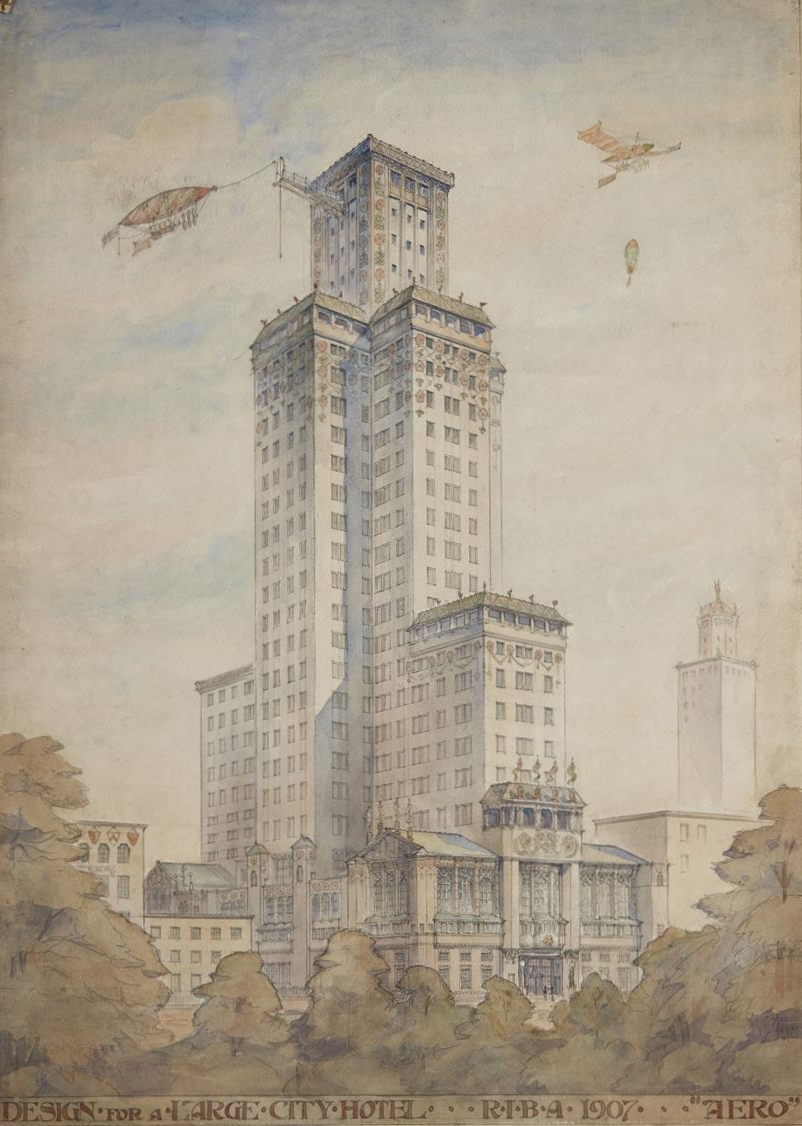
Large City Hotel -1907

Aero Hotel, 1907

A historically important collection of drawings and plans by the architect and planner Sir Frank Mears was sold at auction this week.  The collection, previously held by the firm of Frank Mears and Partners, featured as four lots in the the Decorative Arts sale at Lyon & Turnbull in Edinburgh on Wednesday 11 November.

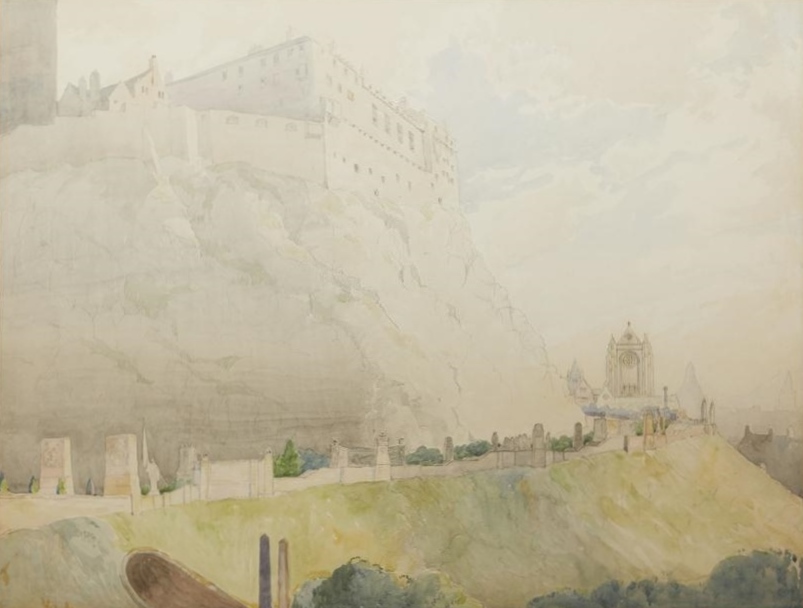
Scottish National War Memorial as Via Sacra 01

Scottish National War Memorial as Via Sacra (1919)

In the course of his career, Frank Mears prepared a number of schemes for monuments and memorials.  The collection includes a sketch by Mears and the architect Ramsay Traquair for a memorial to Edward VII & I at the foot of the Canongate in Edinburgh (1911), a watercolour of his proposal for a Scottish National War Memorial as Via Sacra (1919), and a watercolour by the architect Robert Naismith of Mears’ Royal Scots Regiment Monument in Princes Street Gardens (1950).

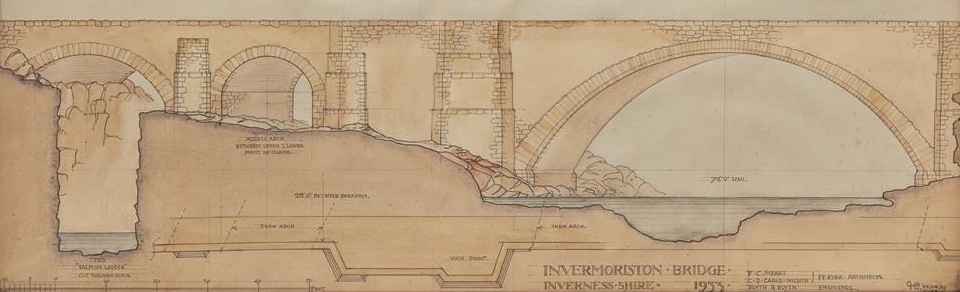
Invermoriston Bridge 1933

Invermoriston Bridge (1933)

In 1930, Frank Mears and Charles Denny Carus-Wilson were appointed consultant architects for five new road bridges on the A82 in the Highlands.  The collection includes a watercolour panel of their design for the Oich Bridge (1930) and watercolour elevations of their bridges at Fort Augustus and Invermoriston (1933).

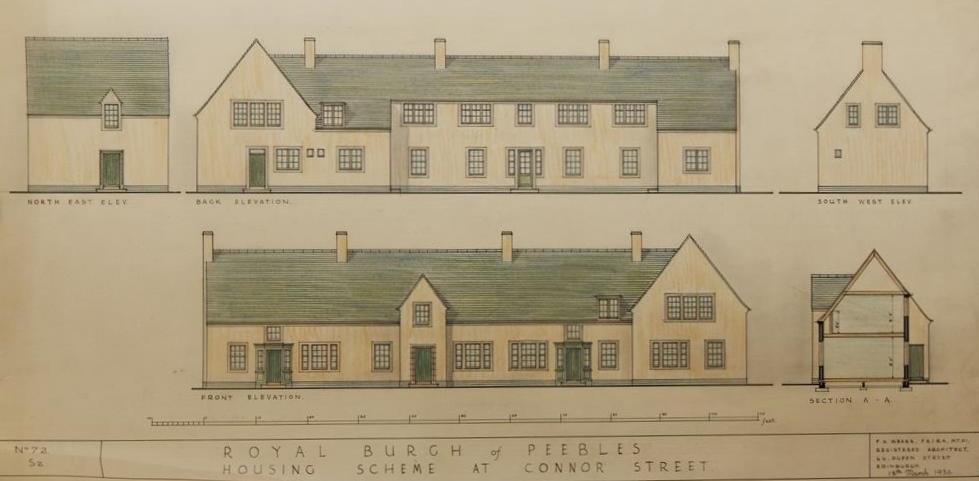
Connor Street, Peebles 1936

Housing Scheme at Connor Street, Peebles (1936)

From 1932, Mears prepared plans and designs for a number of housing schemes in the Royal Burgh of Peebles.  The collection includes plans and elevations for schemes at Neidpath Road (1935) and Connor Street (1936).

Baker Street, Stirling 1943

Reconstruction of Baker Street, Stirling (1943)

In 1936, Stirling Town Council engaged Mears to advise on the redevelopment of Baker Street in the burgh’s historic core.  The collection includes watercolour sketches for the reconstruction of Baker Street dated 1940 and 1943.

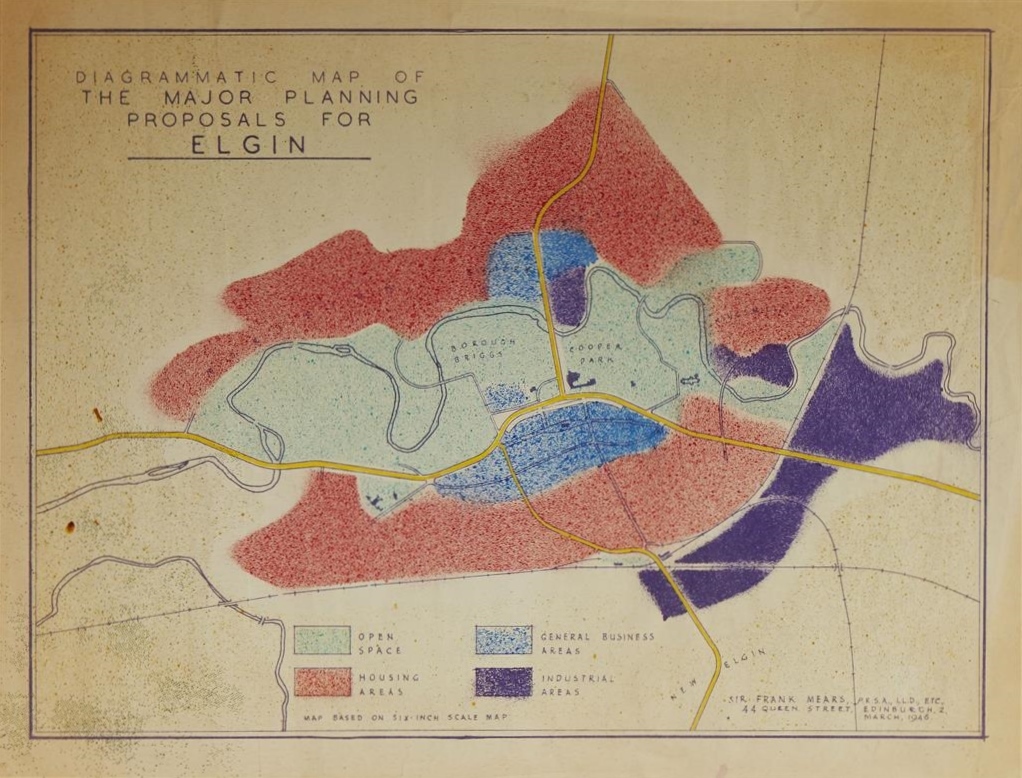
Elgin - Major Planning Proposals

Major Planning Proposals for Elgin (1946)

In 1938, Mears was engaged by Elgin Town Council to advise on a scheme for the historic part of the town.  Work was suspended following the outbreak of hostilities in 1939, but in 1944 the Council asked him to prepare a development plan for post-war reconstruction.  The collection includes his plans for major new residential development and the road improvements required to support it (1946).

The drawings have been acquired for the national collection by Historic Environment Scotland.

The Scottish Play as Garbled Glaurfest

04 Wednesday Nov 2015

Posted by Graeme Purves in The Land o Cakes

≈ Leave a comment

Tags

Justin Kurzel, Macbeth, Marion Cotillard, Michael Fassbender, William Shakespeare

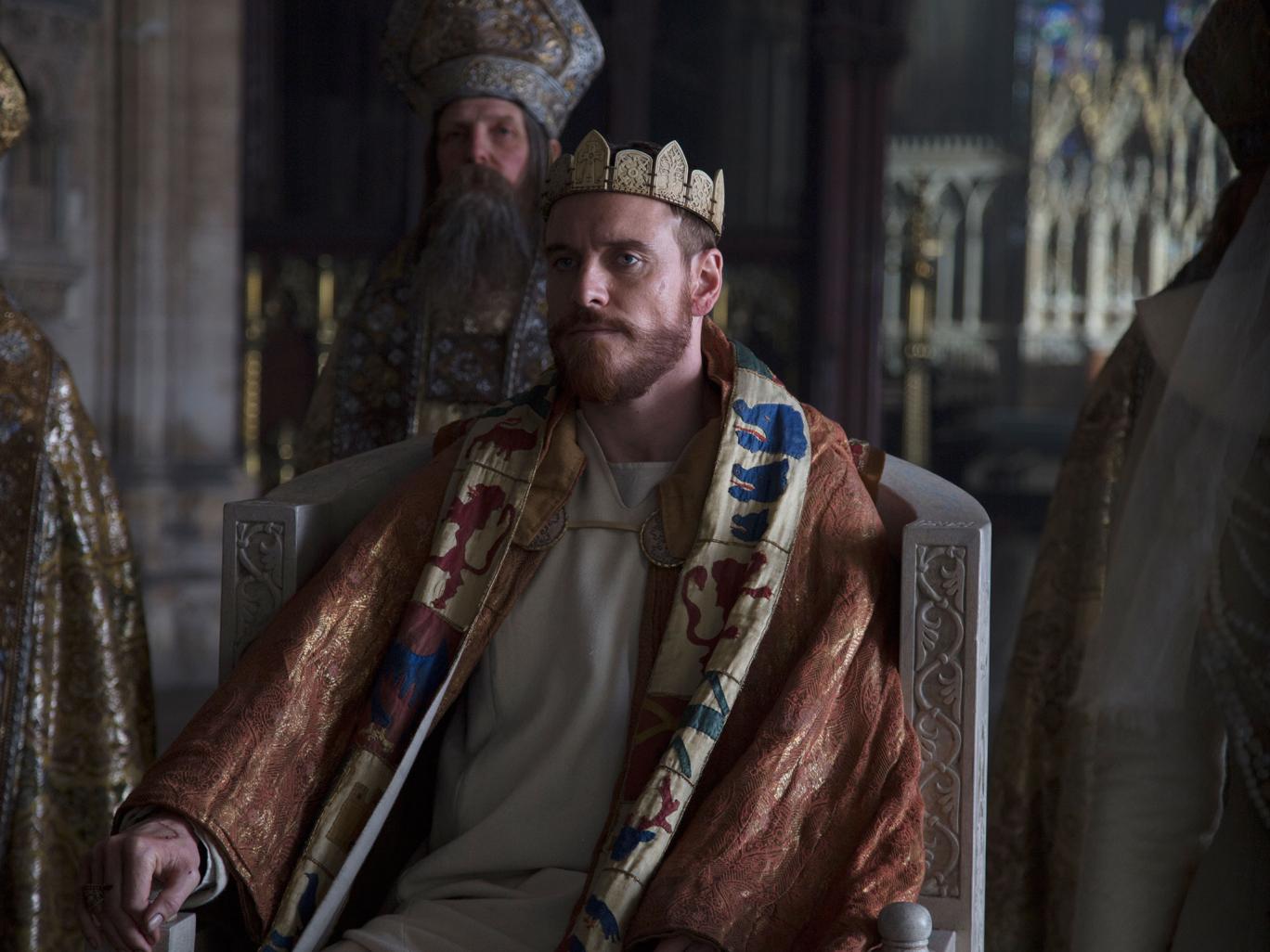
Fassbender - Macbeth

Michael Fassbender as Macbeth

I finally caught up with Justin Kurzel’s ‘Macbeth‘, and it is a real pig’s breakfast – Noggin the Nog meets Once Upon a Time in the West!

The scenery is bleakly magnificent, but Kurzel succeeds in making it look more like a wet weekend in the Greenland of Erik the Red than 11th Century Scotland. Battles take the form of mud-wrestling with dirks in Braveheart warpaint.  Michael Fassbender and most of the rest of the cast toy with versions of mumbled Lowland demotic. Sadly, nobody seems to have told Marion Cotillard, who delivers her lines theatrically in mannered Shakespearean English, hurriedly gabbling her way through her first crucial scene as if she were worried about missing her bus. Sean Harris seems to base his performance as Macduff on the insight that his character’s name rhymes with gruff.

As a mere thane, Macbeth appears to live in a flimsy shanty town in the middle of a Highland peat bog. After he becomes king, he and his missus are able to move into an elegant castle in the high Norman style. ‘More than enough motive for murder there I would have thought.

On the positive side, Lynn Kennedy, Kayla Fallon, Seylan Baxter and Amber Rissmann make a good job of the weird sisters, steering well clear of cackling crone clichés.  And David Hayman puts in a good performance as Lennox, a man careful to stay on the right side of power.

Where Kurzel meddles with Shakespeare’s tale, it is not for the better.  Why would even a deranged Macbeth have Macduff’s wife and children taken to his castle and publicly burnt at the stake, a fate reserved for witches and heretics?  Shakespeare wisely has them dispatched at a distance by the king’s henchmen.  “The Thane of Fife had a wife. Where is she now?”  Kurzel’s reworking of the story leaves Lady Macbeth with little room for doubt.  And if Macbeth were anachronistically ensconced within the sturdy keep of a Normanised Dunsinane, why would he abandon the strength of that position to fight Macduff on open ground outside?

Orson Welles and Akira Kurosawa have both made better jobs of filming the Scottish play.

Why the Climb Down on Offshore Ownership of Land?

31 Monday Aug 2015

Posted by Graeme Purves in The Land o Cakes

≈ 1 Comment

Tags

accountability, Land Reform, offshore tax havens, Transparency

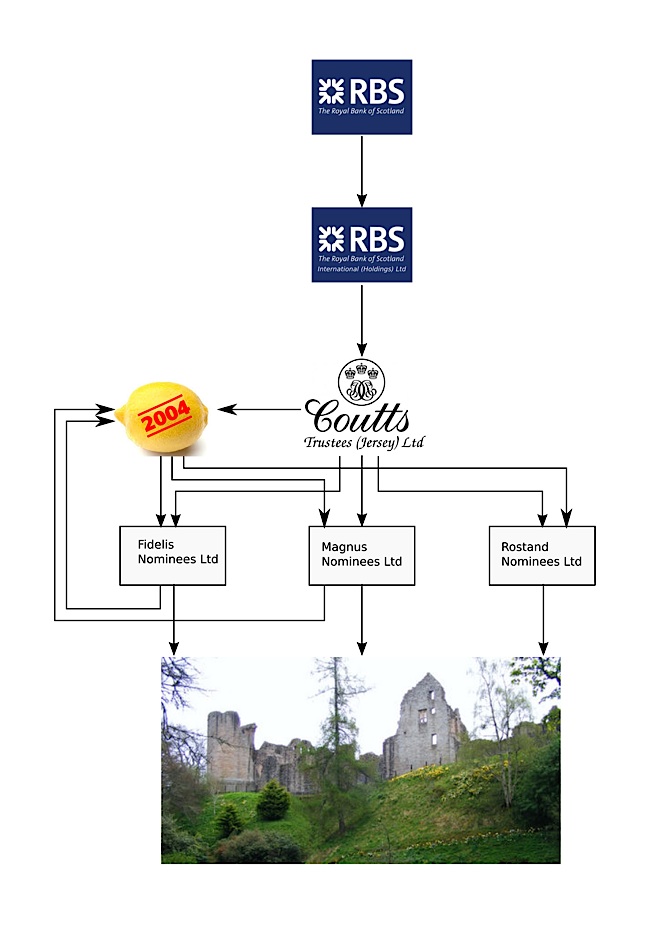
The conviction of gamekeeper George Mutch for the illegal killing of a trapped goshawk on the Kildrummy Estate in Aberdeenshire earlier this year drew attention to the tangled web of offshore shell companies which help to obscure its beneficial ownership.

kildrummy_ownership_670

Kildrummy’s Channel Island Puzzle

The lack of transparency, traceability and accountability engendered by such convoluted ownership arrangements was one of the issues addressed by the Land Reform Review Group.  In May 2014, the Group reported that “a practical step that could be taken in Scots law would be to make it incompetent to register title to land in the Land Register in any legal entity not registered in a member state of the EU” (Part 2, paragraph 9).

The Scottish Government consulted on this matter in December 2014 and the analysis of responses noted that 79% of respondents agreed that restricting the type of legal entities that can take ownership or a long lease over land would help improve the transparency and accountability of land ownership in Scotland and that 82% agreed that in future land should only be owned or held on a long lease by individuals or by a legal entity formed in accordance with the law of a Member State of the EU.

Despite strong evidence of public support for reform, no such measure has been included in the Land Reform (Scotland) Bill.  The explanation provided in the Policy Memorandum accompanying the Bill is that it might have led to more land being held by trusts whose beneficiaries may not be known.  This argument is weak and unconvincing.  The question of ownership by trusts is a distinct matter which should be pursued on its own merits.  The challenges involved in addressing that issue do not justify abandoning action on ownership by offshore corporate entities.  As land reform campaigner Andy Wightman has pointed out, “by insisting that the parent company is registered in the EU, the primary purpose of ensuring transparency and accountability is significantly enhanced through the public identification of Directors with legal responsibility, through the enhanced availability of information available via annual returns, and through the liability of EU registered companies to disclose beneficial ownership under EU law.”

It is difficult to know what the real reason for the climb down by the Scottish Government might be.  The concerns expressed by the minority opposed to the measure are hardly show-stoppers.  Some raised the trust issue and others suggested that it might deter inward investment, pointing to anecdotal evidence that Norwegian, Swiss and Middle Eastern owners had spent significant sums on holdings to the benefit of the rural economy.  There would, of course, be nothing to prevent anyone, whatever their nationality, from registering their title in the name of a company registered in an EU member state.

Scottish politics was energised and radicalised by the Independence Referendum and the great influx of new members experienced by Yes-supporting parties last autumn reflected a popular desire for real and substantial reform.  There will be widespread disappointment that the SNP Government has abandoned an important land reform measure on such a flimsy pretext.  It is to be hoped that the Scottish Parliament will subject this matter to thorough scrutiny during the passage of the Bill.


UPDATE

On Tuesday 1 September the Scottish Government offered a new reason for its decision not to pursue the Land Reform Review Group’s recommendation on offshore ownership. Michael Gray reported that a Scottish Government spokesperson had told CommonSpace that “as corporate transparency is not consistent across Europe it was found that complex corporate structures could still obscure ownership and, therefore, the LRRG’s proposal would not actually increase transparency.”  Unfortunately, this doesn’t bear scrutiny either (note how the possibility of “could” conveniently morphs into the certainty of “would not” in the course of the sentence!).  The fact that the level of corporate transparency varies across the EU does not mean that the LRRG’s proposal would not increase transparency. The requirements of even the least exacting of EU states offer significantly more transparency than those of offshore tax havens.

55.953252 -3.188267

Putting Communities at the Centre of Community Planning

20 Saturday Jun 2015

Posted by Graeme Purves in The Land o Cakes

≈ Leave a comment

Tags

Community Empowerment, Community Planning, Development Planning, Spatial Planning

RTPI Scotland has undertaken research on the links between spatial and community planning with a view to making recommendations on how they might be strengthened. A report on Phase 1 of the research was published in April.  A workshop to inform the content of the Phase 2 report was held in Edinburgh on Thursday 18 June.

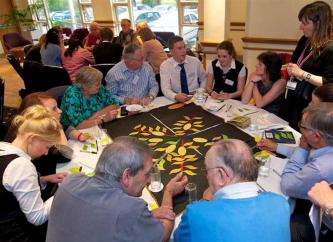
Aberdeenshire CPPGlasgow Community PlanningMoray CPPThe fact that community planning is a statutory function in Scotland has saddled us with a corporate model of “community planning” which has its origins in the 1990s and is now some 20 years out of date. It sees community planning as being about public agencies working together to deliver better services for communities. The communities themselves are accorded only a passive role.  In fairness, Scottish Government guidance and best practice have moved beyond that, but it remains a process concerned with better local governance rather than community empowerment.

Community Planning

While the RTPI Scotland research is concerned with the relationship between spatial and community planning rather than the reform or modernisation of community planning, I believe that we have to take cognisance of how thinking and community expectations have developed since the Local Government in Scotland Act 2003.  The Community Empowerment (Scotland) Bill has just completed its passage through the Scottish Parliament and the Independence Referendum experience has contributed to the development of a more politically aware and engaged citizenry, ready to demand active involvement in service delivery and place-making.  If we see the challenge only in terms of improving communication between spatial and community planners, we are in danger of simply making planners more complicit in a top-down and technocratic approach to community development which falls short of contemporary needs. We need to be prepared to challenge the model and insist that the empowerment of communities is a central element of our shared agenda.

Renfrewshire Ketso

It is good to see “community-led approaches” featuring in recommendation 9 of the report on Phase 1 of the RTPI Scotland research.  It is to be hoped that this theme can be given greater prominence in Phase 2.

One excellent suggestion highlighted in the workshop is that in the preparation of development plans the traditional call for sites should be broadened to include a call for the identification of community assets.

David Livingstone Memorial

13 Saturday Jun 2015

Posted by Graeme Purves in Frank Mears

≈ Leave a comment

Tags

Blantyre, Charles d'Orville Pilkington Jackson, David Livingstone, Frank Mears

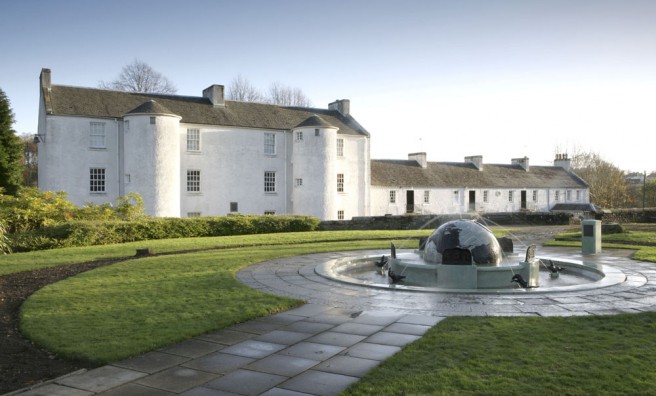
The David Livingstone Trust has been successful in gaining a grant of £3.5 million from the Heritage Lottery Fund to transform the David Livingstone Centre at Blantyre into a leading heritage attraction.

Livingston Memorial

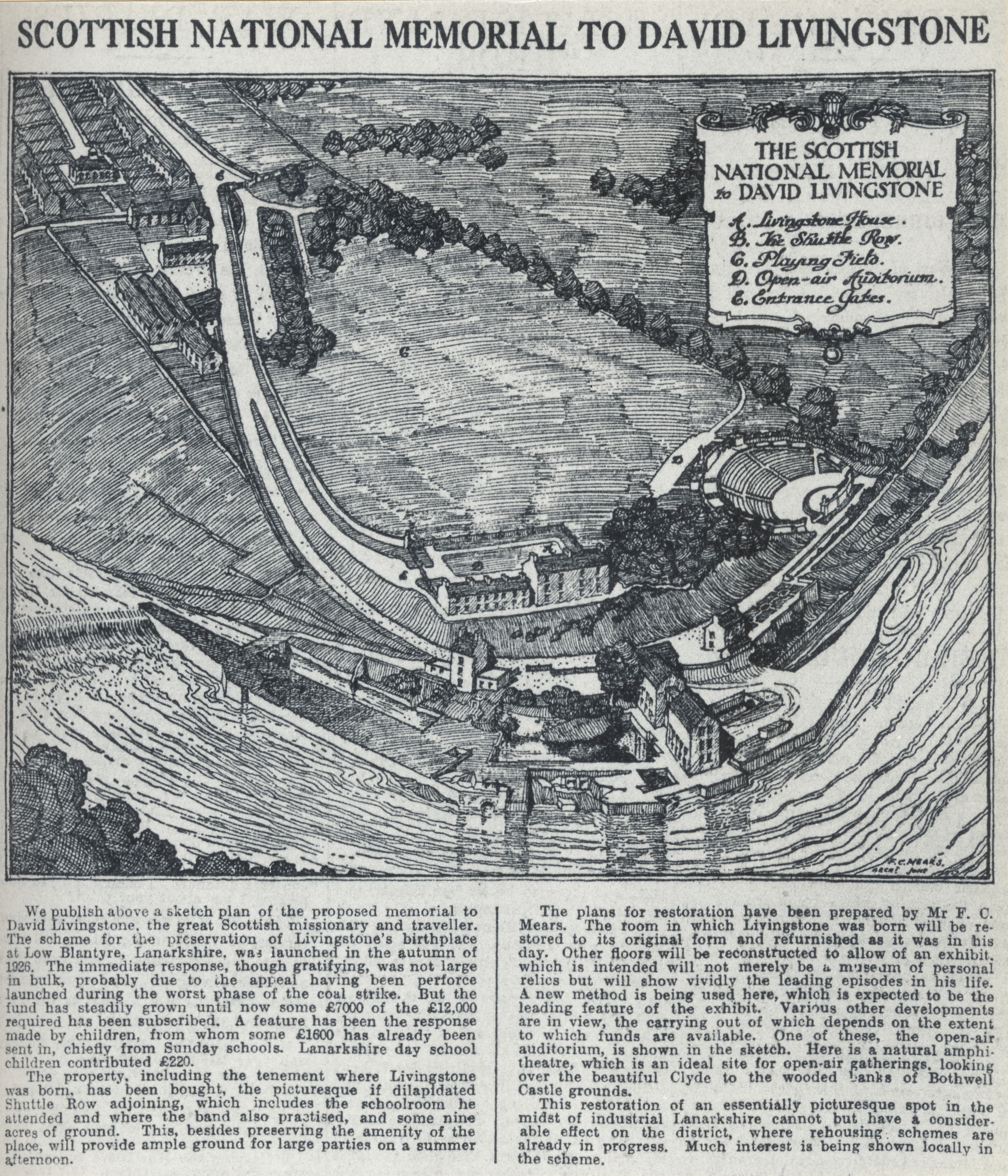
Report in The Glasgow Herald, June 1927

The David Livingstone Memorial was developed in the early 1930s according to a scheme devised by the architect and planner, Frank Mears. It incorporates important work by the sculptor, Charles d’Orville Pilkington Jackson, including the Patrick Geddes inspired World Fountain.

The village of Low Blantyre was built on the banks of the Clyde near Hamilton in about 1785 to house the workers at the nearby cotton mill founded by David Dale. After production ended in 1904, the settlement was progressively abandoned.  The houses fell into decay and the local council embarked on a programme of gradual clearance so that, by the early 1920s, the tenement in which David Livingstone was born in 1813 was one of the few buildings left standing.  On a visit in 1925, the Rev. Dr. James I. Macnair and the local Congregational minister, the Rev. D. N. Thomson, found it in a ruinous condition and Thomson suggested that an effort should be made to acquire the property and surrounding grounds to create a permanent memorial.

David Livingstone

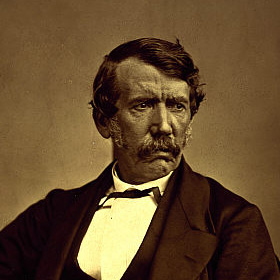
David Livingstone

There were three remaining buildings on the site: a three-storey tenement of 24 single-ends, one of which was Livingstone’s birthplace; an adjoining row of two-storey cottages, and a lodge in its own grounds.  An option over the properties was secured from Messrs. Baird & Co., the local coal mining company, and a temporary Memorial Committee was established.  In order to promote the scheme, the Committee recruited the support of an impressive array of Scottish dignitaries, including J. M. Barrie, John Buchan, Ramsay Macdonald, the Duke of Hamilton, Field Marshal Lord Haig, the Earls of Elgin and Home, the leaders of the Scottish churches, the principals of the Scottish universities and the provosts of the cities and principal towns.  An appeal was launched in 1926 but, in the uncertain climate created by the National Strike, wealthy benefactors were reluctant to come forward.  It was not until the following year, after an approach had been made to Scottish Sunday schools and bible classes, that sufficient funds were raised to allow the project to proceed.

The Rev. Dr. Donald Fraser of the United Free Church suggested that Professor Patrick Geddes was the most suitable person to prepare a restoration scheme.  However, Geddes was by this time ensconced in France, busy with his university project at Montpellier.  The Memorial Committee’s Secretary, Mr. J. G. Harley, pointed out that Geddes had a son-in-law, Frank Mears, who was “a man filled with the same idealism” and “had great experience in the restoration of old buildings”.  On this recommendation, Mears was invited to Blantyre to give his opinion.  He was inspired by the opportunity to be involved in a restoration project of such national significance and, after his visit, he greatly expanded on the Committee’s original idea of turning Livingstone’s birthroom into a place of pilgrimage.  James Macnair later acknowledged that “It is to our architect, Frank Mears, that we mainly owe the unique form which the Memorial gradually assumed”.

In its early days, the Memorial’s main attraction was the Livingstone Gallery, which sought to convey the essential aspects of Livingstone’s character in a series of eight relief tableaux.  The concept was devised jointly by Mears and Pilkington Jackson.  Mears created the long, low gallery by throwing four of the tenement’s little rooms together and used their bed recesses as niches for displaying the tableaux.

Livingstone Memorial

Shuttle Row buildings and the World Fountain

Some years after work on the Shuttle Row buildings was completed, a gift from the widow of one of the early trustees allowed the construction of the World Fountain in the adjoining grounds.  The design, which displays a strong Geddesian influence, was conceived by Frank Mears and executed by Pilkington Jackson.  It takes the form of a globe of the world about 6 feet in diameter rising from the centre of a basin filled with water.  The globe is tilted so that Blantyre lies on its summit and it is oriented so that, at any time, the area of its surface which is illuminated by the sun corresponds to that part of the world which is then in daylight.  Five plaques around the edge of the fountain portray Geddes’ “elementary occupations of mankind” while, from the basin, bronze figures are positioned to throw fine sprays of water over the globe’s surface.

It is to be hoped that the new project will respect the work by Mears and Pilkington Jackson.

55.801821 -4.083363

Tongues of the Trossachs

23 Saturday May 2015

Posted by Graeme Purves in The Land o Cakes

≈ Leave a comment

Tags

Balquhidder, Land Reform, Rob Roy MacGregor, Scottish accents, Trossachs, Viscount Astor

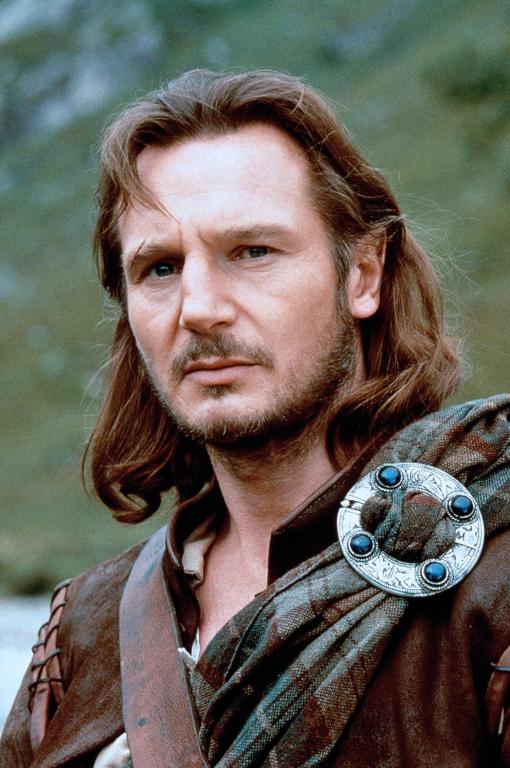
Liam Neeson

Viscount Astor

Papers are invited for an academic conference examining linguistic and philological evidence relating to the accent of the outlaw and popular hero, Rob Roy MacGregor, to be held in the Old Library Tea Room, Balquhidder in September. The opening address will be given by our patron, William Waldorf Astor III, 4th Viscount Astor.

Donald Meek has already offered a plenary paper on guttural fricatives in 18th Century drover communities.  We also hope to explore how caterans loosened Lowland vowels.

Professor Robert P. C. Murdoch of Aberfoyle University will lead an afternoon workshop on the use of plosives in early land disputes in Highland Stirlingshire (pre-registration with the Home Office is essential).

Liam Neeson will join us for scones on the patio at conference close.

_________________________________________________________________

This field of research owes a great debt to Viscount Astor, who has announced his intention to champion the accent of Rob Roy through personal use.  Viscount Astor’s family has connections with the Tarbert Estate on Jura, through a company registered in the Bahamas.

56.359897 -4.373823

Where the Ettrick meets the Tweed

09 Saturday May 2015

Posted by Graeme Purves in The Land o Cakes

≈ Leave a comment

Tags

David I, David Purves, Ettrick, River Tweed, Scots language, Scottish Borders, Scottish Literature

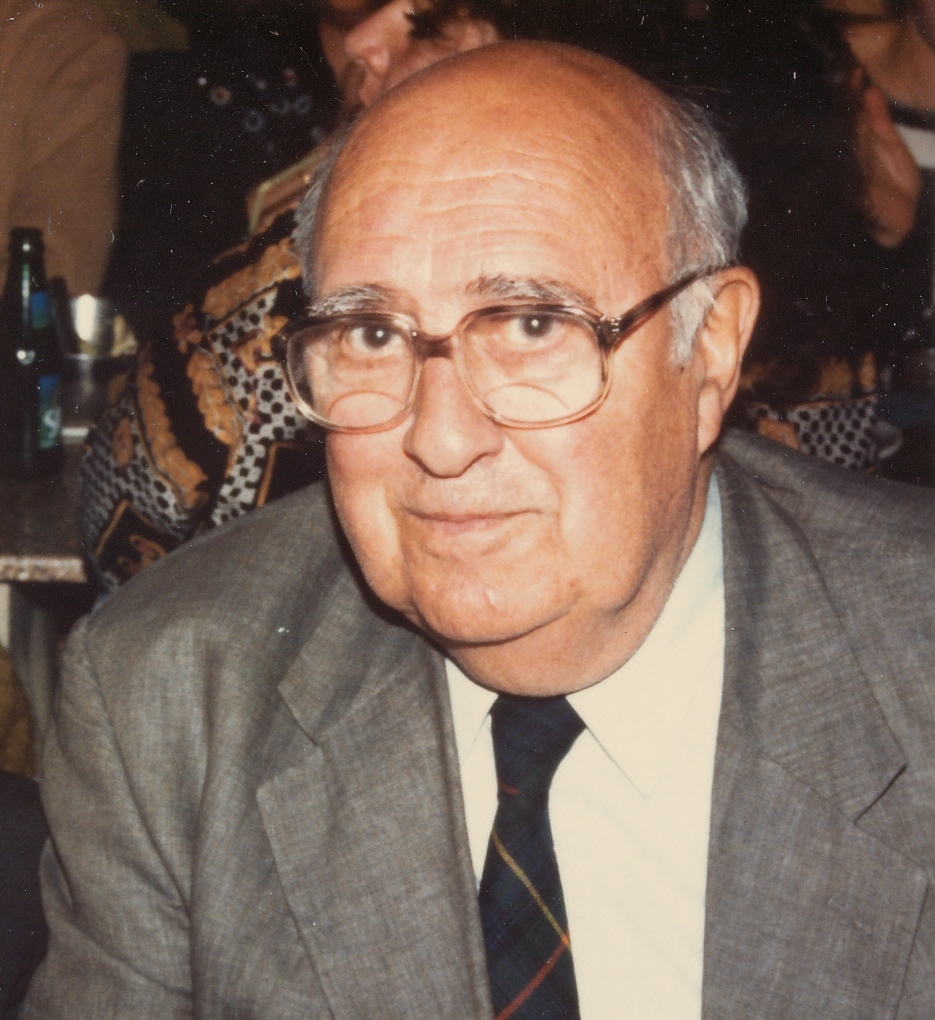
David Purves

David Purves (1924 – 2015)

My father was born in Selkirk and spent his childhood in Galashiels.  It was his love of the language he grew up with in the Borders that led to him becoming a champion of writing in Scots.  After his death in January, I found a letter amongst his papers in which he asked that his ashes be scattered at the confluence of the Ettrick and the Tweed.

As we drove down the A7 on a bright May morning, birds were singing and the trees were bursting into vibrant green.  Teams of men in orange overalls were busy with engineering and landscaping works along the route of the Waverley Line.  In Stow, where my grandfather had a shop and I spent the first three years of my life, we passed a large placard for SNP candidate Calum Kerr in somebody’s garden.  Dad would have been tickled by Calum’s victory in the constituency he contested back in February 1974.

At Ochiltree’s restaurant at Abbotsford we met Jamie, Nicola and their labrador, Bella, who had traveled up from Cornwall.  Then we made our way down to the river crossing on the Selkirk road.

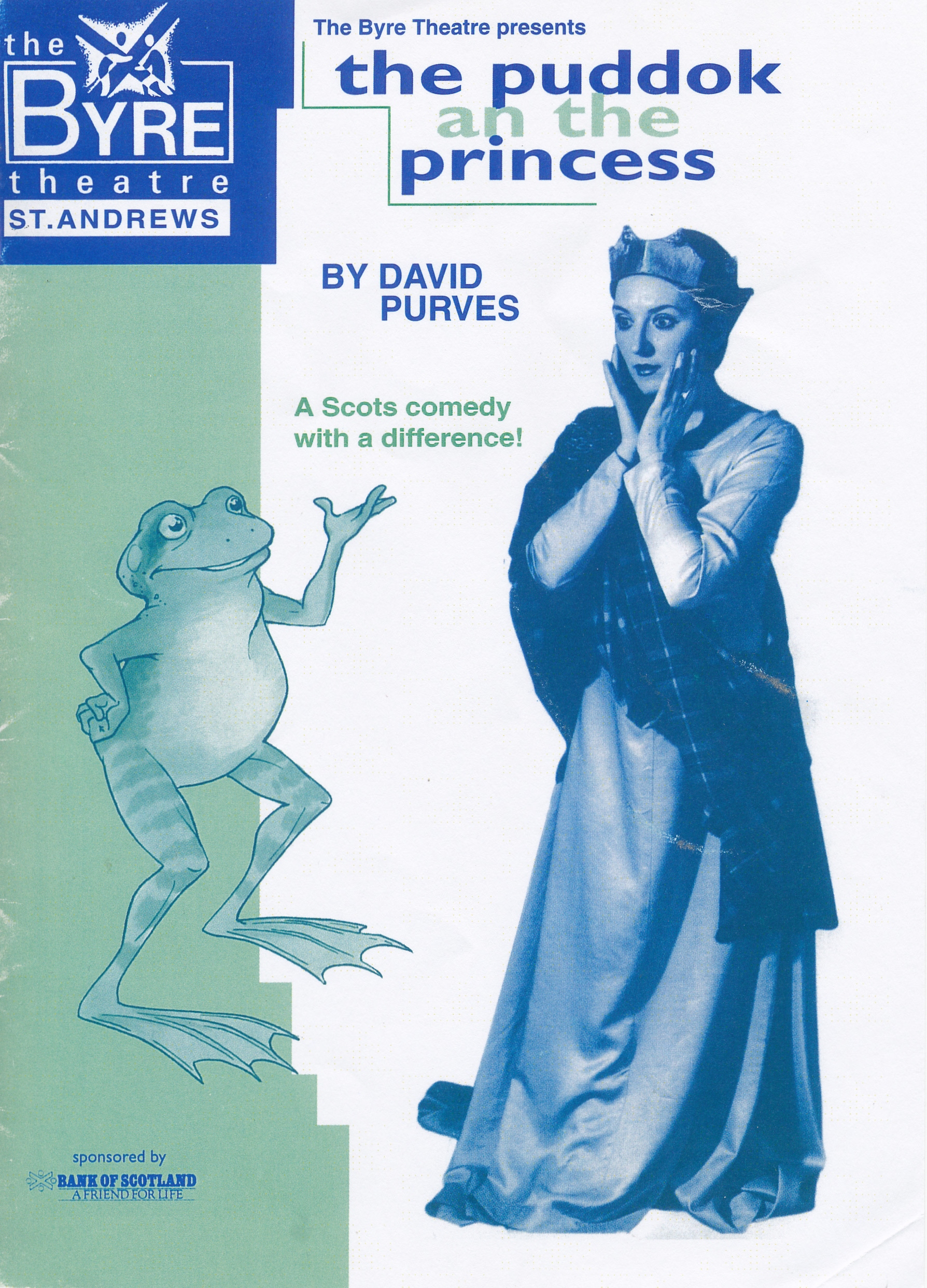
The Puddock

The Puddok an the Princess – Edinburgh Fringe First Winner 1985

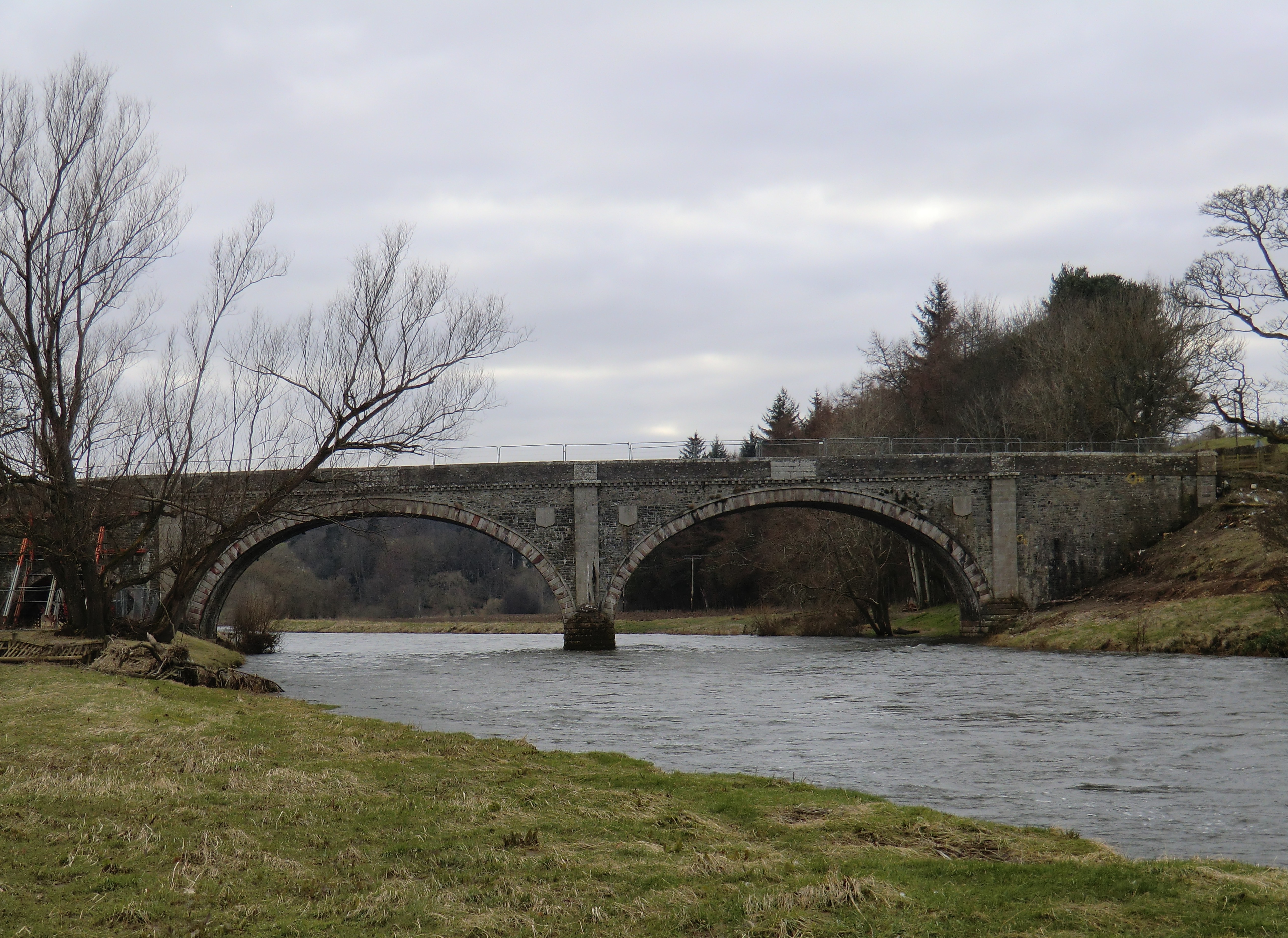
When Neil and I did our reconnaissance in March, we discovered that the old Tweed Bridge had been closed due to structural deterioration and was completely fenced off.  This made access to the point where the rivers meet more difficult and would have prevented mum from getting down to the waterside.  Luckily, the bridge is now open for cyclists and pedestrians and we were able to get to the desired spot quite easily.

Tweed Bridge

Old Tweed Bridge

As was traditional in many families, in our branch of the Purveses male children were named after Scottish kings.  In our case, the favoured names were James, Alexander and David.  It was Scotland’s first David (1083 – 1153) who, first as Prince of the Cumbrians and then as King of Scots, brought political stability to the contested territory of the Borders and through the religious houses he endowed, established a strong and enduring literary culture. Drawing on Celtic, Anglo-Saxon and Norman influences, this led to such notable achievements as The Romance of Thomas the Rhymer, the earliest surviving chivalric romance written in Quant Inglis.  Through the medium of the stark Border Ballads,  this tradition survived the social and economic disruption of the Wars of Independence to inform the work of writers like James Hogg and Sir Walter Scott in the 19th Century.

The rivers were high and the water was moving briskly.  The ashes of a man swirled into the continuing stream in a grey-white cloud and the torrent swept them eastwards to our mother the sea. “Fareweel Soutar Davie!  Ye’ll be at Berwick in nae time!”

_________________________________________________________________

A short biography of David Purves can be found on the website of the Scottish Poetry Library.  An obituary was published in The Scotsman on 6 January 2015.

55.568110 -2.812398

Staying Smart about Place

25 Tuesday Nov 2014

Posted by Graeme Purves in The Land o Cakes

≈ Leave a comment

Tags

Built Environment, Place, Planning, Scottish Government, Scottish Ministers

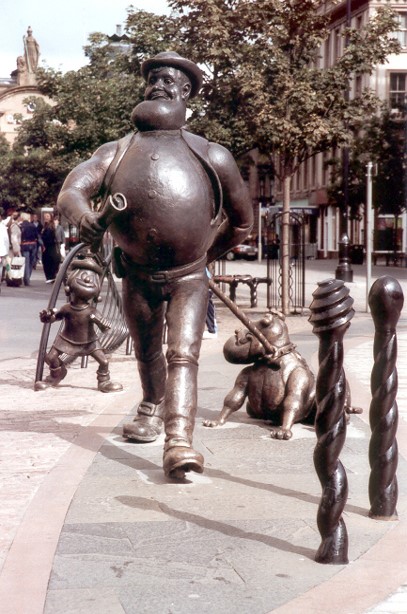
Desperate Dan

As a planner, one of the things I was interested to find out following the announcement of Nicola Sturgeon’s team of Ministers is where the built environment features in the new Ministerial portfolios.  The answer is not as clear as it might be.  Most noticeably, there is now no Minister with the word “Planning” in their title.  Aspects of the built environment, place-making and strategic planning remain scattered across a number of portfolios.  Planning, building standards, business improvement districts, town centres, housing and community planning sit within Alex Neil’s Social Justice and Communities portfolio, while architecture and the heritage aspects of the built environment sit with the Cabinet Secretary for Culture, Fiona Hyslop. Cities fall within Keith Brown’s Infrastructure and Investment portfolio.  Sustainable development is the responsibility for the Cabinet Secretary for Rural Affairs, Richard Lochhead.  But how does it all hang together?

A recognition of the importance of place has been a key feature of Scottish policy-making in relation to the built environment.  It is prominent in “Our Place in Time”, the strategy for our historic environment which underpins the merger of Historic Scotland and the Royal Commission on Ancient and Historic Monuments of Scotland.  Place and place-making are given considerable emphasis in the new Scottish Planning Policy and the third National Planning Framework (NPF3) published earlier this year.  Creating successful, sustainable places delivers major benefits for the economy, health and wellbeing and the environment.

In Scotland we are fortunate that planning is seen as part of the solution to the economic, social and environmental challenges we face, rather than part of the problem.  Our built environment disciplines possess a wealth of expertise in place-making and we have maintained a strong strategic planning capability at national and city region levels.  As Planning Minister, Derek Mackay gave clear leadership, with an emphasis on improving planning authority performance.  Planning is in better shape and better heart than it is South of the Border.  On the other hand, Scotland’s cities agenda seems to have lost momentum and lacks the strategic perspective which underpinned it in the days when Scottish Enterprise took an interest in the spatial dimension of economic development.

In going forward, the new Ministerial team will need to counter the impression that planning is being progressively subordinated.  It will be important for them to show that they have not lost sight of the importance of place in realising economic and social potential and the roles which planning, design and creative conservation can play in building a better Scotland.  They will need to continue to foster a view of architecture which places emphasis on place-making rather than iconic buildings.  Perhaps there a need to identify a Ministerial champion who will maintain an overview of the built environment and show leadership in taking forward the place-making agenda?

Accentuating the positive, brigading planning under Community Empowerment might offer the prospect of moving it closer to the community-focused activity which pioneers like Patrick Geddes envisaged.  It also offers the opportunity to develop an approach to community planning which is genuinely centred on communities and not simply an exercise in corporate liaison.  Realising the potential of people and places should be seen as one of the key objectives of land reform.

Frank Mears – a Pioneer of Scottish Planning

20 Monday Oct 2014

Posted by Graeme Purves in Frank Mears

≈ 2 Comments

Tags

Edinburgh Zoo, Frank Mears, Patrick Geddes, regional planning, rural regeneration, Thomas Whitson, urban conservation

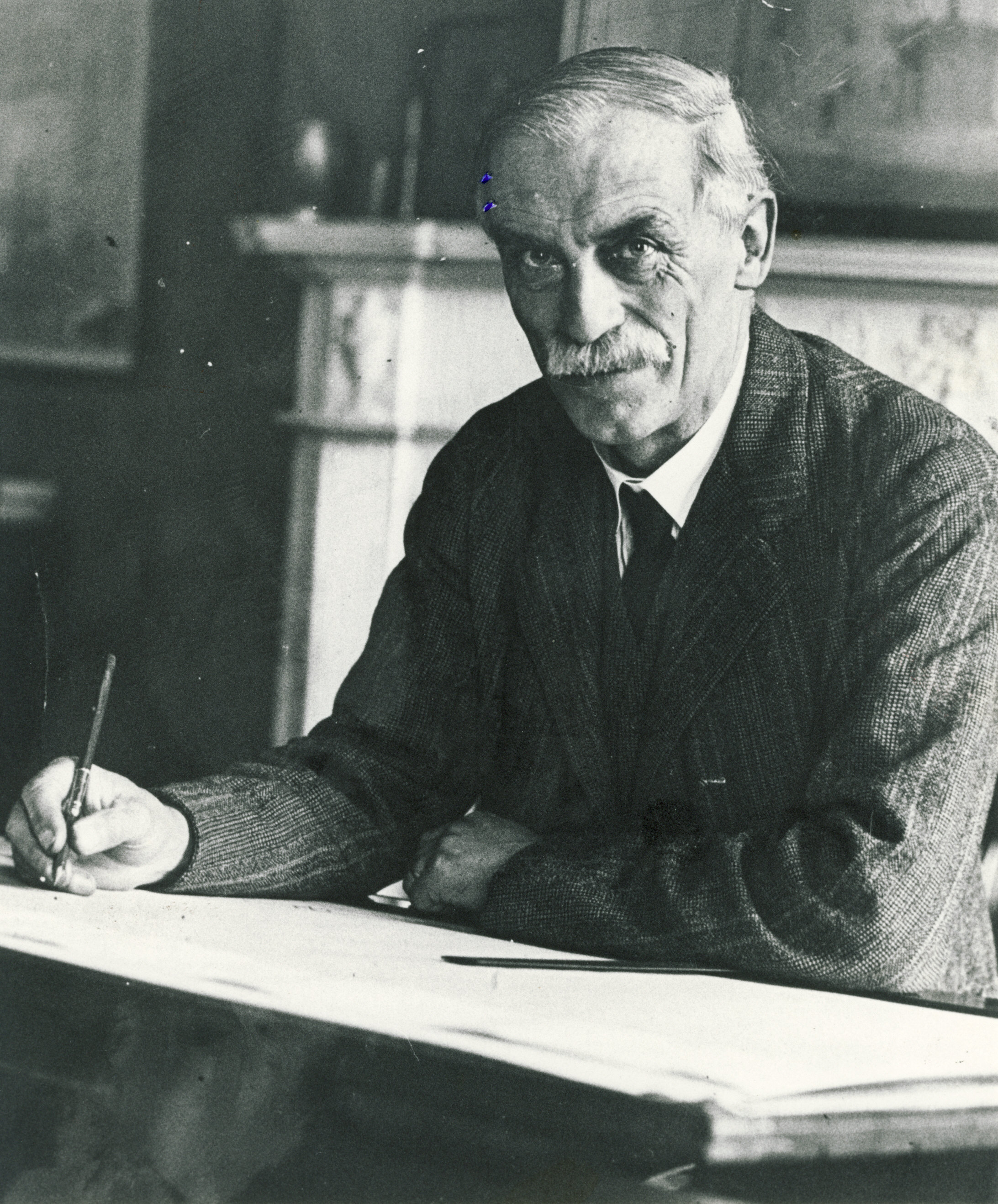
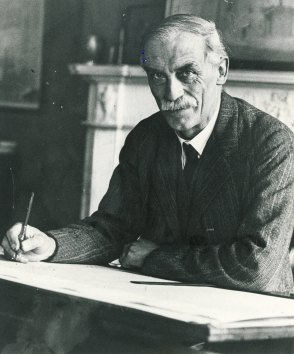
Sir Frank Mears

Sir Frank Mears

Frank Mears was Scotland’s leading planning practitioner during the 1930s and 40s.  In 1944 he was elected President of the Royal Scottish Academy, in 1945 he received an honorary doctorate from Edinburgh University and in 1946 he was knighted in the New Years Honours.  Yet in the period since his death in 1953, his distinctive contribution to the early development of planning in Scotland has been largely forgotten.

Mears was born in 1880.  His architectural training in Edinburgh at the turn of the Century had a strong Medieval emphasis and as an apprentice he worked on a number of important ecclesiastical projects, such as the Coates Memorial Church in Paisley.

It was as a result of his work with Patrick Geddes that Mears developed an interest in planning.  In around 1908, Mears became involved with the circle of artists, intellectuals and civic activists associated with Geddes’ Outlook Tower.  Geddes lamented the loss of the intellectual pre-eminence which Edinburgh had enjoyed during golden years of the Enlightenment, and the great variety of environmental and educational projects which he promoted in the city were designed to stimulate a cultural and intellectual renascence. Early in their relationship, he wrote to Mears of his hopes for Edinburgh in the following terms:

“The scheme is a great one – that of planning the cultural future of Edinburgh – a renascent capital – and of Scotland as again one of the great European powers of culture.”

An appreciation of Geddes’ close engagement with the fate of Edinburgh as a national culture-capital is crucial to an understanding of the particular perspective which he brought to planning.  His conception of the nature and purpose of planning was quite different from that of other planning propagandists.  For Geddes, the central concern was not with the technical problems of urban expansion or the creation of brave new utopian settlements but with the task of inspiring communities to an active participation in their own cultural and social renewal.

Mears soon became one of Geddes’ principal assistants and played a key role in a number of important projects, including the Survey of Edinburgh and the preparation of the award-winning Cities Exhibition. In his subsequent career, Mears was the planner who most faithfully sought to translate Geddes’ ideas on social and cultural renewal into practice.

In 1913, Geddes and Mears were engaged to lay out Edinburgh’s new Zoological Park at Corstorphine.  Much of the work was done by Mears and Geddes’ daughter, Norah, whom Mears later married.  He was keen to avoid the use of traditional cages as far as possible and his designs for rock dens and enclosures was influenced by the innovative approach to the display of animals pioneered at New York and Hamburg.
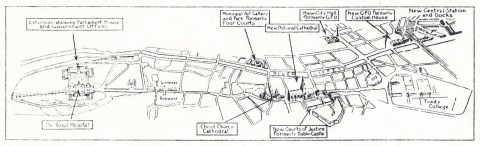
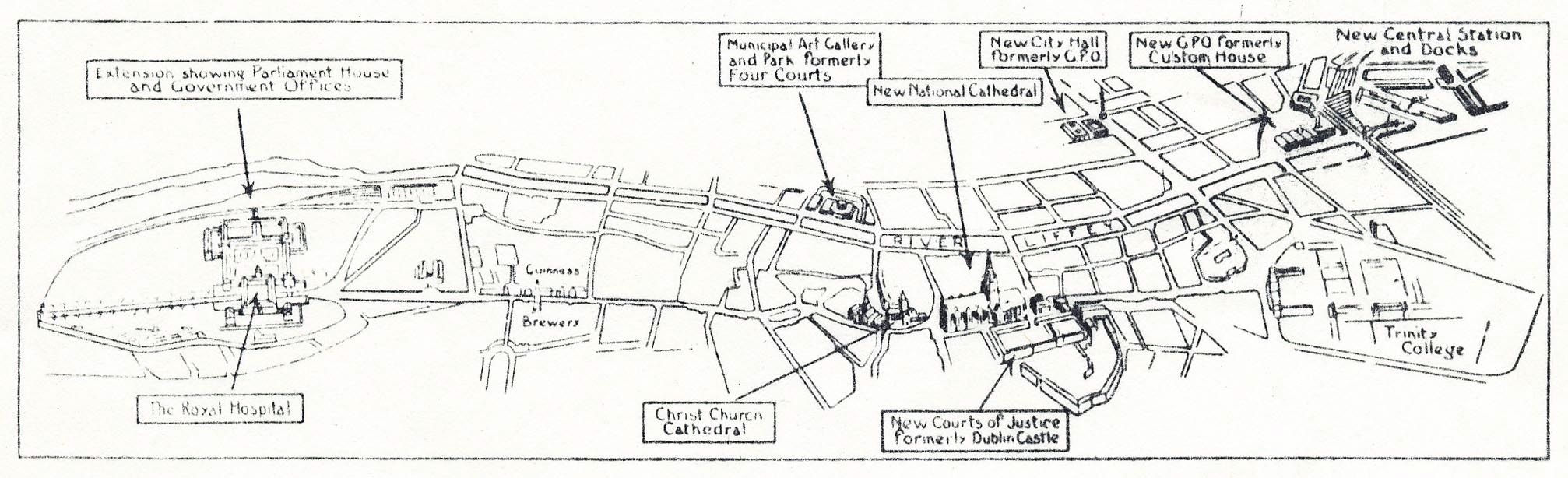
Dublin Reconstruction - 1922

Greater Dublin Reconstruction Movement proposals, 1922

After the Great War, Mears undertook important work in two other culture-capitals during crucial periods of transition.  In 1919, Geddes and Mears were commissioned by the Zionist Commission for Palestine to prepare plans and an architectural design for the Hebrew University of Jerusalem.  In 1922, Mears assisted the Greater Dublin Reconstruction Movement with the preparation of plans for civic renewal and the accommodation of new national institutions in the early days of Irish independence.

During the twenties and thirties, Mears maintained a close interest in planning and development issues in Edinburgh.  He had an close ally in Councillor Thomas Whitson and when Whitson became Provost in the late twenties, Mears was commissioned to prepare preliminary suggestions for the City Centre.  The vision which he offered was of the historic city renewed as a modern Scottish capital and the plan placed emphasis on meeting the needs of expanding national and civic institutions.
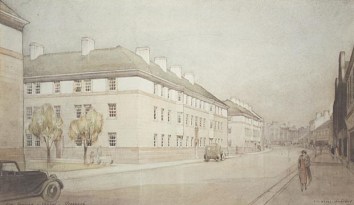
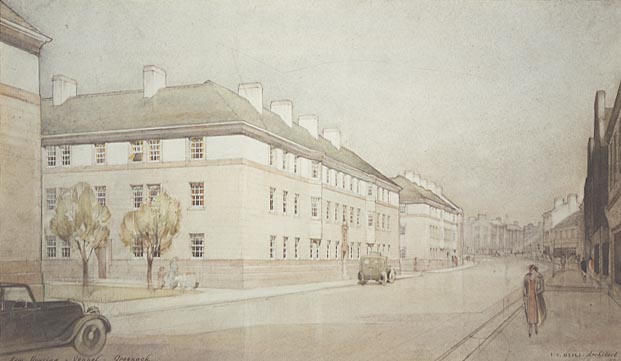
greenockflats

New tenement housing for Greenock

Mears was a pioneer of conservation in Scotland’s historic burghs.  In Edinburgh, he campaigned for the renewal of the Royal Mile and undertook the restoration of Huntly House and Gladstone’s Land.  In the period between 1936 and his death in 1953, he acted as planning consultant to the burghs of Dumfries, Elgin, Girvan, Greenock, Perth, Stirling and Thurso.  Perhaps the best example of his reconstruction work in historic burghs is his scheme for the renewal of Stirling’s Old Town.

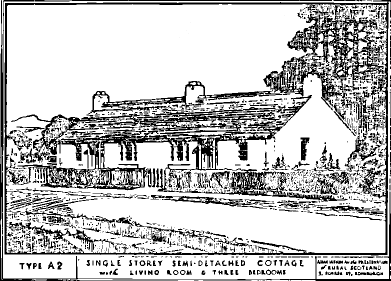
Mears was keenly interested in rural issues and played a key role in the establishment of the Association for the Protection of Rural Scotland.  He stressed the importance of providing modern services and infrastructure in rural areas and in East Lothian and the Borders he applied community planning principles to the development of strategies for rural resettlement.  He was also concerned about the quality of new development in the countryside and, on behalf of the APRS, he prepared standard designs for low-cost rural houses.
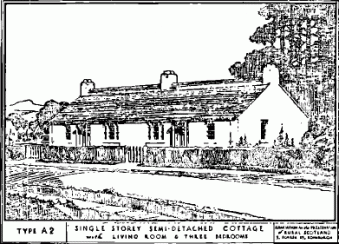
cottage

One of Mears’ designs for low-cost rural housing

Mears was a strong advocate of regional planning.  In 1943, under the autonomous administration established by wartime Secretary of State, Tom Johnston, he was asked to prepare a regional plan for Central and South East Scotland, an area encompassing the entire Forth and Tweed catchments.  The Plan reflected Mears’ strong concerns about the impact of rural depopulation and advocated the return of approximately 10% of the urban population to the rural areas.  It included a strategy for the resettlement of depopulated Border valleys and its proposals for the reafforestation and recolonisation of the Slamannan Plateau laid the foundation for what was to become the Central Scotland Forest.

Towards the end of his career, Mears addressed the issue of rural depopulation in its most acute form in a strategy for the revitalisation of Sutherland.  Against the prevailing wisdom of the time, he rejected the notion that the problem could be solved “by a simple process of decanting a given proportion of large-scale industries into partially depopulated areas.”  Instead, in a plan strongly influenced by Frank Fraser Darling’s Preliminary Report on the West Highland Survey, he advocated a strategy based on the regeneration of the crofting economy through measures such as land rehabilitation, tenure reform, investment in agriculture, forestry and fishing, and the encouragement of small rural industries based on indigenous resources.

Following the 1945 General Election, the initiative in matters of planning and reconstruction passed from the Scottish Office to Whitehall and in the post-war period a technocratic planning profession was to become increasingly preoccupied with systems, procedures and regulation.  In this climate, those aspects of Mears’ planning philosophy which did not conform to British planning orthodoxy were largely disregarded.  Today, his commitment to social, cultural and environmental renewal, and the emphasis he placed on urban conservation and rural regeneration can be seen to have abiding relevance.  


This article was first published in the Autumn 1999 issue of the Saltire Society Newsletter. In 1981 the Society awarded me a Robert Hurd scholarship to enable me to undertake research on Frank Mears.
← Older posts
Newer posts →

Subscribe

  • Entries (RSS)
  • Comments (RSS)

Archives

  • March 2025
  • March 2022
  • December 2021
  • March 2021
  • November 2020
  • August 2020
  • May 2020
  • February 2020
  • February 2019
  • October 2018
  • August 2018
  • May 2018
  • April 2018
  • July 2017
  • April 2017
  • February 2017
  • January 2017
  • September 2016
  • July 2016
  • May 2016
  • March 2016
  • December 2015
  • November 2015
  • August 2015
  • June 2015
  • May 2015
  • November 2014
  • October 2014
  • August 2014
  • July 2014
  • June 2014
  • May 2014
  • April 2014
  • March 2014
  • June 2013

Categories

  • Frank Mears
  • Reviews
  • Spatial Planning
  • The Land o Cakes
  • Travellers' Tales

Meta

  • Create account
  • Log in

Blog at WordPress.com.

  • Subscribe Subscribed
    • By Erceldoune
    • Join 29 other subscribers
    • Already have a WordPress.com account? Log in now.
    • By Erceldoune
    • Subscribe Subscribed
    • Sign up
    • Log in
    • Report this content
    • View site in Reader
    • Manage subscriptions
    • Collapse this bar
 

Loading Comments...