• Thomas Learmonth o Erceldoune

By Erceldoune

~ Graeme Purves

By Erceldoune

Category Archives: Spatial Planning

Spatial Planning for Recovery in Wales and Scotland

07 Sunday Mar 2021

Posted by Graeme Purves in Spatial Planning, The Land o Cakes

≈ Leave a comment

Tags

COVID-19, housing delivery, Place-Making, Post-Pandemic Recovery, Rural Repopulation, Scotland, Spatial Planning, Wales
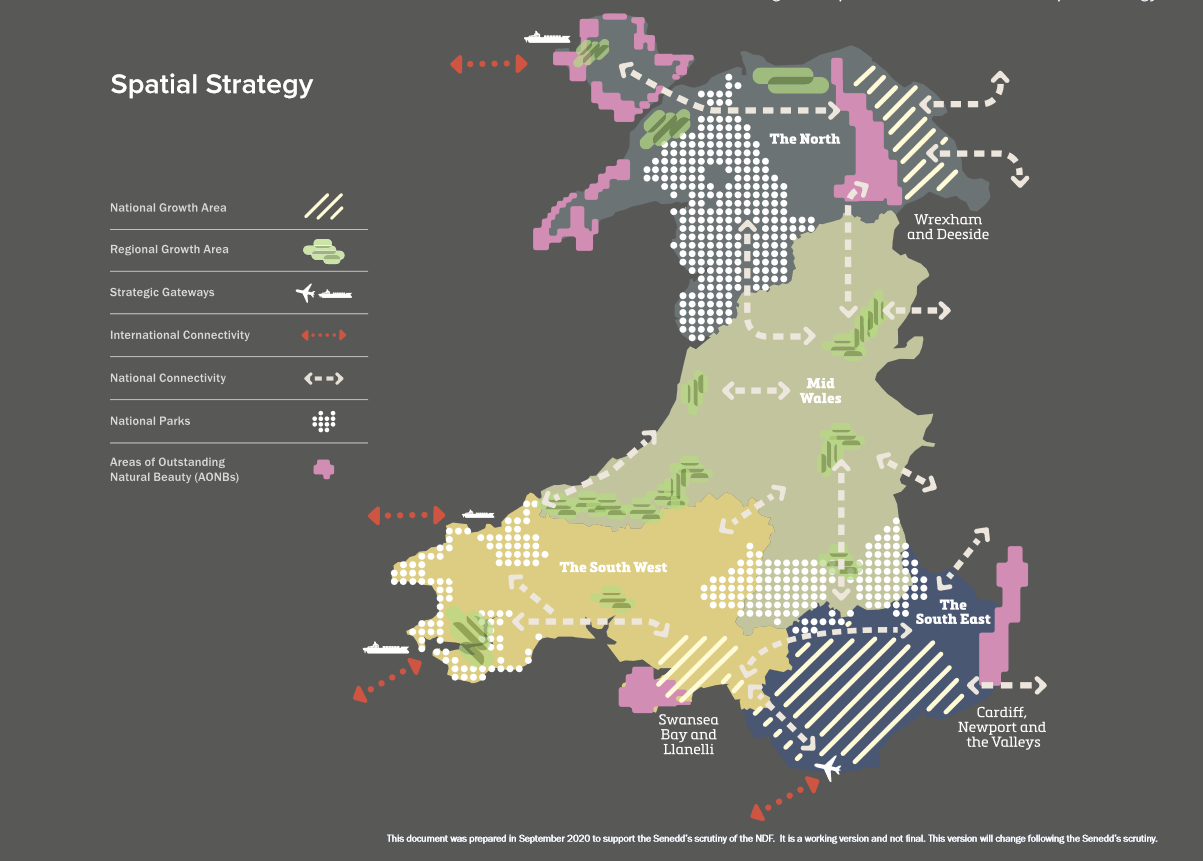
As the initial consultation on Scotland’s fourth National Planning Framework (NPF4) draws to a close, the Welsh Government is preparing to publish the final version of the National Development Framework for Wales, Future Wales: the National Plan 2040.  Some of the issues raised during the Senedd’s final scrutiny of Future Wales are also of relevance for NPF4.  This blog compares approaches being taken by the two devolved administrations to highlight some strategic planning challenges.

Post-Pandemic Recovery

Along with taking forward the pressing Climate Change agenda, one of the major challenges in both countries will be economic and social recovery from the effects of the COVID-19 pandemic. While the Scottish Government’s post-COVID Economic Recovery Implementation Plan reflects the neoliberal narrative set out in the Higgins Report, Towards a Robust, Resilient Wellbeing Economy for Scotland, Scottish Ministers do appear to recognise some role for strategic planning in recovery.  The Implementation Plan indicates that NPF4 will be brought to Parliament in September.  It also states that the Regional Land Use Partnerships should have a role in regional economic development as well as meeting climate change goals.  In his foreword to the Position Statement on NPF4 published in November, Planning Minister Kevin Stewart states that the experience of the pandemic has highlighted the importance of a good local environment, with good access to open space and amenities, but post-pandemic recovery is not developed as a theme in that document.

In a report Go Big – Go Local published in October, the UK2070 Commission warned that the pandemic may exacerbate regional inequalities and have disproportionate impacts on the elderly and opportunities for young people. It recommended that strategies for recovery should place emphasis on investment in infrastructure with a view to building resilience and strengthening connectivity.

During committee scrutiny of the draft Future Wales in the Autumn of last year, the Welsh Minister for Housing and Local Government, Julie James, argued that the strategy it set out is sufficiently robust and flexible to respond to the societal changes arising from the pandemic and that experience over the past year had validated its focus on climate change, place-making and resilience.  However, the Senedd’s Climate Change, Environment and Rural Affairs Committee has pressed for more.  Drawing on the work of the UK2070 Commission, it has called for Future Wales to include a clear statement reflecting the lessons learned from COVID-19 and explaining how the framework will help to further post-COVID recovery.  It has pressed for explicit recognition of the potential contributions of investment in infrastructure, housing, connectivity, heat networks and natural capital, and increasing capacity in the foundation economy.  There may well be similar calls in Scotland.

The Regional Dimension of Recovery

While the Higgins report played down the role of the public sector, particularly local authorities, in recovery, some of its recommendations were very much in tune with the thinking of the UK2070 Commission.  It called for an investment-led recovery.  It recognised the need to address regional disparities in Scotland and advocated a regionally focused model of economic development.

Future Wales has a strong regional dimension.  The Welsh Government will rely on strategic development plans for North, Mid, South-East and South-West Wales to take forward key aspects of policy development and implementation.  How enthusiastic the Scottish Government will be about a strong regional dimension to recovery strategy remains to be seen.  It has blown hot and cold over regions over the past decade.  In 2014 it reaffirmed its commitment to strategic development plans at the regional level, yet the planning review initiated by Alex Neil in 2015 led to a proposal to end regional agency and centralise strategic planning in the National Planning Framework.  As a result of opposition in the Scottish Parliament, the Scottish Government was obliged to accord a role to Regional Land Use Partnerships.  The Position Statement for NPF4 states that “Our strategy will be informed by emerging regional scale spatial and economic strategies.”

The Chief Secretary to the Treasury, Stephen Barclay, announced in January that the UK Shared Prosperity Fund is to be disbursed from London.  This creates a real danger that Scottish discretion on spatial priorities will be significantly curtailed. The Scottish Government may count itself fortunate that its attempt to abolish regional strategic planning failed.  Without it, its flank might have been even more exposed to UK Government interventions than it is.  It will be important for the Scottish Government to build strong relationships with local authorities and work closely with regional partnerships on spatial strategies.

Barclay’s announcement makes it even more important to be clear about the relationship between strategic spatial planning and growth deals.  They reflect different ideological perspectives, and there is potential for them to pull in different directions.  The Position Statement on NPF4 states only that regional spatial and economic strategies “will align with city and regional growth deals.”  There is no indication that growth deals should reflect spatial strategies.  In Wales, the Senedd’s Climate Change, Environment and Rural Affairs Committee has recommended to the Welsh Government that “Future Wales should explicitly state the need for a reciprocal and iterative relationship between strategic development plans and growth deals over time.”  Stakeholders should insist on the same relationship between spatial strategies and growth deals in Scotland.

Place-Making and Housing Delivery

There is contrast between the Welsh and Scottish Governments in their approach to place-making and housing delivery.  Future Wales accords the public sector the lead role in urban development, regeneration and the delivery of affordable housing, though the Welsh Government remains coy about specific delivery mechanisms.  In the NPF4 Position Statement, the public sector and local authorities barely get a mention.  The Scottish Government appears to prefer a developer-led model, with the role of planning authorities being merely to provide developers with “a steady pipeline of land.” While there is a lot of aspirational rhetoric about place-making in the Position Statement, the Scottish Government shows little inclination to empower the public sector to take the necessary lead.  Better places and 20-minute neighbourhoods are public policy objectives, but we are given no hint as to the mechanisms which will be used to deliver them.  There is no reference, for example, to the work the Scottish Land Commission has been doing on land value capture and sharing for several years now.

Rural Repopulation

Finally, it is interesting that the repopulation of rural areas has re-emerged as an objective of spatial planning in Scotland and Wales, something we have not really seen since the strategic plans for post-Depression and post-War recovery in the middle of the last century.  In autumn 2018, Community Land Scotland successfully promoted an amendment to the Planning (Scotland) Bill which requires the NPF to consider the potential for rural resettlement.  The NPF Position Statement says that rural repopulation will be a key theme for emerging regional spatial strategies for the South of Scotland, Argyll and Bute, Western Isles, Orkney and the Highlands.  The Welsh Senedd’s Climate Change, Environment and Rural Affairs Committee has called for Future Wales to include further locational guidance on addressing rural depopulation.  It has also pressed for the Welsh framework to recognise opportunities for people to live and work sustainably outside towns and cities.


This article was originally published as a blog for Built Environment Forum Scotland (BEFS) in February 2021.


Planning and Post-COVID Recovery

11 Tuesday Aug 2020

Posted by Graeme Purves in Spatial Planning, The Land o Cakes

≈ Leave a comment

Tags

COVID-19, Economic Recovery, Scotland, Scottish Government, strategic planning, Wellbeing Economy

Entrepreneurial StateReflecting on the emergency measures introduced in March to cope with the COVID-19 pandemic, the columnist Neal Ascherson observed, “The state is back.”  And “the longer the virus emergency lasts,” he pointed out, “the more the memory of the pre-virus world begins to grow unreal, unconvincing.  Now, unmistakably, there’s a feeling that ‘things will never be the same after it’s over’ and ‘we can’t go back to all that’.”

That feeling has arisen before.  The trauma of the Great War led to the demand for ‘homes fit for heroes’ and the construction of good quality working class housing by local authorities right across Scotland, under the Housing and Town Planning (Scotland) Act of 1919.  It arose again after the Great Depression.  The ‘reconstruction planning’ which came to the fore after the Second World War was originally a response to Scotland’s experience of industrial depression and mass unemployment.  Professor Douglas Robertson has drawn my attention to a film which captures the aspirations and vision of the time.  Wealth of a Nation was one of seven documentaries made by Films of Scotland for the 1938 Empire Exhibition in Glasgow, under the supervision of John Grierson.  It looks forward to better housing and social facilities, modern industrial estates, improved transport infrastructure, electrical power from the glens, and a National Park readily accessible to the population of West Central Scotland.

In April, the Scottish Government charged an independent advisory group chaired by Benny Higgins with providing expert advice on economic recovery from the COVID-19 crisis.  Their report, entitled Towards a Robust, Resilient Wellbeing Economy for Scotland, was submitted to the Scottish Government in June.  On 5 August, the Scottish Government responded to the Advisory Group’s recommendations in a document entitled the Economic Recovery Implementation Plan.

Some of the recommendations in the Higgins Report are very much in tune with the thinking of the UK2070 Commission established under the chairmanship of Lord Kerslake to address regional inequalities across the United Kingdom.  The Advisory Group calls for an investment-led recovery.  It recognises the need to address regional disparities in Scotland and advocates a regionally focused model of economic development.  However, unlike the Commission, it fails to make the necessary connections between economic development, strategic spatial planning and the strengthening of local government.  Planning is portrayed as a regulatory impediment to recovery, part of the problem rather than an important part of the solution.

The Scottish Government’s Implementation Plan places emphasis on housing and infrastructure; decarbonising and greening the economy; economic and social renewal; and changing the way we work and travel.  These are all areas where planners at national and local levels can contribute valuable skills and expertise.  Regrettably, the Scottish Government neglects to recognise that fact.

Instead, the Implementation Plan follows the lead of the Advisory Group in seeing planning as a barrier to recovery.  The Scottish Government’s commitments on Planning are ‘to carry out a comprehensive review of national planning policies and an extension of permitted development rights’; and an exploration of ‘the options to alleviate planning restraints.’  We are not told what these ‘restraints’ might be, but we can be fairly certain that bad developments in the wrong places will neither assist recovery nor contribute to wellbeing.

Neither reviewing national planning policy nor tinkering with permitted development rights will make any significant contribution to economic recovery.  They will simply be a counter-productive distraction when the skills and energies of planners should be fully focused on measures to promote economic and social recovery.

Businesses large and small face huge challenges as a result of the COVID-19 pandemic.  Brexit will shortly deliver a further blow. It is entirely appropriate that measures to sustain and support them through and beyond the current crisis should be at the heart of the Scottish Government’s economic recovery plan.  But the Higgins Report adheres to a discredited neoliberal narrative which seeks to portray the public sector as a barrier to rather than an essential partner in recovery.  It seeks to set the public and private sectors in opposition to each other, when their roles are complementary.  A successful recovery plan requires the building of a broad consensus on the way forward, not divisive rhetoric.  The Scottish Government’s Council of Economic Advisers includes the former Chief Medical officer, Sir Harry Burns, who has long promoted the Wellbeing agenda, and Marianna Mazzucato, the champion of the entrepreneurial state. Katherine Trebeck is a leading advocate of the Wellbeing Economy based in Scotland.  The Advisory Group on Economic Recovery would benefit from their wise counsel.

The Scottish Government’s Economic Recovery Implementation Plan indicates that the fourth National Planning Framework (NPF4) will be brought to Parliament in September 2021.  It also intends that the Regional Land Use Partnerships which will be introduced from 2021 should have a role in regional economic development and meeting climate change goals.  The Scottish Government needs to develop a positive narrative which explicitly identifies Planning as an important agent of recovery, setting out the important contribution planners can make to delivering housing, creating better places, developing district and communal heating systems, economic and social renewal, improving infrastructure, and changing the way we work and travel; and explaining the roles the National Planning Framework and Regional Land Use Partnerships will play in providing a strategic spatial policy context for that work.


This article first appeared as a Built Environment Forum (BEFS) blog on 10 August 2020.


What will happen to the England-Scotland border following Brexit?

28 Thursday Jul 2016

Posted by Graeme Purves in Spatial Planning, The Land o Cakes

≈ Leave a comment

Tags

Brexit, cross-border collaboration, open borders, Scotland-England border

This piece by Professor Keith Shaw of Northumbria University provides a valuable perspective on the prospects for collaboration across the Scotland – England border following the EU referendum result. The point he makes about collaborative opportunities in areas such as rural development, farming, tourism and renewable energies being dependent on EU investment and support is very important. But overall, I think his conclusions are too gloomy. Scotland, the Republic of Ireland, Northern Ireland and progressive forces in England share a common interest in maintaining open borders and building effective mechanisms for cross-border collaboration within these islands. These are the objectives on which we must make common cause in shaping the ultimate outcome of the Brexit vote.

ESRC's avatarESRC blog

Between 2013 and 2015, the ESRC funded a seminar series examining the changing relationship between Scotland and the North East of England. While the series highlighted the many challenges facing the North East’s economic fortunes in the context of an even more powerful neighbour north of the border, it also explored the opportunities provided by the Scottish independence campaign – and the aftermath of the 2014 referendum – to forge new, creative, cross-border collaborations between two ‘close friends’ united by common bonds and shared traditions.

Keith ShawHere Professor Keith Shaw, of Northumbria University, who led the seminar series, speaks about the effect on the relationship between Scotland and the North East of England and forthcoming potential outcomes following Brexit.

One of the collaborative opportunities identified – and subsequently taken up – in the ESRC seminar series ‘Close Friends’? Assessing the impact of greater Scottish autonomy on the North…

View original post 794 more words

Mapping Europe’s Future

16 Friday May 2014

Posted by Graeme Purves in Spatial Planning

≈ 1 Comment

Tags

Cities, ESPON, Europe, inclusion, migration, Patrick Geddes, Scotland, sustainable development, territorial development, unemployment, wave power

One of the lesser known agencies of the European Union is the European Observation Network on Territorial Development and Cohesion (ESPON), which analyses and reports on trends in territorial development across the continent. As a geographical observatory, it does the job pioneered by Patrick Geddes at his Outlook Tower in Edinburgh across a European canvas.

The data which ESPON collects and maps help us to understand the geographical dimension of the forces driving change in Europe and where Scotland sits within the wider picture.

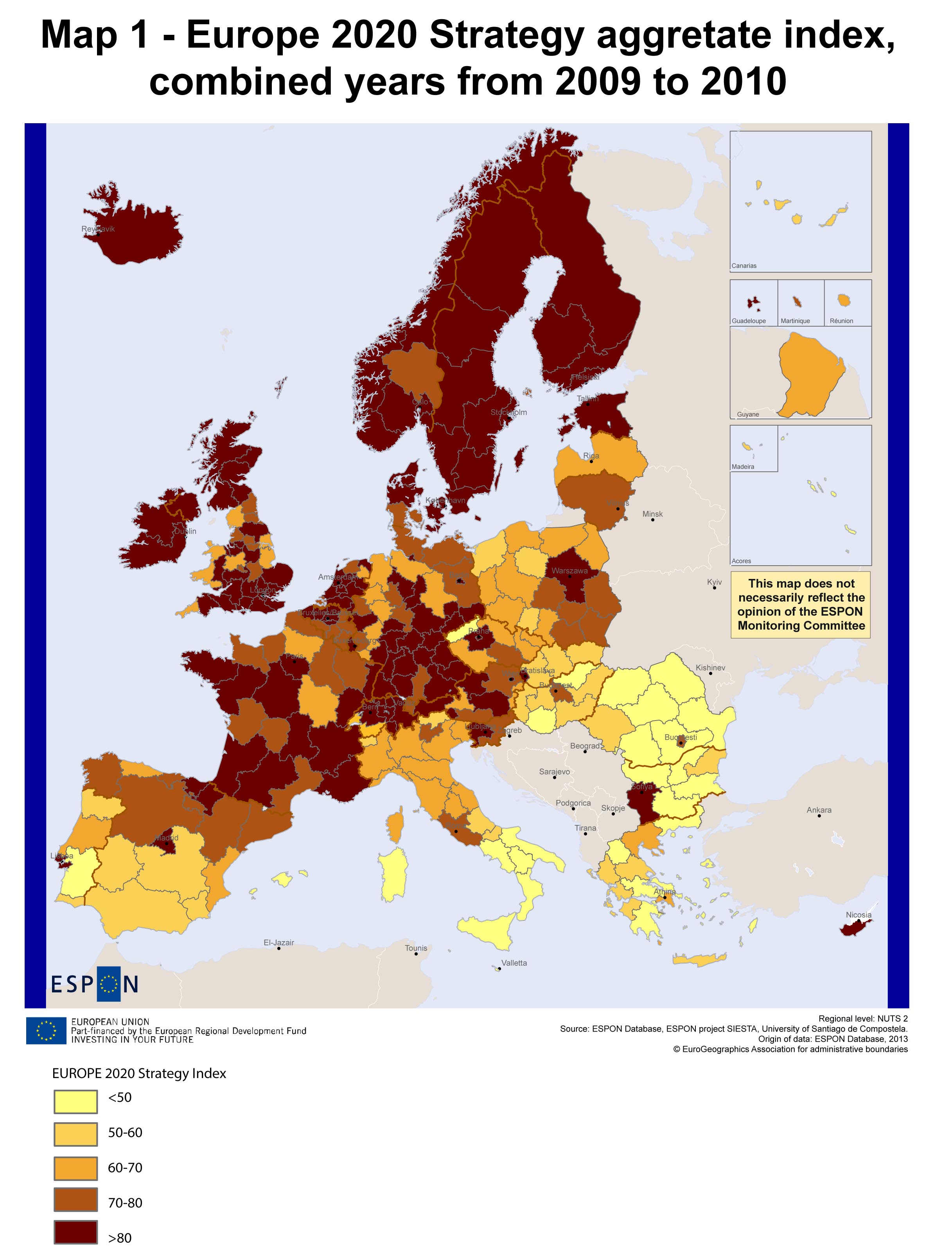
Map 1

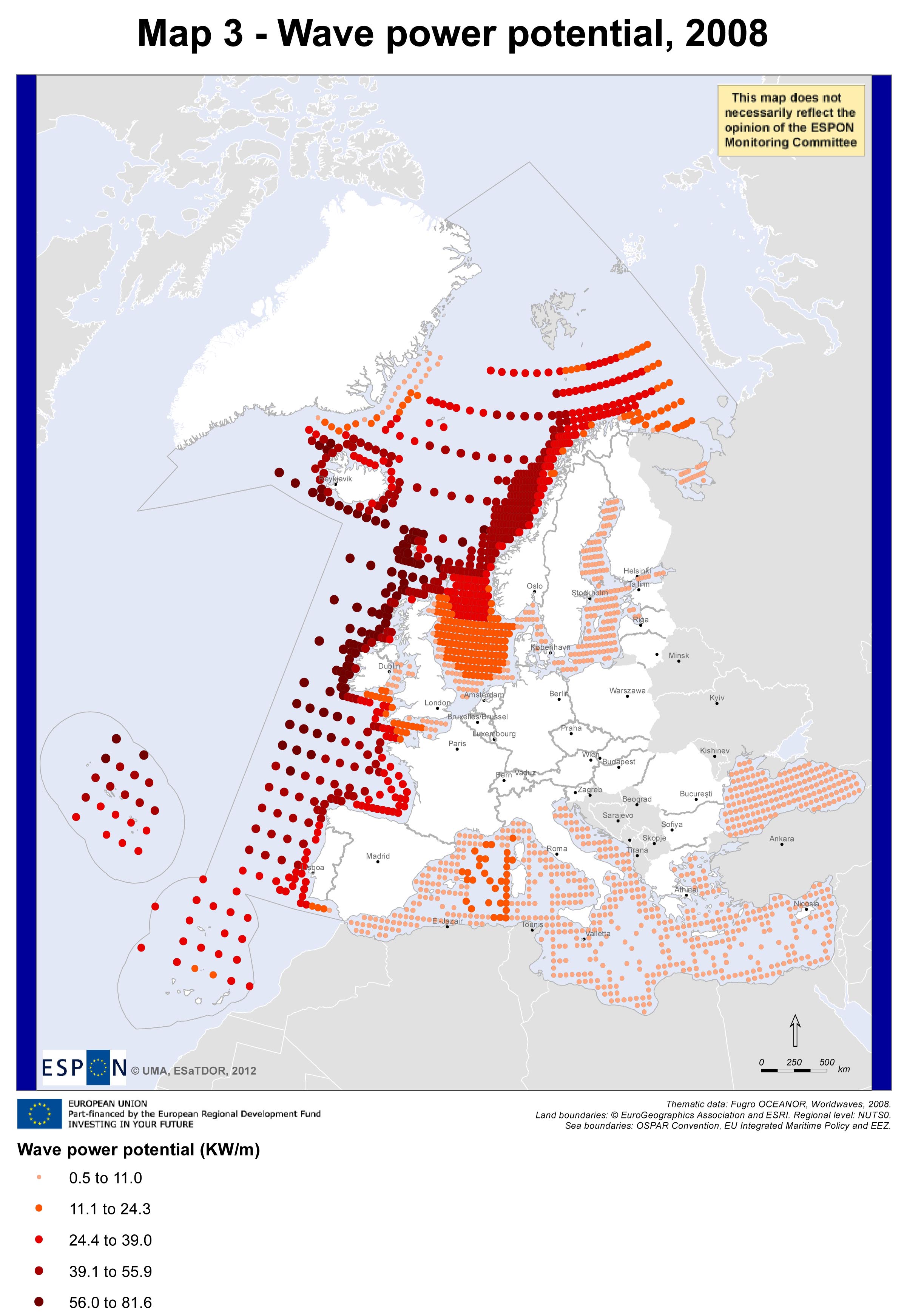
A recent ESPON briefing paper looks at the progress European territories are making towards the achievement of the targets for smart, sustainable and inclusive growth set out in the Europe 2020 Strategy. The analysis shows that performance in relation to the targets is strongest in Central and Northern Europe, with Scotland sitting alongside top-performing countries such as Finland, Sweden, Ireland and Estonia. The paper also highlights the fact that countries exposed to the Atlantic Ocean have strong unrealised potential for harnessing wave power.

Map 3

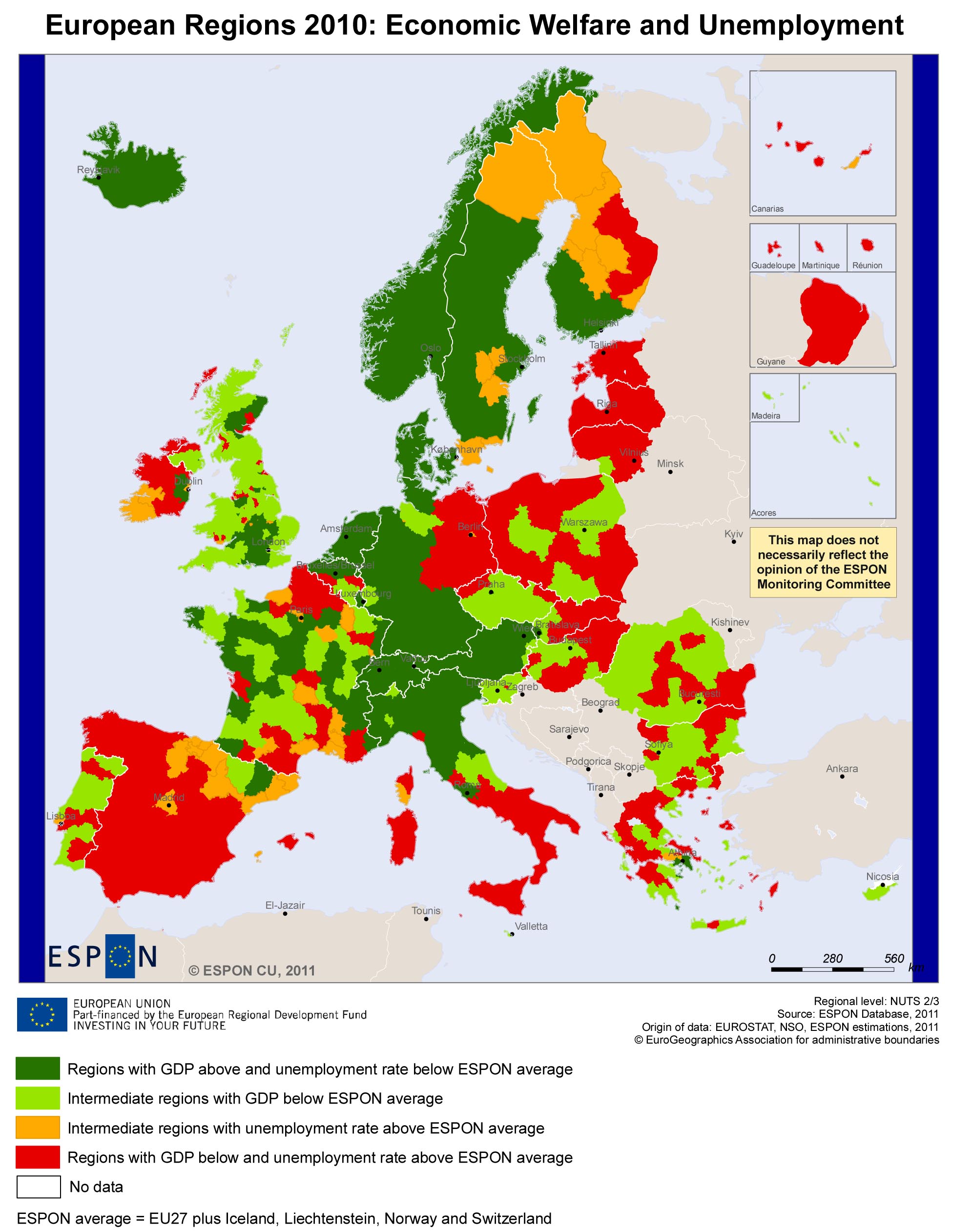
ESPON analysis of economic welfare and unemployment shows that GDP is above the European average and unemployment below the European average in much of Eastern Scotland, but that there are black-spots of poorer economic performance and higher unemployment in Glasgow and the Clyde Valley, the Western Isles, Angus and Fife.

Economic Welfare & Unemployment

Another briefing paper identifies quality of place and the capacity for strategic governance as key factors in the success of Europe’s “second tier cities”. It identifies Glasgow and Edinburgh as two of the UK cities which have been most successful in creating new jobs and notes that Edinburgh outperforms London in terms of the proportion of the population with higher education degrees.  It argues that increasing the strategic capacity to deliver place-based policies at city and regional level is the way forward.

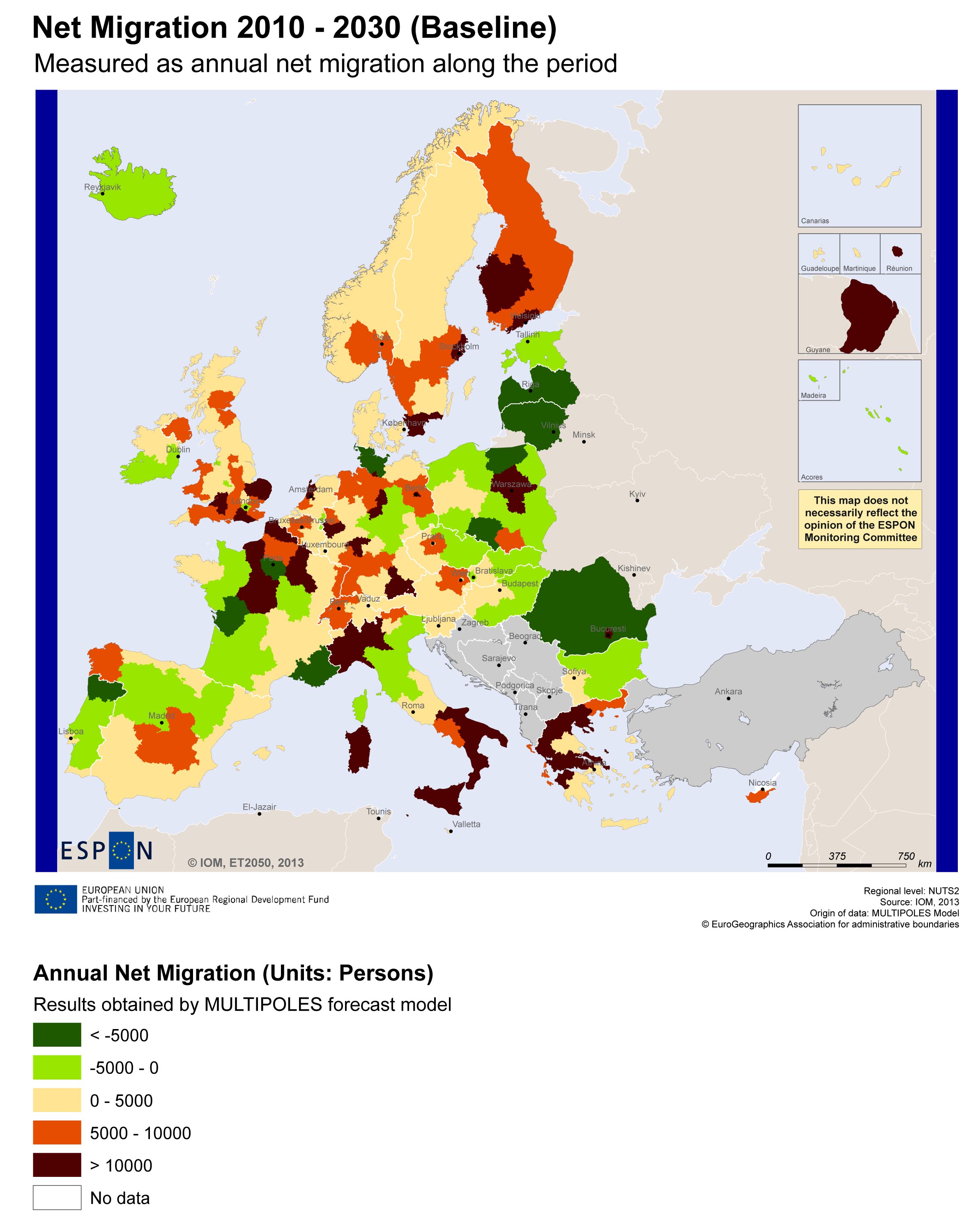
A third briefing paper examines migration trends in Europe in the aftermath of the economic crisis and this was an important focus of an ESPON seminar in Vilnius in December 2013. The analysis showed that the recession has had a major impact on migration flows in Europe, exacerbating the loss of population from countries in Eastern Europe, and reversing recent migration trends in Spain, Portugal, the Czech Republic, Ireland and Iceland.  The economic and social consequences of the loss of skilled workers is a major concern for politicians and policy-makers in countries such as Lithuania, Latvia and Romania.

Map_5_final

ESPON’s quiet mapping of the socio-economic and environmental challenges we face as Europeans may have less lounge bar appeal than the dog-whistle slogans of Nigel Farage, but in pointing to an agenda for collaboration towards a better future it offers something much more positive, purposeful and exciting than UKIP’s remedy of neoliberal economics and political isolation.

Subscribe

  • Entries (RSS)
  • Comments (RSS)

Archives

  • March 2025
  • March 2022
  • December 2021
  • March 2021
  • November 2020
  • August 2020
  • May 2020
  • February 2020
  • February 2019
  • October 2018
  • August 2018
  • May 2018
  • April 2018
  • July 2017
  • April 2017
  • February 2017
  • January 2017
  • September 2016
  • July 2016
  • May 2016
  • March 2016
  • December 2015
  • November 2015
  • August 2015
  • June 2015
  • May 2015
  • November 2014
  • October 2014
  • August 2014
  • July 2014
  • June 2014
  • May 2014
  • April 2014
  • March 2014
  • June 2013

Categories

  • Frank Mears
  • Reviews
  • Spatial Planning
  • The Land o Cakes
  • Travellers' Tales

Meta

  • Create account
  • Log in

Blog at WordPress.com.

  • Subscribe Subscribed
    • By Erceldoune
    • Join 29 other subscribers
    • Already have a WordPress.com account? Log in now.
    • By Erceldoune
    • Subscribe Subscribed
    • Sign up
    • Log in
    • Report this content
    • View site in Reader
    • Manage subscriptions
    • Collapse this bar
 

Loading Comments...