THE BONE CAVE: A JOURNEY THROUGH MYTH AND MEMORY, by Dougie Strang, Birlinn Limited, Edinburgh, 2023
THE GHOSTS OF THE FOREST: THE LOST MYTHOLOGY OF THE NORTH, by William A. Young, Inter-Celtic, Edinburgh, 2022
In Scottish, Irish and Manx Gaelic myth, the Cailleach is a divine hag and ancestor associated with the creation of the landscape and with the weather, especially storms and winter. In Scotland she is known as Cailleach Bheurra, or Beira, Queen of Winter. In her dramatization of Hans Christian Andersen’s The Snow Queen, staged as the Christmas play at the Lyceum Theatre in Edinburgh in December, Morna Young conflates the characters of Beira and the Snow Queen. For Dougie Strang, the Cailleach is also a goddess associated with deer and the hunt, and it is tales of this aspect of her persona that he pursues on a long-distance walk through the mountains of the West Highlands. She is a goddess of a heroic, hunter-gatherer society living in a landscape much more heavily forested than ours today, and in the stories her demise is often associated with the change to a pastoral economy.
In the Highlands, the arrival of large-scale sheep farming is strongly associated with the Clearances of the 18th and 19th centuries. In the Southern Uplands there was an earlier ‘coming of the sheep.’ In the high medieval period, while monks and clerics in Britain and Britanny were busy weaving Arthurian romances from earlier Celtic tales, the great Border monasteries were grazing huge flocks on the surrounding hills. The Borders of the 12th and 13th centuries were booming, economically and culturally. Berwick was Scotland’s largest port. My own Purves ancestors were part of the influx of Flemings drawn to the Borders by the thriving wool trade with the Low Countries.
The origins of Scottish literature are often traced to Thomas Learmonth of Ercildoune who lived in Earlston in Berwickshire in the 13th Century. In the ballad of Thomas the Rhymer he encounters the Queen of Elfland while resting under the Eildon Tree.
‘She led three greyhounds on a leash,
Seven hunting dogs ran by her side,
She bore a horn about her neck,
And under her belt full many an arrow.’
The Queen is in search of quarry. In The Ghosts of the Forest, his exploration of the mythology of the post-Roman Brythonic kingdoms to the North of Hadrian’s Wall, William A. Young suggests that she may have her origin in the Hellenistic goddess Diana the Huntress, or a Celtic equivalent. A shrine to Diana has been discovered at the Roman camp of Trimontium, just below the Eildon Hills.
The ballad of Thomas the Rhymer clearly draws on earlier Brythonic myths and legends. Young argues that among them are the tales relating to the sixth century character Lailoken, who, like Thomas, acquires the gift of prophecy. In his book Scotland’s Merlin: A Medieval Legend and its Dark Age Origins Tim Clarkson explores the role of Lailoken as a prototype for the composite figure of Merlin in Arthurian romance. The Lailoken of Vita Merlini Silvestris is a man so traumatised by guilt and horror at the scale of the slaughter he witnesses at the Battle of Arthuret in 573 that he retreats to the Great Wood of Caledon, where he lives as a wild man. He is a pagan, adhering to the old religion and a traditional relationship with the land. But the world he inhabits is changing. Towards the end of his life he seeks the sacrament from Bishop Kentigern of Glasgow, the leading cleric of the Kingdom of Strathclyde, and meets his threefold death near Drumelzier, at the hands of a gang of shepherds.
These two books provide us with valuable insights into the cultures that created Scotland’s Celtic mythologies, and the ways in which our relationship with the land of Scotland have changed over the centuries. In the Highlands and Southern Uplands, the coming of the sheep brought profound ecological changes, symbolised by the loss of the Great Wood of Caledon. The production of woollen cloth at scale in the Low Countries, and later in Yorkshire, Lancashire and on the Tweed, set us on the path to industrialisation and all its consequences. The sheep economy has contributed to patterns of ownership and management which impoverish the land and estrange us from it to this day. In our time, the hunt is not undertaken by Celtic heroes under the supervision of powerful goddesses. It has become an exclusive pastime of the super-rich.
REFLECTIONS: THE LIGHT AND LIFE OF JOHN HENRY LORIMER, edited by Elizabeth Cumming, Sansom & Company, Bristol, 2021
SLAVES AND HIGHLANDERS: SILENCED HISTORIES OF SCOTLAND AND THE CARIBBEAN, by David Alston, Edinburgh University Press, 2021
The exhibition Reflections: The Light and Life of John Henry Lorimerat Edinburgh’s City Art Centre includes a reproduction of his painting Lullabye (1889) which features a Guyanese woman, Joanna Herbert, who was employed as nanny to the children of John Henry’s sister Alice for more than twenty years.
Two of John Henry Lorimer’s sisters entered marriages which took them to the South American colony of British Guiana: Alice married Sir David Chalmers, Chief Justice for the colony, in 1878; Hannah married the botanist, anthropologist and explorer Sir Everard Thurn in 1895.
Joanna Herbert’s mother had been born into slavery. The identity of her white father is unknown. She became a valued member of the Chalmers household, accompanying the family on visits to Scotland and moving with them when they returned to live in Edinburgh in 1894. She featured in several of John Henry Lorimer’s paintings. He insisted that she wore a head tie for the sittings, which Joanna did under protest, seeing it as a symbol of slavery and oppression.
Scotland’s close connections with British Guiana and other Caribbean colonies does not feature prominently in her national story. However, as David Alston points out in his book Slaves and Highlanders: Silenced Histories of Scotland and the Caribbean, Scots were quick to take advantage of the opportunities opened in the English sugar islands by the Act of Union. They began to arrive in numbers in Jamaica in the early 1700s, helping to drive the transition from small-scale slave holdings to large integrated plantations and the consequent increase in demand for enslaved Africans. After the Treaty of Paris of 1763 ceded French colonies in the Lesser Antilles to Britain, Scots were prominent in establishing new plantations on the islands of Grenada and St. Vincent.
British Guiana was the last frontier of Caribbean colonisation. Scots had established themselves as plantation owners in Essequibo, Demerara and Berbice when they were still Dutch colonies. The three colonies were surrendered to British forces in 1796 and formally ceded to Britain in 1814. They united to become British Guiana in 1831. Under British control, the Guianas were to become the most Scottish of the Caribbean colonies. The Royal Scots garrisoned Demerara and Berbice during the first decade of the 1800s. By 1802, Scots, mainly with a Highland connection, were in possession of one-third of the new coastal cotton plantations in Berbice and directing vast engineering works to bring them into cultivation. Scots dominated the colony’s Court of Policy and Criminal Justice and the later Council of Government. Merchant houses with Scottish origins controlled the sugar trade. At emancipation, Glasgow merchants held more wealth in British Guiana than in any other Caribbean colony.
Scotland’s involvement in the slave economy of the Caribbean was to have profound impacts at home. The West Indies became an important market for Scottish exports, including the rough linen known as ‘slave cloth’ and salt herring, which was used as a cheap source of protein on the plantations. By 1813, 65% of Scottish exports were to the Caribbean colonies. After the American War of Independence, the West Indies became the principal source of cotton for the textile industry. The slave economy also drove the development of the financial sector, particularly insurance and banking. Wealth derived from the plantations, including substantial sums in compensation on the abolition of slavery, was invested in land and agricultural improvement in Scotland. In the mid-nineteenth century, men like John Gordon of Cluny and George Rainy applied a cold-eyed approach to land management honed on Caribbean plantations to the clearance of tenants from their estates in the Highlands and Islands. Long after the abolition of slavery, Guyana was providing distinguished colonial careers for men like Alice Lorimer’s husband, Chief Justice David Chalmers.
David Alston has carried out extensive research on Highland Scotland’s involvement in the slave economy of the Caribbean, detailed on his Slaves & Highlanders website. His valuable book highlights Scotland’s strong colonial relationship with Guyana. The images of Joanna Herbert in the John Henry Lorimer exhibition, which is accompanied by a beautifully illustrated book edited by Elizabeth Cumming, give us a discomfiting glimpse of the continuation of that relationship into the late 19th Century.
Forty years on, Douglas Robertson and Graeme Purves reflect on the political and cultural developments which wove the fabric of the campaign that delivered Scotland’s Parliament.
Scottish Parliament panel, Tapestry of Scotland, Galashiels
The forces that had come together to campaign for a Yes vote in the 1979 Scottish Assembly referendum had made heavy political and emotional investments in a successful outcome. Their failure to achieve an Assembly (despite the narrow victory in the referendum vote) and the subsequent election of a UK Conservative government strongly opposed to devolving any power from Westminster were substantial blows. It was to take time for the various strands of the self-government movement to come to terms with what had happened, and then start to re-group, re-engage and re-organise.
In 1981, there was still much uncertainty and little real leadership from senior figures in the political parties, but new ideas and debates about how best to move matters forward began percolating up from below. How these ideas and debates arose, how they were disseminated and then acted upon, differed across Scotland’s established political camps. By examining various events in 1981 we can start to see how the fabric of Scottish politics and culture was changing. A national consensus was being woven together from the political campaigning warp and a contemporary cultural weft. It proved to be a rough, coarse and in places a spikey cloth, with many unfinished ends, but it was able to comfort and sustain, and, in time, create a momentum sufficient to deliver a Parliament in just under 20 years.
The aftermath
While Labour had lost the 1979 UK general election, its share of the vote and number of MPs in Scotland had increased. It now held 44 of Scotland’s 71 parliamentary seats. Scottish voters continued to put their faith in Labour, but it quickly became apparent that the party was unable to protect them from the damaging impacts of Thatcher’s monetarist policies.
For the SNP, the 1979 election result was a disaster. The collapse in their vote all but extinguished that famous 1974 breakthrough. In the February election of that year, their 22% vote share secured seven seats, increasing to 11 on 30% of the vote at the October ballot. But in 1979 their vote share slumped to 17%, delivering only two seats, the Western Isles and Dundee East. Labour Prime Minister Jim Callaghan’s, famous jibe about the SNP being like “turkeys voting for an early Christmas” proved painfully prophetic.
The Scottish Liberal Party, long stalwarts of Home Rule, retained the three seats they had held throughout the 1970s, on a slightly increased vote share, though it remained below 10%. Having propped up the Labour administration through a formal pact between 1977 and 1978, their leader David Steel was soon to pursue another political partnership, this time with what had been the right-wing of a fracturing Labour Party.
The political mood across Scotland was dark and fractious. Labour and the SNP blamed each other for Scotland’s predicament. In the eyes of the SNP, Labour had failed to deliver on devolution, being unable to marshal its own MPs. It had also been a Labour MP, George Cunningham, who introduced the mandatory ‘40% Rule’ which scuppered devolution, despite the majority Yes vote. But in Labour’s eyes, the SNP had brought down the Labour government, ushering in a radical Conservative government led by Margaret Thatcher.
In the years immediately after the referendum most politicians and media commentators considered devolution ‘dead and buried.’ At the SNP conference in Dundee in September 1979, delegates ostentatiously turned their backs on devolution by electing ‘fundamentalist’ nationalists to senior positions. Gordon Wilson, the newly elected Chairman and one of their two remaining MPs, recognised this lack of balance in leadership roles to be problematic,1 as did a significant number of left-leaning, pro-devolution activists who then established the 79 Group. Margo MacDonald, a founding member, argued that devolution had proved to be a class vote, with the working-class supporting devolution while the middle-classes opposed it. Given this, MacDonald argued, the SNP’s aim should be to build working-class support and directly target the Labour vote. For the 79 Group, the SNP’s future lay in becoming the radical alternative to Labour.
Campaigning warp
Meanwhile, activists from various political backgrounds had started meeting to explore ways of keeping the self-government flame alive. This led to the launch of the all-party Campaign for a Scottish Assembly (CSA) at the headquarters of Edinburgh’s Trades Council in March 1980, exactly a year on from the referendum. Jack Brand, a political scientist, and an SNP and 79 Group member, was its first Chair. In an interview prompted by the event, Jimmy Milne, the communist General Secretary of the STUC, told The Scotsman’s Chris Baur that the Scotland Act had been “the creature of Westminster politicians who were only concerned with slinging together something that could get through parliament.” But how, asked Baur, could the implacably Unionist majority at Westminster be compelled to address fresh demands for devolution? “By making the mark II Bill a creature of a representative Scottish Convention,” Milne replied. This was an early mention of a Constitutional Convention, an idea with a long pedigree, which had previously been deployed by the post-war National Covenant Movement. It was, in time, able to galvanise activists drawn from right across political and civic Scotland to set down a blueprint for the new devolved government of Scotland.2
Prior to the 1979 referendum, the former Royal High School on Edinburgh’s Regent Road had been converted to house Scotland’s proposed Assembly. In June 1980, in what was the first attempt to harness the symbolism of its empty debating chamber, the CSA staged a ‘Festival of the People’ immediately behind, on the Calton Hill. The event, the brainchild of Hugh Millar, took inspiration from the fêtes and fiestas which were part of the repertoire of the democratic socialist and communist parties of Western Europe. It featured floats, music and drama, with the 7:84 Theatre Company performing a 30-minute excerpt from their then-current production, Joe’s Drum. The festival concluded with a ceilidh at the Zetland Halls in Pilrig Street.3
The SNP leadership, by now in full fundamentalist mode, had adopted the slogan “Independence, nothing less”, and sought to deny the symbolism of a building associated with the failed Assembly project. Despite this, a significant number of SNP activists attended the festival. Conservative Ministers were fully aware of the building’s potential as a totemic focus of opposition to their government and sought ways to defuse its symbolism. One of these was holding meetings of the Scottish Grand Committee in the building, the first taking place in February 1982.4
In July 1980, George Foulkes, MP for Ayrshire South, announced the establishment of a Labour Campaign for a Scottish Assembly (LCSA), to build constituency support and exert influence at the party’s October Blackpool conference.5 The pressure worked, with the new party leader, Michael Foot, assuring a fringe meeting that he remained “fully committed to a Scottish Assembly.”6 However, opinion in the party in Scotland remained divided. At Labour’s 1981 Scottish conference, held in Perth, more than a third of delegates voted against proposals to resurrect the commitment to a Scottish Assembly. Meanwhile, at an LCSA fringe meeting, stalwart Donald Dewar and emerging star George Galloway jointly moved a resolution stating: “the establishment of a Scottish Assembly will aid the advance towards a Socialist society”.7
Some 500 people attended the CSA’s second convention in March 1981. However, the campaign was far from being a mass movement, with only two active branches, one in Edinburgh, the other in Glasgow, and member groups in Aberdeen, Inverness, Perth and Fife. That said, those activists embraced a wide political spectrum: the Labour Party, the SNP, the Scottish Liberal Party, the Scottish Ecology Party (forerunner of the Scottish Greens), the Communist Party of Great Britain, and the Scottish Republican Socialist Party, plus the Scottish Trade Union Congress and individual trade unions. Several prominent activists had previously been members of the short-lived Scottish Labour Party.8 This ensured the CSA had a wide political reach.
At the SNPs 1980 Rothesay conference, the 79 Group had tried to push the SNP leftwards, promoting a Margo MacDonald, Stephen Maxwell leadership ticket. After that failed, the Group set about building its organisation and stepping up internal campaigning prior to the 1981 conference to be held in Aberdeen the following May. It participated fully in a lively debate on party strategy at the party’s National Council held in Livingston on 7th March. A report by Gordon Wilson urged the SNP to bid for the ‘moderate niche’ in Scottish politics, but by the end of the meeting, he had to acknowledge that the party’s future lay as the radical alternative to the Labour Party. Later that month 79 Group News was launched under the editorship of Chris Cunningham who, along with his sister Roseanna, was a founding Group member.9
With ‘de-industrialisation’ gathering pace, the 79 Group and other SNP members became active in various local campaigns to save jobs. Showing solidarity with the trade union movement was breaking new ground for the SNP, though it had long participated in CND demonstrations. When, on 21st February 1981, SNP activists turned up to support the 50,000-strong STUC-organised unemployment demonstration in Glasgow10 there was some debate as to whether they should be allowed to take part. Eventually, the party’s Industrial Officer, Steve Butler, an ex-STUC official and 79 Group member, negotiated their participation, but only secured the slot at the very back of the march. In June, large numbers of SNP members joined a demonstration in Greenock in support of the Lee Jeans work-in, where women machinists were fighting to save their jobs. Later, activists occupied several Job Centres to highlight rising unemployment.11 Activists also joined demonstrations outside the BMC truck works in Bathgate and the Talbot car plant at Linwood.
At the SNP’s annual conference that May, Jim Sillars, who had previously left the Labour Party to form the short-lived Scottish Labour Party, was elected Vice-Chairman for Policy, while Andrew Currie, another prominent 79 Group member, was elected Vice-Chairman for Organisation. Overall, delegates stuck with a predominantly fundamentalist leadership, but they sided with the 79 Group’s radical positioning. They voted by a large majority for a motion calling for “a real Scottish resistance”, including “political strikes and civil disobedience on a mass scale.” Gordon Wilson responded by putting Sillars in charge of the ‘Scottish Resistance’ campaign.12 At the subsequent National Council in Stirling, five 79 Group members were voted onto the party’s National Executive Committee.13
In September, 79 Group News warned of government plans to turn the empty Assembly building into a law court, arguing that it should become a focal point in any future campaign for Scottish democracy.14 A month later, on the 16 October 1981, Sillars and five other SNP members (Steve Butler, Chris McLean, Iain Moore, Graeme Purves and Douglas Robertson) broke into the Assembly building.15 All but Moore were 79 Group members.
The protest sought to link the empty Assembly building with the accelerating rise in unemployment. Three of the six succeeded in gaining entry to the debating chamber where Sillars read a declaration stating, “This occupation is a demonstration of the Scottish National Party’s determination to provide the kind of vigorous leadership which we Scots must have if we are to resist effectively and then banish the presence of an English Tory Government without mandate or legitimacy in our country.”16
All six were soon arrested and held at Gayfield Police Station where, after consultation with the Solicitor General, Nicholas Fairbairn, they were charged with vandalism under the recently passed Criminal Justice (Scotland) Act 1981. They had hacked out the wooden astragals of a roof window with an axe in order to access and drop down into the debating chamber.
A week later, on 24th October, around 1,800 SNP activists gathered on Calton Hill to highlight the absurdity of having an empty Assembly building when it should have been debating what actions were needed to tackle unemployment. Speeches focused on Scotland’s high levels of unemployment, the deployment of Cruise missiles and the Trident nuclear up-grade for Faslane on the Clyde. Three more party members – Jim Campbell, Ruth McQuillan and Charlotte Reid – were arrested after chaining themselves to the Assembly building railings.17
The trial of the SNP six was held at Edinburgh Sheriff Court in January 1982. The defence submission was that the Act under which they had been charged was inoperable, as it would not have become law had the Assembly Act not been illegally repealed, given that criminal justice matters would have been a devolved Assembly power.18 The case was tested in an appeal to the High Court and lost. The legal nuances of the judgement, which relied in part on the Edinburgh and Dalkeith Railway Company Act of 1826, ensured its failure to engage public interest.19 The vandalism convictions and fines stood.
In the wake of the Assembly Building break-in, senior figures in the SNP decided that they had had more than enough of the ‘Scottish Resistance’ campaign and moved to rid the party of the 79 Group. At the party’s annual conference in Ayr in June 1982, delegates passed resolutions reaffirming a left-wing profile for the party, though, somewhat bizarrely, Andrew Welsh succeeded in amending the resolution on civil disobedience to reject its use to protect jobs. However, all this was quickly overshadowed. At a fringe meeting at which leading traditionalists launched their ‘Campaign for Nationalism in Scotland,’ Winnie Ewing declared that the move was intended to provoke a confrontation with the 79 Group so that the party would be forced to move against it. Party Chairman Gordon Wilson was quick to oblige. The following day, he departed from his intended keynote address to announce that he would table an emergency motion to ban all organised political groups within the SNP.20 Most 79 Group members in the hall immediately walked out of the conference in protest.21 22
In his memoir, Gordon Wilson likened managing the conflict within the party in the early 1980s to having to deal with a plague of Jacobins.23 Stephen Maxwell viewed matters differently, describing what happened at Ayr as “a traditionalist counter-charge into the nearest ideological funk-hole.”24 With the demise of the 79 Group, the SNP reverted to its fundamentalist position, standing aloof from cross-party efforts to bring about a Scottish legislature, though many individual SNP members remained active in the CSA. The party’s preferred positioning delivered only limited electoral success over the next fifteen years.
March 1981 had also seen the emergence of a new UK political force, the Social Democratic Party (SDP), when the so-called ‘Gang of Four’ (Roy Jenkins, David Owen, Bill Rodgers and Shirley Williams) split from the Labour Party. In an article in the spring issue of the magazine Crann-Tara, Danus Skene, who at this point in his political odyssey was a Scottish Liberal Party member and an independent councillor, argued that, despite the strongly centralist philosophy espoused by leading English social democrats like Anthony Crosland, the SDP should be given the benefit of the doubt on the question of Scottish self-government.25 In fact, the ‘Gang of Four’ had explicitly cited the devolution of power to Scotland and Wales as one of the reasons for their break with Labour. However, given that this stance quickly became a potential impediment to rapprochement with the Liberals, the SDP was obliged to back-pedal, explaining limply they were not opposed to decentralisation per se, only to Labour’s ‘lopsided’ policy. They undertook to come back with a ‘British wide regional government scheme’, but at the 1981 Liberal Conference in Galashiels, David Steel made it clear that Scotland could not wait for ‘Home Rule all round’, so should now act as a pace-setter for constitutional reform.26
Traditionalists in the SNP believed that the party should emulate the Social Democrats by staking a claim for the middle ground of Scottish politics, a view strengthened by Roy Jenkins’ Glasgow Hillhead by-election victory in March 1982. George Leslie, the affable SNP candidate secured only 11% of the vote. In July 1982, the Social Democrats delivered on their earlier constitutional promise, calling for 13 regional assemblies elected by proportional representation across the UK, as part of a wider package of reforms including the abolition of the House of Lords and the introduction of single-tier local government. Privately, Liberals dismissed the proposals as ‘utopian’ and they had faded into obscurity by the time of the merger of the two parties in 1987.27 That said, similar proposals have made convenient re-appearances over the last four decades, quickly to disappear again, and again.
Meanwhile, the frustrations caused by Scottish Labour’s perceived political impotence, despite its numeric strength in Scotland, was leading to unrest amongst its members. Scottish Labour’s own ‘Gang of Four’, George Foulkes, John Maxton, David Marshall and John Hume Robertson did not relish the prospect of a protracted period in opposition. Later Denis Canavan and Dundee’s George Galloway and John McAllion expanded this self-styled awkward squad. In July 1982, the Sunday Standard, a new Scottish Sunday paper launched by the Lonrho Group the previous year, reported that as many as fourteen Labour MPs were moving towards support for independence.28
The opposition parties were finding it hard to challenge the new ideologically-driven Conservatives. Labour and the SNP fought each other, and, internally, amongst themselves. This created a great deal of tension, soul searching and political flux, given that no effective protection could be given to individuals and groups suffering from the brutal impacts of monetarism and rapid de-industrialisation. It was in this difficult political environment that new thinking began to emerge. New arguments were put forward by a range of different voices in spaces more usually associated with the country’s cultural architecture. Arts and culture stepped up to develop modern narratives about Scotland which complemented and supported the campaign for self-government. And again, the beginnings of this are to be found in and around 1981.
Cultural weft
Cairns Craig, in his book The Wealth of the Nation: Scotland, Culture and Independence, argues that there was a direct cultural response to the dashed political hopes caused by the failed devolution referendum.29 Until that time, many Scottish commentators had espoused what he terms ‘nostophobia’, a pessimistic preoccupation with the cramping, provincial inadequacies of Scottish culture. This had become the dominant intellectual discourse in the immediate post-war period with figures as diverse as Edwin Muir, Allan Massie, Alexander Trocchi and the film-maker Bill Douglas each providing their own particular contributions to the construct.
Tom Nairn, in an article for Scottish International,30 the 1970s citadel for ‘nostophobia’, had argued that the Scots, liberated from the debilitating constraints of a failed national culture, were now well placed to provide the intellectual vanguard of a new post-nationalist world. It was therefore a rich irony that it was Scottish International’s conference, ‘What Kind of Scotland?’, held in Spring 1973, which witnessed the first performance of John McGrath’s The Cheviot, the Stag and the Black, Black Oil. The standing ovation given by an enthusiastic audience can be seen as marking the exhaustion of the ‘nostophobic’ impulse.
Craig uses the term ‘theoxenia’ to describe the cultural response to the political hopes dashed by the outcome of the 1979 devolution referendum. This was the adoption of a new perspective that was able to combine respect for Scotland’s various indigenous cultural resources, with ‘a receptiveness to the gifts of gods who come as strangers’.31 He credits Edwin Morgan as being a critical figure in bringing about this change, also identifying Alasdair Gray, Liz Lochhead and Ian Hamilton Finlay as leading contributors to this phase of cultural revival.
Scott Hames, in his recent book The Literary Politics of Devolution, picks up on this, noting the significance accorded to literature as a touchstone of cultural vitality in the period between the referendums of 1979 and 1997.32 Alasdair Gray’s Lanark, published in 1981, was probably the most iconic Scottish novel of this period. Some 30 years in gestation, it was hailed as evidence of the continuing vigour and distinctiveness of Scottish writing. In that Autumn’s issue of the arts and culture magazine Cencrastus, Cairns Craig saw it as marking “a new level of ambition and achievement” in a literature of working-class life which had been slowly emerging over the past twenty years.33 Anthony Burgess felt moved to describe Gray as “the best Scottish novelist since Walter Scott.”34
The emerging working-class literary canon embraced both prose and poetry. In the writing of William McIlvanney, James Kelman, Ian Banks, A.L. Kennedy and Janice Galloway a distinctive Scots voice and identity was central, reflecting lived experience and contemporary culture. In poetry, an older generation of male poets such as George Mackay Brown, Tom Leonard, Edwin Morgan, Sorley MacLean, Alexander Scott, Alan Spence and Iain Crichton Smith had long embraced that locus. Liz Lochhead’s work helped prise open doors for a new generation of poets by offering female perspectives, breaching what for so long had been a largely male domain, as the Scottish Poetry Library’s ‘hall of fame’ amply illustrates. The work of Dilys Rose, Jackie Kay, Imtiaz Dharker and now Kathleen Jamie is emblematic of that shift.
In seeking explanations for the survival of Scotland as a distinct literary, cultural and class entity, academic discourse too often ignores the roles of the press, music hall, pantomime and folk and popular music. Where would the distinctive Scottish voice and insight be without figures like William D. Latto, Stanley Baxter, Jimmy Logan, Jack Milroy, Rikki Fulton, June Imrie, Una MacLean, Elaine C. Smith, Robbie Coltrane, Andy Gray, Gerard Kelly, Craig Ferguson, Gerry Rafferty, Hamish Henderson, John Byrne, David Hayman, Michael Marra, Sheena Wellington, Ishbel MacAskill, Jimmy Shand, The Corries and Karine Polwart? And no one can doubt the tectonic impact on Scottish identity, culture and class of Billy Connolly. Why is the massive contribution made by truly popular culture so rarely acknowledged? This is an old chestnut, but we still, led by academia, for whatever reason, choose to embrace either a narrow literary or a very ‘Imperial’ British Arts Council understanding of ‘culture’.35
In his memoir recounting the long campaign for land reform, Reclaiming Our Land, Rob Gibson notes the important contribution made by songwriters and musicians in not only articulating a political resistance to Thatcherism but also helping to drive the cultural revival during the 1980s, another dimension of Craig’s ‘theoxenia’.36
In folk and popular music, this revival embraced both the Gàidhealtachd and Lowland experiences, urban and rural, as well as drawing on the voices of traveller communities. It benefited greatly from the painstaking work of enthusiastic collectors such as John Lorne Campbell, Margaret Fay Shaw, Hamish Henderson, John Purcell and Norman Buchan.37
This blending of cultures can be found in the music of Dick Gaughan, Ossian, Silly Wizard, Boys of the Lough, The Tannahill Weavers, Battlefield Band, Wolfstone and earlier pioneers such as Hamish Imlach, The Corries and Gaberlunzie. Added into that mix was the class dimension in the song writing of the likes of Eric Bogle, and the polymaths Dominic Behan and Freddie Anderson. Anderson, a playwright, author, poet and communist was an influential figure in working-class culture and the folk music scene from the 1950s onwards.
The Glasgow Folk Festival, established in 1980, was one of the events where the revival was played out. Alan Stivell38 headlined in the 1981 Festival with his Symphonie Celtique, a blend of Breton nationalism and Celtic electronic revivalism.
An early example of a Scottish Gaelic counterpart to this was the band Runrig, whose third album Recovery was also released in 1981. It dealt with the social history of the Gàidhealtachd, reflecting a renewed sense of cultural confidence within the Scottish Gaelic community, and coinciding with the Gaelic road signs campaign which paint-bombed English-only road signs across the Highlands and Islands.
The musical revival was picked up and further developed by Capercaillie, founded by accordionist Donald Shaw and singer Karen Matheson, taking modern Gaelic music to a world stage on foundations laid by singers like Ishbel MacAskill and Dolina Maclennan. A major change, however, was that this new music was for dancing to, not just listening.
Across Scotland during the early 1980s, contemporary political and cultural themes were beginning to be addressed by popular bands such as Big Country, Deacon Blue and Aztec Camera, as well as singer-songwriters such as The Proclaimers and Dougie MacLean. Much later, Martyn Bennett, in his seminal LP Grit, tied up many of these threads, also blending in recordings captured years before by Hamish Henderson and others at the School of Scottish Studies.
That blending of the contemporary with past cultural traditions had been used to great effect by 7:84, founded by John McGrath and Elizabeth and David MacLennan back in 1971. Borderline Theatre Company and TAG had honed their own blend of agitprop theatre, as had Wildcat, Communicado Theatre and Theatre Babel, all founded later in 1982. Earlier, in March 1981, the Scottish Theatre Company, the brainchild of Ewan Hooper, had been launched at the MacRobert Theatre at Stirling University. It operated a policy of presenting both Scottish and international classic drama, while at the same time commissioning new works. It had a successful first season, toured nationally and staged productions for the Edinburgh International Festival.39 Yet despite attracting large audiences and successfully securing commercial sponsorship, including from Scottish Television, it had to be wound up in 1987 when the Scottish Arts Council stopped its annual funding, as was the case for Borderline, Wildcat and Communicado. It would take almost two decades for a National Theatre of Scotland to be established, and there is room to question whether the modern national institution has a greater popular impact than the grassroots initiatives that laid its foundations decades earlier.
What stands out from all this activity is the strong interplay between people active across Scotland’s cultural scene, so that poetry, playwriting, song, dance and performance all helped to support and sustain one another. Lochhead and Marra were exemplars of this new mode of cultural fusion and multi-tasking. In Glasgow, venues such as the Third Eye Centre, run by Tom McGrath, another Arts Council victim, and the famous folk venue, the communist Star Club, played important roles in supporting cultural activity, as did pubs such as Sandy Bells, The Royal Oak and the West End Hotel bar in Edinburgh, and The Scotia Bar in Glasgow.
Other cultural events stimulated discussion about the nature of Scottish identity. In spring 1981, the Scotch Myths exhibition, devised by Murray together with Barbara Grigor and Peter Rush, was mounted at the Crawford Centre at the University of St. Andrews. It went on to feature in the Edinburgh International Festival later that year. Its exploration of popular representations of Scottish identity, focusing on Tartanry and the Kailyard, attracted much critical attention and influenced cultural and political debate in the early 1980s.
Other cultural events stimulated discussion about the nature of Scottish identity. In spring 1981, the Scotch Myths exhibition, devised by Murray together with Barbara Grigor and Peter Rush, was mounted at the Crawford Centre at the University of St. Andrews. It went on to feature in the Edinburgh International Festival later that year. Its exploration of popular representations of Scottish identity, focusing on Tartanry and the Kailyard, attracted much critical attention and influenced cultural and political debate in the early 1980s.
In the Spring 1981 issue of The Bulletin of Scottish Politics, four articles were devoted to themes explored by the exhibition.40 Colin McArthur also reviewed the exhibition in the winter 1981-82 issue of Cencrastus,41 the first of a substantial series the magazine ran on the representation of Scotland and the Scots in the media. The exhibition also inspired the three-day Scotch Reels event held at the 1982 Edinburgh Film Festival, which explored representations of Scotland and the Scots in cinema and television.42 Grigor later contributed to Scotch Reels: Scotland in Cinema and Television, edited by Colin McArthur43 and was commissioned to write and direct the film Scotch Myths, which was screened in March 1983 at the Festival of Film and Television from the Celtic Countries, held in Glasgow.44 In the end tartan, along with piping and accordions, have found their place on the smörgåsbord of contemporary Scotland, an outcome which might cause Hugh MacDiarmid to spin a bit in his grave.
Billy Kay’s Odyssey: Voices from Scotland’s Recent Past published by Polygon Books, the student arm of Edinburgh University Press, in 1980 presented another challenge to narrow conceptions of Scottish identity.45 A ground-breaking collection of oral history drawn from his popular Odyssey radio series broadcast by BBC Radio Scotland in the previous year, the work captured the diverse experiences of men and women across Scotland, including migrants from Donegal, Kintyre fishermen, Lithuanians in Lanarkshire, Dundee jute workers, Shetland whalers, Tiree emigrants to Canada, and servicemen seeking to exercise their land rights on returning to Knoydart after the Second World War. It reflected a view of Scotland as an inclusive and ethnically diverse national polity, what William McIlvanney was later to describe as a ‘mongrel nation’ in his famous speech to the 20,000-strong crowd at the Campaign for Scottish Democracy rally in Edinburgh in December 1992.46
Scottish broadcasting made its own contribution. The changing expectations and aspirations of young women were addressed in the BBC television drama series Maggie, based on novels by Joan Lingard published in the 1970s. Set in Glasgow and Inverness-shire, the series centred on teenager Maggie McKinley and the challenges of adolescence as she aspired to further education, a career and an independent life, while her parents expected her to take a secure job, get married and settle down.
Broadcast in a peak viewing early-evening slot from 1981 to 1982, it had a strong cast, including Kirsty Miller, Mary Riggans, Jean Faulds and Michael Sheard, with the title music written by B.A. Robertson.
As will be obvious from this review, Scottish politics in the early 1980s was still predominantly a male preserve, and political parties were to spend decades debating how best to ensure the proper representation of women.47 In this, as in much else, the parties tended to be well behind the curve of social and cultural change. The perspectives of women were to become increasingly prominent across the Scottish political discourse as the wrangling continued. The CSA had its own internal difficulties to overcome in respect of gender equality, leading at one point to a female walkout. The final blueprint issued by the Constitutional Convention was considered something of a poor compromise by feminists.48
And then there were the magazines in which many of the personal and political connections were played out. It was the magazines that highlighted, reported on and critiqued the vibrant mix of art, culture and politics, seeing this blending and complexity as the new norm. Those writing the plays, poems and books and making the music were also involved in publishing and contributing to the various discourses offered by these magazines.
In his novel, And the Land Lay Still, James Robertson, who had been a member of Radical Scotland’s board, highlights the importance of small magazines in framing political and cultural discourses in the period between the referendums:
“There were magazines recording and encouraging this process of self-exploration. They were small-scale, low-budget, sporadic affairs, and their sales were tiny – a few hundred, a very few thousand – but the people running them weren’t doing it for the sales. They were doing it to address that pervasive sense of wrongness. And the people who read them – culturally aware, politically active people – were hungry for what they provided. More than anything, perhaps, the magazines said: “You are not alone.”49
One of the first out of the blocks was the literary and cultural affairs magazine, Cencrastus. Launched in autumn 1979 by a group of Edinburgh University students with the support of Cairns Craig, then a lecturer in the English Department, its expressed intention was to perpetuate the devolution debate within an internationalist frame.50 In some ways, it picked up where predecessors like Scottish International and Calgacus had left off.
The pro-self-government radical quarterly Crann-Tara preceded the 1979 referendum. It had been run almost single-handedly from Aberdeen by Norman Easton since 1977.51 At its supporters’ group52 meeting in February 1981, it was agreed to move publication to Edinburgh, with Easton staying on as editor for one more year.53 When Ian Dunn took over as editor in 1982 the magazine was renamed Radical Scotland.54
The following year it was relaunched as a bi-monthly magazine under the same title, by a predominantly new editorial team headed by Kevin Dunion.55 Most members of the new team, including Dunion, had previously been involved with 79 Group News and, with the demise of the group, were looking for a new vehicle to promote their particular political perspective. The magazine was later to spearhead the notion of the ‘Doomsday Scenario’ in the run-up to the 1987 general election, whereby Scotland would again vote Labour but again get a Tory government based on English votes. It also promoted the idea of the Constitutional Convention and became the house magazine for CSA debates, arguments and thinking. Radical Scotland, although very much a political publication, also gave a lot of space to cultural matters, reviewing books, plays and music and commissioning and publishing short stories and poems.
Autumn 1980 saw the launch of The Bulletin of Scottish Politics. Though short-lived – its second and final issue appearing six months later in Spring 1981 – it was influential in shaping the character of the campaign which followed. Its Editorial Board comprised Neal Ascherson, Jack Brand, Bernard Crick, Roy Grønneberg, Christopher Harvie, Tom Nairn, Lindsay Paterson, Danus Skene and Michael Spens, all of whom had been active in the Yes Campaign of 1979. Their stated position was that there should be a Scottish Assembly, given that the question had been fully debated across Scotland and answered in the affirmative. The question for the 1980s was, therefore, what road the self-government movement should now take. Their political stance was to the left, again reflecting the preference which the Scottish electorate had expressed at the 1979 General Election.56
Like the other magazines, The Bulletin of Scottish Politics was internationalist in outlook, keen to see how the transformation of the monochrome post-war political landscape might alter previously long-held allegiances and national constructs and identities. The writings of Antonio Gramsci, including the prison letters translated into English by Hamish Henderson,57 were an important contribution to that thinking, as were the plays of Václav Havel and Dario Fo. As a group, these magazines ensured that the focus on Scottish identity and culture would play an important part in building national self-confidence and help overcome debilitating party political divisions.
Looking back
In the early 1980s, the absence of clear and effective leadership from the main political parties created a vacuum which activists filled by pursuing their own initiatives, building on the cross-party links which had been forged during the run-up to the 1979 referendum. This process was further facilitated by the establishment of various umbrella organisations, such as the CSA. The organisation and execution of demonstrations and events helped further bind people together, as did the discussion forums offered at various venues, and by small political and cultural magazines.
Activists recognised that a confident and vibrant contemporary culture could help to advance the cause of self-government, taking inspiration from similar developments across Europe at that time. The period also saw a final cathartic rejection of the couthie tartanry which had served to sustain and contain Scottish identity during the heyday of Empire, though tartan itself was to survive as a strand within that emerging new cultural fabric.
In the period between the referendums there was a consolidation of modern civic nationalism: the idea of Scotland as an inclusive, ethnically diverse and socially progressive national polity. This became a pervasive political narrative, reshaping notions of nationalism and national identity. And, of course, this is a narrative now being challenged and tested, as was the case with the previous myth-making. The small magazines played a significant role in that cultural project through the exploration of neglected areas of Scotland’s cultural and political history, and by publishing and reviewing emerging thinkers and writers. Their international connections helped to frame Scotland as a legitimate national polity, as well-equipped to pursue progressive agendas as any of its European neighbours.
That said, traditional party politics in the early 1980s was still very predominantly male, though the perspectives and participation of women were becoming increasingly prominent across the Scottish political scene. Wider developments in both the social and cultural realms played an important part in challenging and displacing male chauvinism in its various guises.
Universities played a significant role in the re-thinking and re-shaping of politics and culture by providing spaces for discussions to take place, funding many of the publications that promoted these debates and paying the wages of many that engaged in them. In the 1980s, many students also still had the time and finances to fully engage, participate and agitate. That world has long gone, and today Scotland’s universities are turning their backs on their role as depositories of knowledge, thought, argument and culture, finding it more congenial and financially rewarding to present themselves as corporate drivers of the neo-liberal project.
And then there is the old High School building, which after 40 years, might finally have found a purpose, not as a parliament but as the home for a music school. While self-government activists and Tory ministers were acutely aware of the potential of the empty Assembly building as a focus for discontent about Scotland’s political predicament, Labour and SNP leaders for their own sectional interests fought shy of exploiting that potential. Our own engagement with the building, forty years ago this month, fell short of our hopes; but together with subsequent events, including demonstrations staged on Calton Hill by the CSA and Democracy for Scotland’s five-year vigil in the 1990s, it probably contributed something to the narrative of democracy denied. And that was, of course, the basic premise that drove the campaign for a Scottish Parliament to its ultimate success.
References
Wilson, G. (2009), SNP:The Turbulent Years 1960 – 1990, Scots Independent, Stirling, pp. 201 – 218.
McLean, B. (2005), Getting it Together: The History of the Campaign for a Scottish Assembly/Parliament 1980 – 1999, Luath Press Ltd., Edinburgh, pp. 40 -73.
McLean, op cit.
McLean, op cit.
Ascherson, N. (1980), ‘After Devolution’, The Bulletin of Scottish Politics, No. 1, September, Edinburgh, pp. 1-6.
Foulkes, G. (1981), ‘Labour for an Assembly’, Crann-Tara No. 12, Winter, Aberdeen, p. 7.
‘Labour at Perth’, Crann-Tara No. 13, Spring, Aberdeen, p. 4.
Boyack, J. (1981), ‘No Mass Movement: Wheeling and Dealing for a Scottish Assembly’, Crann-Tara No. 15, Autumn, Aberdeen, pp. 16 & 17.
‘Livingston – The Great Strategy Debate’, 79 Group News Issue 1, March 1981, p. 4.
‘The Long March’, Crann-Tara No. 13, Spring, Aberdeen, p. 5.
‘Lee Jeans Rally’ and ‘Buroo Demos’, 79 Group News, July-August 1981, pp. 1 & 2.
Wilson, op cit.
‘Continued Swing to the Left: Stirling National Council’, 79 Group News, July-August 1981, p. 3.
‘Royal High School Protest’, 79 Group News, September 1981, p. 1.
Purves, G. (1982), ‘Calton Hill Break-In’, Radical Scotland Issue 1, Summer, Edinburgh, pp. 12-14.
‘Assembly Occupied’, 79 Group News, October 1981, p. 1.
Purves, op cit.
Thomson, C. (1983), ‘The Anglicisation of Scots Law’, Cencrastus No. 12, Spring, Edinburgh, pp. 2-5.
Sillars v. Smith SLT 539, Second Division held that the vires of an Act of Parliament could not competently be challenged in a Scottish Court.
University of Stirling, Scottish Political Archive records.
Dunion, K. (1982) ‘Ayr Revisited’, 79 Group News, August, p. 6.
Wilson, op cit.
Wilson, op cit.
Maxwell, S. (1982), ‘Radicalism without Ideology?’, 79 Group News, August, p. 7.
Skene, D. (1981), ‘Behind the Gang’, Crann-Tara Number 13, Spring, Aberdeen, pp. 16 – 17.
McLean, op cit.
McLean, op cit.
McLean, op cit.
Craig, C. (2018), The Wealth of the Nation: Scotland, Culture and Independence, Edinburgh University Press.
Nairn, T. (1973) ‘Culture and nationalism: An open letter from Tom Nairn’, Scottish International Vol. 6, No. 4, p. 3.
Craig credits Edwin Morgan as being the apostle of ‘theoxenia’, diligently reworking Scotland’s past in ways that would allow her to engage on equal terms with other European cultures. Morgan’s notion of the gifts of gods who come as strangers is an allusion to his translation of Friedrich Hölderlin’s The Rhine, which sees the gods as wandering among us, seeking what immortality denies them – emotion, sympathy, identification. Any stranger might be Zeus in disguise, so we should welcome them and value their gifts.
Hames, S. (2020), The Literary Politics of Devolution: Voice, class, nation, Edinburgh University Press.
Craig, C. (1981), ‘Going down to Hell is easy’, Cencrastus No. 6, Autumn, pp. 19-21.
Bernstein, S. (1999), Alasdair Gray, Lewisburg: Bucknell University Press, p. 18.
Kerevan, G. (1983), ‘The cultural consequences of Mr Keynes’, Radical Scotland, August/September, pp. 23-26.
Gibson, R. (2020), Reclaiming Our Land, Highland Heritage Trust, p. 43.
Munro, A. (1996), The Democratic Muse: Folk music revival in Scotland, Scottish Cultural Press, Aberdeen.
Alan Stivell, a Breton and Celtic musician, who through playing the harp, generated global interest in Celtic music as a component part of world music.
Stevenson, R. (1981), ‘Scottish Theatre Company: First Days, First Nights’, Cencrastus No. 7, Winter, Edinburgh, pp. 10 – 13.
‘The Politics of Tartanry’, The Bulletin of Scottish Politics No. 2, Spring 1981, 55-86.
MacArthur, C. (1981) ‘Breaking the Signs: ‘Scotch Myths’ as Cultural Struggle’, Cencrastus No. 7, Winter, Edinburgh, pp. 21-25.
McArthur, C. (1983), ‘Scotland: The Reel Image: Scotch Reels and After’, Cencrastus No. 11, New Year, Edinburgh, pp. 2-3.
McArthur, C. (ed.) (1982), Scotch Reels: Scotland in Cinema and Television, BFI Publishing, London.
McArthur, C. (1983) ‘Tendencies in the New Scottish Cinema’, Cencrastus No. 13, Summer, Edinburgh, pp. 33 – 35.
Kay, B. (1980), Odyssey: Voices from Recent Scotland’s Past, Polygon Books, Edinburgh.
William McIlvanney: ‘Scottish author known as the ‘godfather of tartan noir’ who also articulated the struggle for independence’, The Times, 7 December 2015.
McLean, op.cit.
Breitenbach, E. and Mackay, F. (eds.) (2001), Women and Contemporary Scottish Politics, Polygon, Edinburgh.
Robertson, J. (2010), And the Land Lay Still, Hamish Hamilton, London.
Gunn, L. and McCleery, A. (2009) ‘Wasps in a Jam Jar: Scottish literary magazines and political culture 1979-99’, in A McNair and J Ryder (eds.) Further from the Frontiers: Crosscurrents in Irish and Scottish Studies, Centre for Irish and Scottish Studies, University of Aberdeen.
‘Supporters take over Crann-Tara’, Crann-Tara No. 10, Spring 1980, Aberdeen, p. 7.
‘Supporters take over Crann-Tara’, op cit.
‘Supporters’ Meeting Report’, Crann-Tara No. 13, Spring 1981, Aberdeen, p. 2.
Dunn, I. (1982), Radical Scotland: A Socialist Quarterly, No. 1, Summer, Edinburgh.
Dunion, K. (1983). Radical Scotland, February/March.
‘Presenting the Bulletin of Scottish Politics’, The Bulletin of Scottish Politics No. 1, Autumn 1980, Edinburgh, pp. i-iv.
Henderson, H. (translator) (1975), Antonio Gramsci: Letters from Prison, Edinburgh University Student Publications.
A version of this article was published by Bella Caledonia on 21st October 2021.
A report from 1994 on work to restore an eccentric estate plantation on an exposed site in the Western Isles for educational and amenity purposes. Scottish Natural Heritage ‘de-listed’ Loch Druidibeg as a National Nature Reserve in 2012, though it remains a Special Protection Area and a Site of Special Scientific Interest. It is now owned by local community-owned company Stòras Uibhist and managed as a community nature reserve in partnership with RSPB Scotland.
Surviving pines from the original estate plantation
The western seaboard of the Outer Hebrides offers what must be one of the most challenging environments for woodland restoration in Scotland. The very high levels of exposure on the Atlantic coast severely limit the potential for tree growth. Over the centuries, the low scrub woodland which once covered the islands has been almost entirely removed. Climatic conditions, burning and intense grazing pressure have prevented regeneration and today native trees are restricted to a handful of locations on the rugged but more sheltered East Coast where a few woodland remnants survive in burn gorges, on islands in lochans or on inaccessible crags. Now the first steps are being taken to restore something of what has been lost. Scottish Natural Heritage Area Officer, Gail Churchhill, has prepared plans for the restoration of a neglected plantation on the Loch Druidibeg National Nature Reserve for educational and amenity purposes.
Loch Druidibeg Reserve
Loch Druidibeg Nature Reserve
The Loch Druidibeg Reserve in the north-west of South Uist stretches for four miles inland from the Atlantic coast, encompassing a complex of shallow lochs and surrounding moorland. It provides an excellent example of the progressive gradation from the lime-rich machair of the coastal plain to the acid moorland of the interior. The Reserve was established in 1958 to protect an important breeding site for greylag geese and is a valuable habitat for many types of waterfowl.
The plantation was established prior to the creation of the Reserve as policies for an estate lodge which was never built. It contains an eccentric mix of Lodgepole Pine, Scots Pine of unknown provenance, Sitka spruce, Chile pine, Norway maple and Rhododendron ponticum. In the intervening period native species such as birch, alder, hazel, rowan and aspen have been planted or become established and it is now an important site for woodland birds which are otherwise scarce in the Hebrides.
Local crofters enjoy grazing rights on the Reserve and in 1975 red deer of Rum stock were reintroduced to the island by South Uist Estates. In the 1980s, Scottish Conservation Project volunteers were contracted by the Nature Conservancy Council to erect a deer fence to protect the plantation from grazing pressure.
The Rhododendron Problem
The presence of Rhododendron ponticum on the site presents SNH with a severe and intractable management problem. As elsewhere on the West Coast, the species has proved extremely invasive. It has already engulfed large areas of the plantation and is spreading onto adjacent land and some of the islands in Loch Druidibeg. In September, a team of a dozen SCP volunteers began “rhoddy bashing” in the northern part of the plantation. It is hoped that sufficient funds can be found to maintain the momentum and Gail Churchill will be keeping a careful photographic record to monitor progress.
The plantation is a popular spot with local people and visitors (particularly when the rhododendrons are in flower in early summer!) and for children brought up in a treeless landscape it has a particular appeal. The emphasis is therefore on enhancing its educational and amenity value rather than on ecological restoration in its purest sense. The exotic tree species will be left in place and the rhododendrons will not be eradicated altogether. The intention is to alter the balance in favour of native tree species within the plantation itself and prevent further encroachment onto the surrounding moorland.
Community Involvement
The plantation will figure prominently in SNH’s local educational programme and community participation in its management will be encouraged. School parties will be able to visit to learn about woodland ecology and local children will be involved in planting more native trees. The only local sources of native seed are the few woodland fragments on the eastern side of the island and SNH is currently negotiating to protect one such site (an SSSI) by fencing off part of a gorge on the southern slopes of Beinn Mhor.
As the initial consultation on Scotland’s fourth National Planning Framework (NPF4) draws to a close, the Welsh Government is preparing to publish the final version of the National Development Framework for Wales, Future Wales: the National Plan 2040. Some of the issues raised during the Senedd’s final scrutiny of Future Wales are also of relevance for NPF4. This blog compares approaches being taken by the two devolved administrations to highlight some strategic planning challenges.
Post-Pandemic Recovery
Along with taking forward the pressing Climate Change agenda, one of the major challenges in both countries will be economic and social recovery from the effects of the COVID-19 pandemic. While the Scottish Government’s post-COVID Economic Recovery Implementation Plan reflects the neoliberal narrative set out in the Higgins Report, Towards a Robust, Resilient Wellbeing Economy for Scotland, Scottish Ministers do appear to recognise some role for strategic planning in recovery. The Implementation Plan indicates that NPF4 will be brought to Parliament in September. It also states that the Regional Land Use Partnerships should have a role in regional economic development as well as meeting climate change goals. In his foreword to the Position Statement on NPF4 published in November, Planning Minister Kevin Stewart states that the experience of the pandemic has highlighted the importance of a good local environment, with good access to open space and amenities, but post-pandemic recovery is not developed as a theme in that document.
In a report Go Big – Go Local published in October, the UK2070 Commission warned that the pandemic may exacerbate regional inequalities and have disproportionate impacts on the elderly and opportunities for young people. It recommended that strategies for recovery should place emphasis on investment in infrastructure with a view to building resilience and strengthening connectivity.
During committee scrutiny of the draft Future Wales in the Autumn of last year, the Welsh Minister for Housing and Local Government, Julie James, argued that the strategy it set out is sufficiently robust and flexible to respond to the societal changes arising from the pandemic and that experience over the past year had validated its focus on climate change, place-making and resilience. However, the Senedd’s Climate Change, Environment and Rural Affairs Committee has pressed for more. Drawing on the work of the UK2070 Commission, it has called for Future Wales to include a clear statement reflecting the lessons learned from COVID-19 and explaining how the framework will help to further post-COVID recovery. It has pressed for explicit recognition of the potential contributions of investment in infrastructure, housing, connectivity, heat networks and natural capital, and increasing capacity in the foundation economy. There may well be similar calls in Scotland.
The Regional Dimension of Recovery
While the Higgins report played down the role of the public sector, particularly local authorities, in recovery, some of its recommendations were very much in tune with the thinking of the UK2070 Commission. It called for an investment-led recovery. It recognised the need to address regional disparities in Scotland and advocated a regionally focused model of economic development.
Future Wales has a strong regional dimension. The Welsh Government will rely on strategic development plans for North, Mid, South-East and South-West Wales to take forward key aspects of policy development and implementation. How enthusiastic the Scottish Government will be about a strong regional dimension to recovery strategy remains to be seen. It has blown hot and cold over regions over the past decade. In 2014 it reaffirmed its commitment to strategic development plans at the regional level, yet the planning review initiated by Alex Neil in 2015 led to a proposal to end regional agency and centralise strategic planning in the National Planning Framework. As a result of opposition in the Scottish Parliament, the Scottish Government was obliged to accord a role to Regional Land Use Partnerships. The Position Statement for NPF4 states that “Our strategy will be informed by emerging regional scale spatial and economic strategies.”
The Chief Secretary to the Treasury, Stephen Barclay, announced in January that the UK Shared Prosperity Fund is to be disbursed from London. This creates a real danger that Scottish discretion on spatial priorities will be significantly curtailed. The Scottish Government may count itself fortunate that its attempt to abolish regional strategic planning failed. Without it, its flank might have been even more exposed to UK Government interventions than it is. It will be important for the Scottish Government to build strong relationships with local authorities and work closely with regional partnerships on spatial strategies.
Barclay’s announcement makes it even more important to be clear about the relationship between strategic spatial planning and growth deals. They reflect different ideological perspectives, and there is potential for them to pull in different directions. The Position Statement on NPF4 states only that regional spatial and economic strategies “will align with city and regional growth deals.” There is no indication that growth deals should reflect spatial strategies. In Wales, the Senedd’s Climate Change, Environment and Rural Affairs Committee has recommended to the Welsh Government that “Future Wales should explicitly state the need for a reciprocal and iterative relationship between strategic development plans and growth deals over time.” Stakeholders should insist on the same relationship between spatial strategies and growth deals in Scotland.
Place-Making and Housing Delivery
There is contrast between the Welsh and Scottish Governments in their approach to place-making and housing delivery. Future Wales accords the public sector the lead role in urban development, regeneration and the delivery of affordable housing, though the Welsh Government remains coy about specific delivery mechanisms. In the NPF4 Position Statement, the public sector and local authorities barely get a mention. The Scottish Government appears to prefer a developer-led model, with the role of planning authorities being merely to provide developers with “a steady pipeline of land.” While there is a lot of aspirational rhetoric about place-making in the Position Statement, the Scottish Government shows little inclination to empower the public sector to take the necessary lead. Better places and 20-minute neighbourhoods are public policy objectives, but we are given no hint as to the mechanisms which will be used to deliver them. There is no reference, for example, to the work the Scottish Land Commission has been doing on land value capture and sharing for several years now.
Rural Repopulation
Finally, it is interesting that the repopulation of rural areas has re-emerged as an objective of spatial planning in Scotland and Wales, something we have not really seen since the strategic plans for post-Depression and post-War recovery in the middle of the last century. In autumn 2018, Community Land Scotland successfully promoted an amendment to the Planning (Scotland) Bill which requires the NPF to consider the potential for rural resettlement. The NPF Position Statement says that rural repopulation will be a key theme for emerging regional spatial strategies for the South of Scotland, Argyll and Bute, Western Isles, Orkney and the Highlands. The Welsh Senedd’s Climate Change, Environment and Rural Affairs Committee has called for Future Wales to include further locational guidance on addressing rural depopulation. It has also pressed for the Welsh framework to recognise opportunities for people to live and work sustainably outside towns and cities.
Reflecting on the emergency measures introduced in March to cope with the COVID-19 pandemic, the columnist Neal Ascherson observed, “The state is back.” And “the longer the virus emergency lasts,” he pointed out, “the more the memory of the pre-virus world begins to grow unreal, unconvincing. Now, unmistakably, there’s a feeling that ‘things will never be the same after it’s over’ and ‘we can’t go back to all that’.”
That feeling has arisen before. The trauma of the Great War led to the demand for ‘homes fit for heroes’ and the construction of good quality working class housing by local authorities right across Scotland, under the Housing and Town Planning (Scotland) Act of 1919. It arose again after the Great Depression. The ‘reconstruction planning’ which came to the fore after the Second World War was originally a response to Scotland’s experience of industrial depression and mass unemployment. Professor Douglas Robertson has drawn my attention to a film which captures the aspirations and vision of the time. Wealth of a Nation was one of seven documentaries made by Films of Scotland for the 1938 Empire Exhibition in Glasgow, under the supervision of John Grierson. It looks forward to better housing and social facilities, modern industrial estates, improved transport infrastructure, electrical power from the glens, and a National Park readily accessible to the population of West Central Scotland.
In April, the Scottish Government charged an independent advisory group chaired by Benny Higgins with providing expert advice on economic recovery from the COVID-19 crisis. Their report, entitled Towards a Robust, Resilient Wellbeing Economy for Scotland, was submitted to the Scottish Government in June. On 5 August, the Scottish Government responded to the Advisory Group’s recommendations in a document entitled the Economic Recovery Implementation Plan.
Some of the recommendations in the Higgins Report are very much in tune with the thinking of the UK2070 Commission established under the chairmanship of Lord Kerslake to address regional inequalities across the United Kingdom. The Advisory Group calls for an investment-led recovery. It recognises the need to address regional disparities in Scotland and advocates a regionally focused model of economic development. However, unlike the Commission, it fails to make the necessary connections between economic development, strategic spatial planning and the strengthening of local government. Planning is portrayed as a regulatory impediment to recovery, part of the problem rather than an important part of the solution.
The Scottish Government’s Implementation Plan places emphasis on housing and infrastructure; decarbonising and greening the economy; economic and social renewal; and changing the way we work and travel. These are all areas where planners at national and local levels can contribute valuable skills and expertise. Regrettably, the Scottish Government neglects to recognise that fact.
Instead, the Implementation Plan follows the lead of the Advisory Group in seeing planning as a barrier to recovery. The Scottish Government’s commitments on Planning are ‘to carry out a comprehensive review of national planning policies and an extension of permitted development rights’; and an exploration of ‘the options to alleviate planning restraints.’ We are not told what these ‘restraints’ might be, but we can be fairly certain that bad developments in the wrong places will neither assist recovery nor contribute to wellbeing.
Neither reviewing national planning policy nor tinkering with permitted development rights will make any significant contribution to economic recovery. They will simply be a counter-productive distraction when the skills and energies of planners should be fully focused on measures to promote economic and social recovery.
Businesses large and small face huge challenges as a result of the COVID-19 pandemic. Brexit will shortly deliver a further blow. It is entirely appropriate that measures to sustain and support them through and beyond the current crisis should be at the heart of the Scottish Government’s economic recovery plan. But the Higgins Report adheres to a discredited neoliberal narrative which seeks to portray the public sector as a barrier to rather than an essential partner in recovery. It seeks to set the public and private sectors in opposition to each other, when their roles are complementary. A successful recovery plan requires the building of a broad consensus on the way forward, not divisive rhetoric. The Scottish Government’s Council of Economic Advisers includes the former Chief Medical officer, Sir Harry Burns, who has long promoted the Wellbeing agenda, and Marianna Mazzucato, the champion of the entrepreneurial state. Katherine Trebeck is a leading advocate of the Wellbeing Economy based in Scotland. The Advisory Group on Economic Recovery would benefit from their wise counsel.
The Scottish Government’s Economic Recovery Implementation Plan indicates that the fourth National Planning Framework (NPF4) will be brought to Parliament in September 2021. It also intends that the Regional Land Use Partnerships which will be introduced from 2021 should have a role in regional economic development and meeting climate change goals. The Scottish Government needs to develop a positive narrative which explicitly identifies Planning as an important agent of recovery, setting out the important contribution planners can make to delivering housing, creating better places, developing district and communal heating systems, economic and social renewal, improving infrastructure, and changing the way we work and travel; and explaining the roles the National Planning Framework and Regional Land Use Partnerships will play in providing a strategic spatial policy context for that work.
Scotland is to be confined in a tower under a provision of a Bill designed to save the Union being considered by the House of Lords. A further provision will ensure regular haircuts.
The Bill is the initiative of the Constitutional Reform Group, a group of peers and commoner types led by Robert Gascoyne-Cecil, 7th Marquess of Salisbury and including Lord Lisvane of Tunbridge Wells and Baron Hain of Robben Island. Warning that “the United Kingdom risks disintegration’ their Lordships assure us that “many who have held positions of power and responsibility in United Kingdom institutions” will fight its demise. They propose a new constitutional structure which would ensure its continuation in perpetuity.
Menzies Campbell
A Liberal amendment to the Bill tabled by Emperor Ming of Pittenweem provides for Scotland to be sent to bed without supper until it learns the error of its ways.
New housing in the Clyde Gateway – identified as a flagship area for urban renewal in the Glasgow and the Clyde Valley Structure Plan 2000
When the Scottish Parliament begins Stage 2 of the consideration of the Planning (Scotland) Bill in mid-September, one of the issues for debate will be the future of strategic planning. The Scottish Government intends that the Bill should remove the statutory requirement to prepare strategic development plans for the four city regions of Glasgow, Edinburgh, Aberdeen and Dundee/Perth. Green MSP Andy Wightman has tabled an amendment to the Bill which would have the effect of retaining that provision.
In its evidence to the Local Government and Communities Committee in March, Clydeplan, the strategic development planning authority for the Glasgow city region, made a robust and persuasive case that the statutory provision for strategic planning at the regional level should be retained. It pointed out that strategic planning had been central to the regeneration of Glasgow and the Clyde Valley through periods of significant structural change over a period of 70 years. Strategic development plans for the area had been an effective component of the planning system, guiding local plans and decision-making, demonstrating the value of joint working and the commitment of constituent local authorities and wider stakeholders over an extended timescale.
Clydeplan pointed out that in England a statutory duty to co-operate had not proved to be a sufficiently effective tool for addressing cross-boundary regional issues, while in 2015 the Planning (Wales) Act had introduced strategic development plans for Cardiff, Swansea and the A55 Corridor, based on the model which currently exists in Scotland. To remove strategic development plans in Scotland would run counter to prevailing best practice in planning internationally, particularly in Europe, where there has been a move towards planning at the scale of integrated functional regions reflecting housing markets, travel-to-work and economic catchment areas as part of the drive to deliver sustainable development.
Like others who gave evidence to the Committee, Clydeplan expressed concern that the Scottish Government’s intention that the role of local authorities in strategic planning should be reduced to assisting with the preparation on the National Planning Framework would lead to an undesirable level of centralisation, undermining the collaborative partnerships which have been working successfully at the regional level up until now.
Clydeplan argued that rather than removing an important mechanism of regional agency, the Scottish Government should be enhancing and building upon existing strategic development plan processes and their established governance and joint-working structures in rolling out a regional partnership model across the country.
In its Stage 1 report on the Bill in May, the Local Government and Communities Committee noted significant concerns about the future of regional spatial planning, which it noted had “a long history in Scotland and has attracted interest and commendation from elsewhere.” It concluded that it was not clear from the evidence heard that removing the current provisions for strategic development plans would lead to simplification, to streamlining, to cost savings or to more effective planning at a regional scale. It recommended that the current statutory framework for regional planning should not be repealed unless a more robust mechanism is provided to that currently proposed in the Bill.
In its response to the Local Government and Communities Committee, the Scottish Government doubled down on its determination to remove the statutory underpinning of strategic planning at the regional scale. Rather than setting out its case for centralising strategic planning at the national level, the Government fell back on the argument that what it proposes is in line with the recommendations of the independent review panel established in 2015, and reiterated its assertion that the change is required to simplify and streamline the system. Little was offered in terms of the more robust mechanism the Committee was looking for. The Government simply undertook to amend the Bill at Stage 2 to introduce a clearer duty for local authorities to work together in strategic planning, something which, as Clydeplan has already pointed out, has not worked particularly well in England.
The Central Scotland Green Network and the Central Scotland Forest have their origins in the proposals for strategic environmental improvement and reforestation contained in the Clyde Valley Plan (1946) and the Regional Plan for Central and South-East Scotland (1948).
In an article published in Bella Caledonia in March 2017, I outlined the regional planning tradition established under the wartime administration of Tom Johnston and how it had evolved over the subsequent 70 years. The Scottish Government states that it respects the long history of regional spatial planning in Scotland, but argues that the context has changed dramatically since regional plans emerged in the post-war period and even in the period since the 2006 Act. It neither explains in what way the context has changed, nor why that change renders strategic development plans obsolete.
As recently as 2014, the Scottish Government accepted the findings of a review of the strategic development plan system by Kevin Murray Associates which concluded that “the system is still bedding in, it is not broken, nor is its potential yet fully optimised.” It is not clear what has caused it to have such a dramatic change of mind. A number of developers called for the abolition of strategic planning in their submissions to the independent review panel, but the sector was not unanimous on the matter and there was no broad groundswell of support for the change.
The case which the independent review panel made for the abolition of regional development plans was scant and far from persuasive. It acknowledged that the city-region remains a critical scale for planning, but argued that the role of planners at the regional level should be confined to the co-ordination of development with infrastructure delivery in accordance with the strategy set out in the Scottish Government’s National Planning Framework. No rationale was offered for the incorporation of regional strategy into a document with a national focus prepared under the direction of Scottish Ministers. The centralisation and loss of regional agency involved were simply not addressed.
There is a suspicion that the Scottish Government’s desire to do away with strategic development plans stems from its preference for mediating its relationships with local authorities on development matters through City Region Deals, untrammelled by the discipline of strategy. The process of preparing strategic development plans is subject to statutory requirements in relation to public consultation, environmental assessment and examination. The process of City Region deal-making is much less transparent and less open to scrutiny. SNP politicians appear only recently to have become concerned about the opportunities it might afford for pork-barrelling.
A range of civic and professional organisations have expressed concern about the Scottish Government’s intention to remove the statutory requirement to prepare strategic development plans and the Government seems disinclined to provide the robust alternative which the Local Government and Communities Committee is looking for. It is to be hoped that safeguarding the regional agency which has contributed so positively to Scotland’s development over the last 70 years is a cause which can command a majority in our Parliament.
Artist and Designer, Margaret Macdonald (1864 – 1933), from Greg Moodie’s ‘Cool Scots’, Luath Press 2018
As another Edinburgh Festival season draws to an end (despite the best efforts of the City of Edinburgh Council’s Marketing Team and the Ross Development Trust), it is worth pausing to take stock of the place of Scottish culture within this gaudy jamboree. For those prepared to push through the serried ranks of stand-up comedians, resist the syrupy blandishments of Gyles Brandreth & Son and look beyond the tacky funfair attractions being offered by pop-up bar barons and public school hucksters, there were some real native gems to be found.
Edinburgh International Festival Director Fergus Linehan is of a different stripe to his predecessor. The Light on the Shore programme has featured and celebrated the best of contemporary Scottish musical talent and helped to re-establish Leith Theatre as a live music venue. The Le Vent du Nord and Julie Fowlis concert made a welcome link between Glasgow’s Celtic Connections and Edinburgh’s Festival. In the first half, Fowlis was supported by a strong line-up of musicians, including Duncan Chisholm and Patsy Reid. Her poise, vocal accomplishment, facility in several languages and easy rapport with the audience were really impressive. In the second half, the Quebecois band, Le Vent du Nord, delivered a much more masculine performance. Indeed, the testosterone levels on-stage were in danger of detracting from their considerable abilities as singers and musicians. At times, it felt uncomfortably like being trapped in a lift with a team of lumberjacks.
Later in the week, Karine Polwart had an international audience in the palm of her hand with her Scottish Songbook concert. Since her award-winning stage show and album, Wind Resistance, Polwart has been at the top of her game. Ably supported by Inge Thomson, her brother Steven and Louis Abbot, she delivered a well-chosen set of Scottish pop favourites from the last fifty years. Most were from the 1980s and ‘90s, the work of bands and artists such as Deacon Blue, Big Country, the Proclaimers, Gerry Rafferty, Jimmy Somerville and Annie Lennox. The concert complemented the Rip it up exhibition currently running at the National Museum of Scotland. At the concert and in an article she wrote for The Guardian, Polwart emphasised the significance of place and drew attention to the post-industrial sensibility of many of the songs originating in the Central Belt of her youth. Readers who are unlikely to have balked at the concept of ‘Brit-Pop’ commented sniffily that pop music is international and knows no borders.
Meanwhile in Charlotte Square, Neal Ascherson opened the Edinburgh International Book Festival with a spell-binding account of wartime Greenock, the setting of his novel The Death of the Fronsac. He stressed the cosmopolitanism of the time, with the streets suddenly filled with servicemen in the uniforms of many countries, and notably the Poles. The subsequent discussion focused on the impact of the Poles on Scottish society. A member of the audience behind me referred to meeting a man in Poland who had happy memories of the time he had spent in Galashiels. My grandfather was a grocer in Galashiels. He was an air raid Observer during the Second World War and regularly played cards with some of the Polish soldiers stationed in the town. They called my aunt Muriel, who was a teenager at the time, “the gypsy” – and they were right! Her grandmother (my great-grandmother) was one of the Yetholm gypsies.
Another tour-de-force at the Book Festival was art historian Roger Billcliffe’s perfectly judged and beautifully illustrated presentation on ‘The Four’ – Charles Rennie Mackintosh, Margaret Macdonald, Frances Macdonald and Herbert MacNair – artists at the centre of the Glasgow Style of the late 19th Century. Although Billcliffe’s book is titled Charles Rennie Mackintosh and the Art of the Four, he was keen to stress that Mackintosh should not be seen as the leader of the group. MacNair was the first to exhibit and Frances Macdonald often took the initiative, with the others falling in behind.
The provocation by Professors Colin Kidd and Gerard Carruthers drawing on their book Literature and Union was an altogether more idiosyncratic affair. The danger of the event taking on the character of a meeting of the Better Together Reading Group was acknowledged by Kidd himself. The two professors are clearly uncomfortable with the fact that the dominant narrative in Scottish literary studies is a nationalist one. Hugh MacDiarmid (dismissed as essentially a vanity publisher), Neil M. Gunn, Murray Pittock and that dangerous firebrand David Daiches are variously to blame, apparently. Carruthers and Kidd see themselves as bold revisionists out to recapture Scottish literature for the Union. Kidd has coined the term ‘Banal Unionism’ to describe the “inarticulate acceptance of Union” and on that basis he is keen to claim James Hogg’s The Private Memoirs and Confessions of a Justified Sinner as the great novel of the Union. For Carruthers, the clinching argument demonstrating Scotland’s essential Britishness is that he used to enjoy watching British war films with his dad. So did I! But isn’t it remarkable how heavily British identity relies on referencing the Second World War these days?
Up at the Quaker Meeting House Gavin MacDougall had put together another excellent programme of discussions based on Luath Press’s current catalogue under the ScotlandsFest 2018 banner. At the event entitled Capturing the Image, the painter Sandy Moffatt and satirical cartoonist Greg Moodie ranged over the revival of Scottish portraiture, the drinking habits of art college staff, graphic techniques, Muriel Spark as a sitter, the banned J.K. Rowling comic strip, the Milne’s Bar poets and the Dundee arts scene. In this year’s Thomas Muir Memorial Lecture round at the Lighthouse bookshop on West Nicholson Street, Gerda Stevenson drew on Quines, her recent collection of poems celebrating the achievements of Scottish women. Music composed for the event was provided by Ewen Maclean and Phil Alexander in partnership with acclaimed traditional singer Fiona Hunter, who also appeared with the Grit Orchestra at the Playhouse Theatre. Back at the Book Festival, James Robertson, Sheena Wellington, Calum Colvin and Gordon Maclean celebrated the life of singer, songwriter and musician, Michael Marra.
The evidence from this Festival season is that Scotland’s cultural scene is as healthy as it has ever been, invigorated by the debate over our constitutional future, confident in the celebration of its diversity and fully engaged with social and political developments at home and abroad. The prospect of Scotland slipping back into Banal Unionism seems remote.
On 26th March 2018, Bella Caledonia reported the launch of the North East Scots Language Board, a new organisation dedicated to promoting the Scots language. The Board is based at the Elphinstone Institute at the University of Aberdeen, but its executive includes representatives of Robert Gordon University, Aberdeenshire Council and a member of the media. Its purpose is to champion the Scots spoken in the North-East of Scotland, but not, apparently, to the exclusion of the Scots spoken in other areas.
In the publicity surrounding the launch of the Board, the concept of a Scots ‘Hertland’ has been invoked, on the basis that the greatest concentration of Scots speakers are to be found between the River Tay and Moray Firth. Bella’s Scots Editor, Alistair Heather, has highlighted similarities to the Gaeltacht in the West. The comparison is revealing. This should not be seen as an advance for the Scots language movement, but rather a retreat. It is the last circling of the wagons around some notional defensible dialect ‘Hertland’ or ‘stronghold’. However did we get to this sad place?
In December 1921, Christopher Murray Grieve wrote a letter to the Aberdeen Free Press in response to a lecture by Dr. J.M. Bulloch to the Vernacular Circle of the London Robert Burns Club entitled The Delight of the Doric in the Diminutive. He dismissed it in the following suitably pithy terms:
“Dr. Bulloch’s plea for Doric infantilism is not worthy of the critical consideration of nursery governesses. A critic capable of referring to ‘Mr. John Mitchell’s delightful crack with his grandson’ is capable of anything – and nothing. Most contemporary grandchildren would take steps to have us examined in lunacy if we afflicted them with such talks in Doric.”
Grieve continued his scathing critique of the movement for a Doric revival in the columns of the Aberdeen Free Press and the Dunfermline Press during 1922. Yet, in the first issue of his The Scottish Chapbook, published in October 1922, we find him introducing us to the work in Scots of the poet, Hugh MacDiarmid. MacDiarmid is interesting, Grieve believes, because:
“He is, I think, the first Scottish writer to address himself to the question of the extendability (without physical violence) of the Vernacular to embrace the whole range of modern culture – or, in other words, tried to make up the leeway of the language. It is an exceedingly difficult task and I envy him his enthusiasm. What he has to do is to adapt an essentially rustic tongue to the very much more complex requirements of our urban civilisation – to give it all the almost illimitable suggestionability it lacks (compared to say English or French).”
Grieve’s initial scepticism about the potential for a revival of the dialects of Scots was based on their limitations as media for the full range of modern cultural expression. He believed that if Scots was to have a future it needed to move beyond the humble and couthie virtues of the cottar’ fireside, to which he believed it had been confined by the Burns cult. It was this belief which led him, in the persona of Hugh MacDiarmid, to embark on the creation of ‘Synthetic Scots’.
In 1951, in his essay A Short Introduction to Scottish Literature, Sydney Goodsir Smith wrote:
“When MacDiarmid spoke of ‘Synthetic Scots,’ he merely referred to another aspect of this necessary revolution; that we should forget the whole poverty-stricken ‘dialect’ tradition that Burns and his predecessors had unconsciously been responsible for, and use again all the rich resources of the language as Dunbar and the Makars had used it, as had Burns and Fergusson, Scott, Galt, Stevenson, and George Douglas Brown. In fact to make a synthesis where for too long there had been “disintegration”.
In 1951, Goodsir Smith was able to reflect with satisfaction that while “in the early days there were only a few adherents to the cause. Today there are a host of them.” Sadly, in the decades since, the Scots language movement has regressed intellectually, and now seems intent on geographical retrenchment. Balking at the creation a standard Scots orthography as being ower dreary a darg, it has, in recent years turned its back on MacDiarmid’s Modernist manifesto, retreating once again into nostalgia-driven dialectism. Thus, in response to the article on the North-East Scots Language Board, Alistair Heather can write:
Stannart spellin. This ane’s tricky. Basically Scots screivers warkin the noo (masel includit) hae spend years pittin thegither an orthography that seems tae them best tae express their thochts in Scots. It can be idiosyncratic. Stannarts dae exist, sic as the fine ane https://www.makforrit.scot/scots/stylesheet/. Gin ye want a stannart tae follae, follae that ane. But dinnae expect ilka screiver tae ging oot an re-learn hou tae spell owrenicht.
There ye hae it! Learnin hou ti spell is ower muckle a fash, tho oo expect it o oorsels wi English, French, German or Italian. In Scotland it’s ti be each til their ain private Pitsligo.
Sae, tak awa Aiberdeen an twal mile roon, an faur are oo? The Barnyards o Delgaty a wheen afore lowsin time in April 1922, A’m thinkin. It’ll be a blythe day oo leave the ferm – at lang an last.
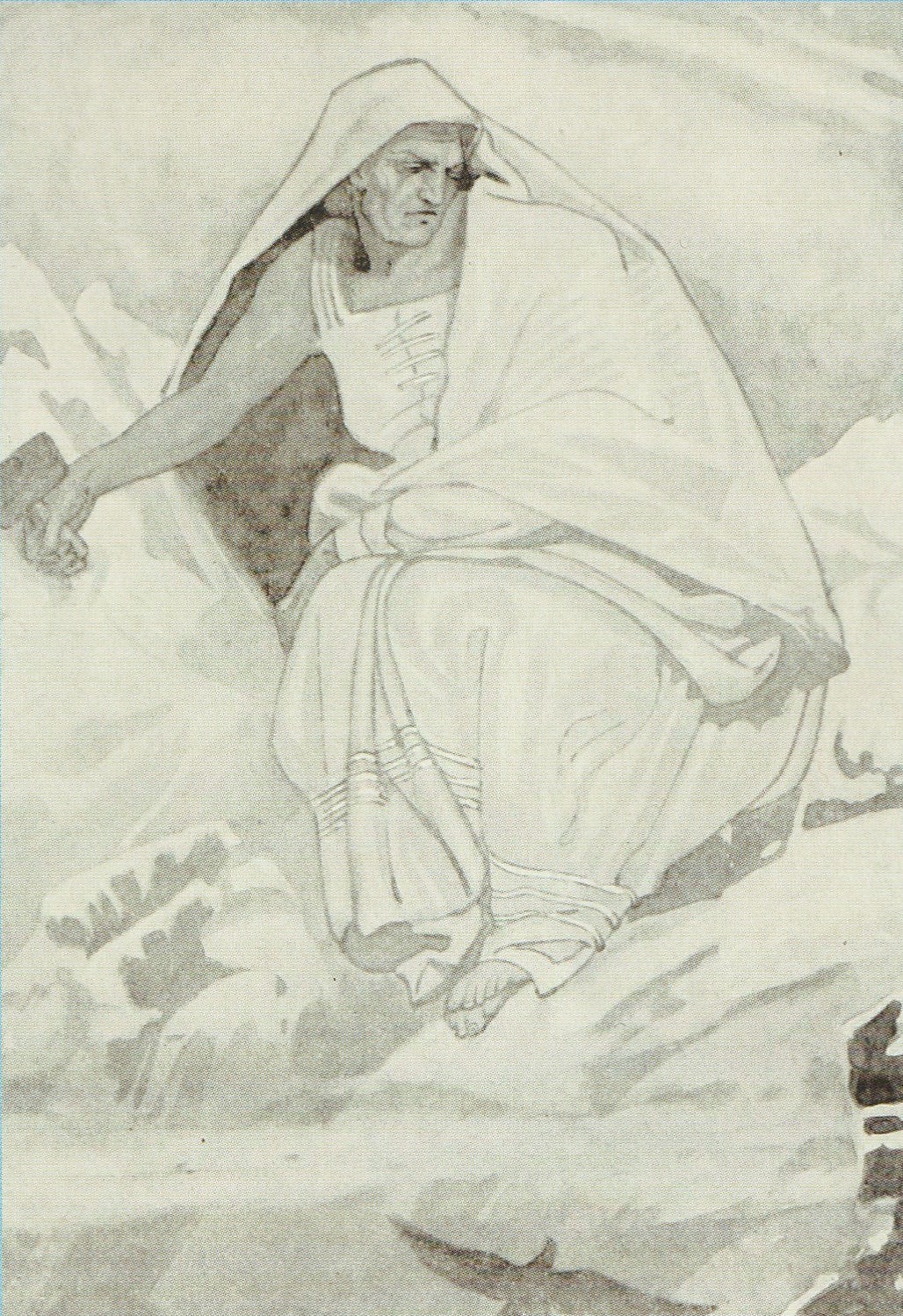

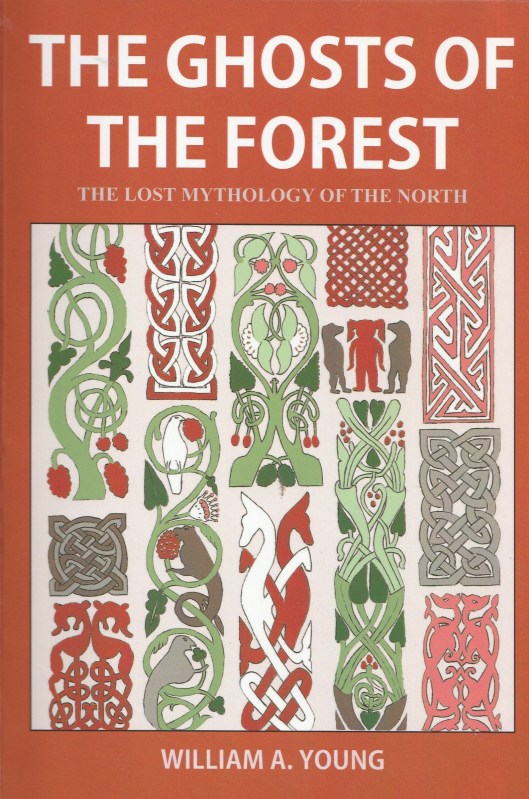
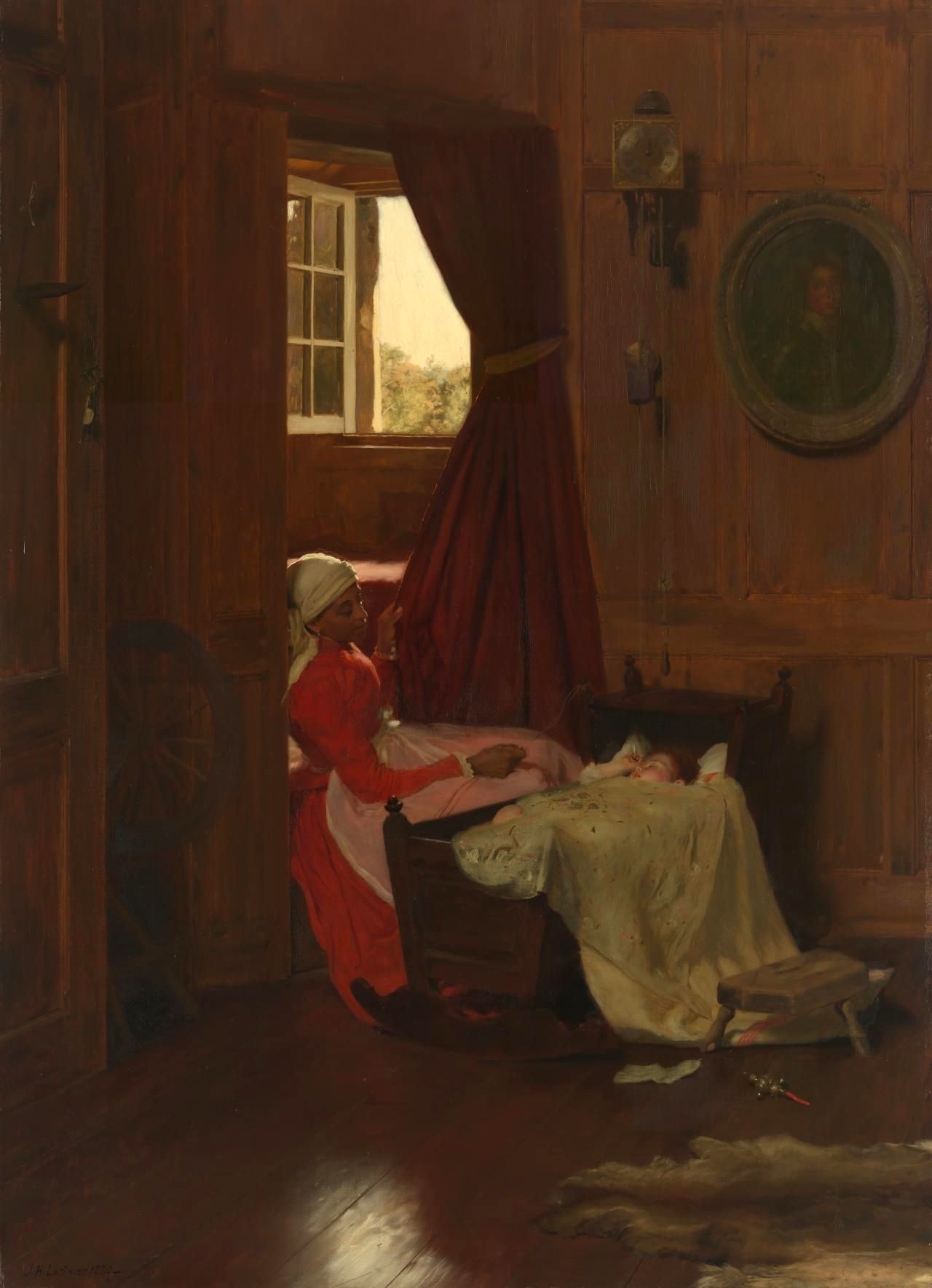
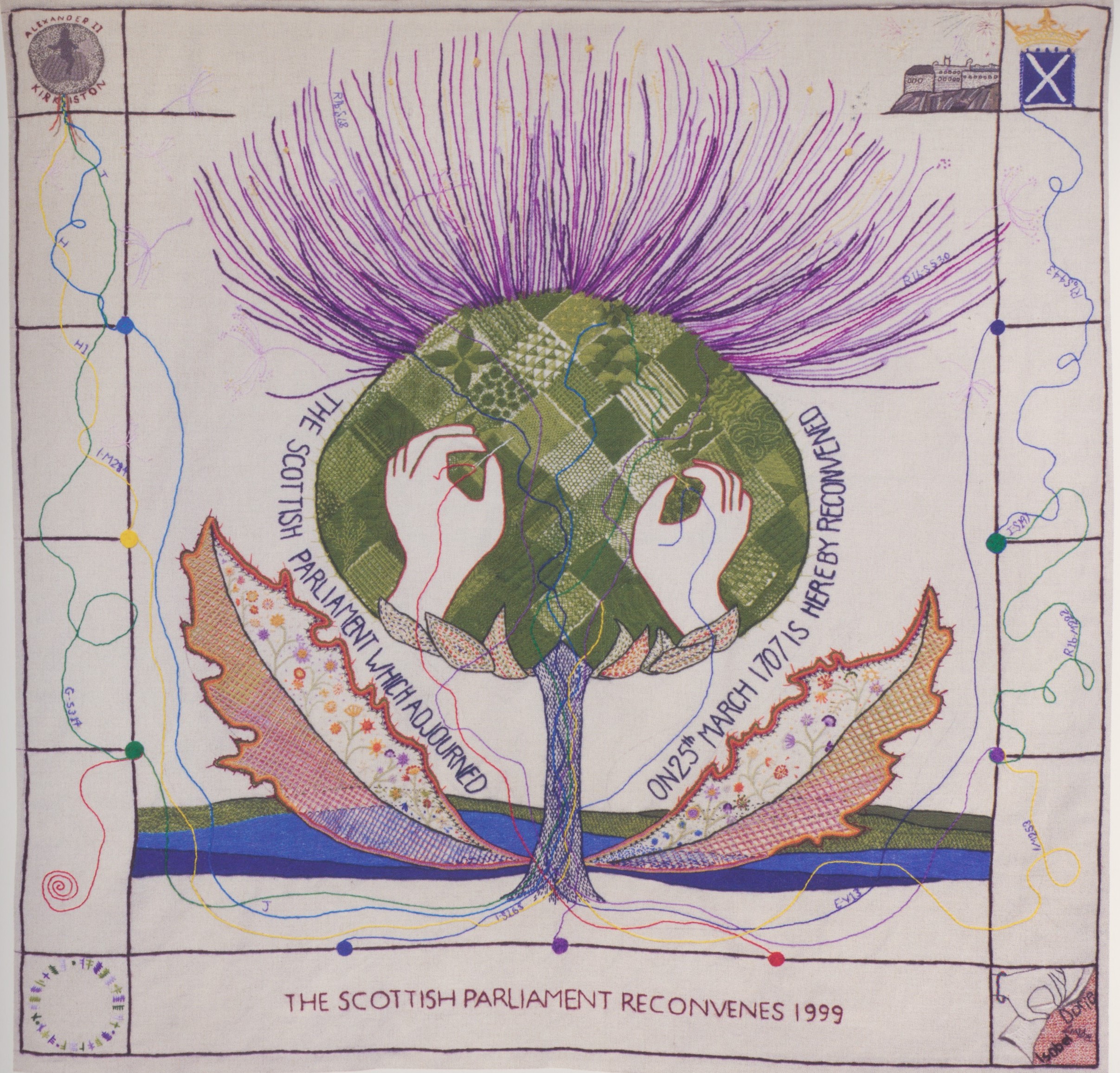
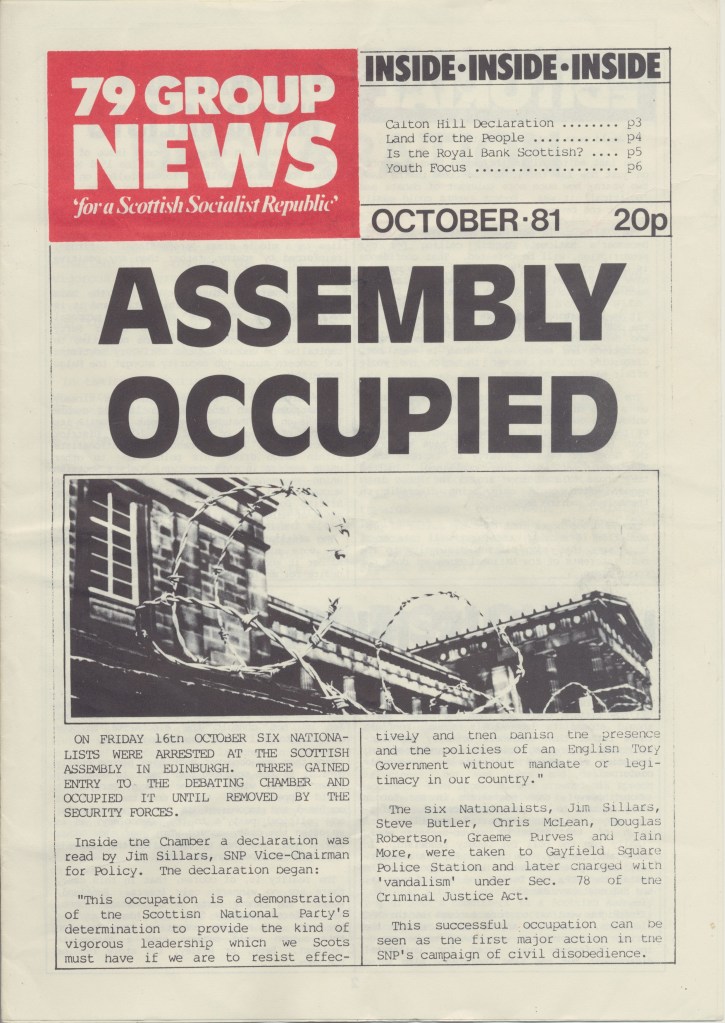

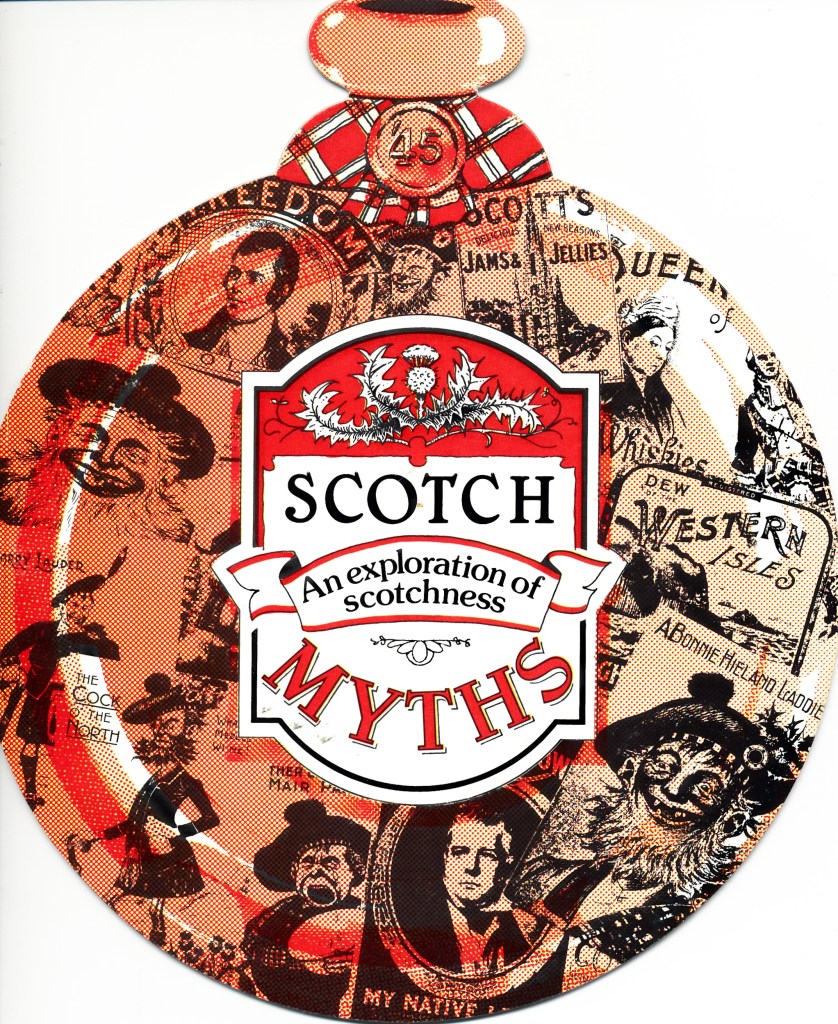
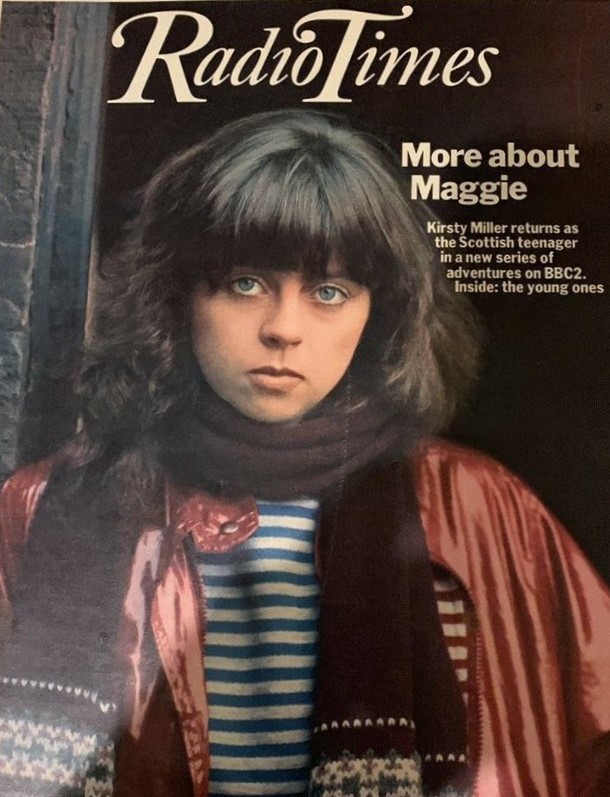
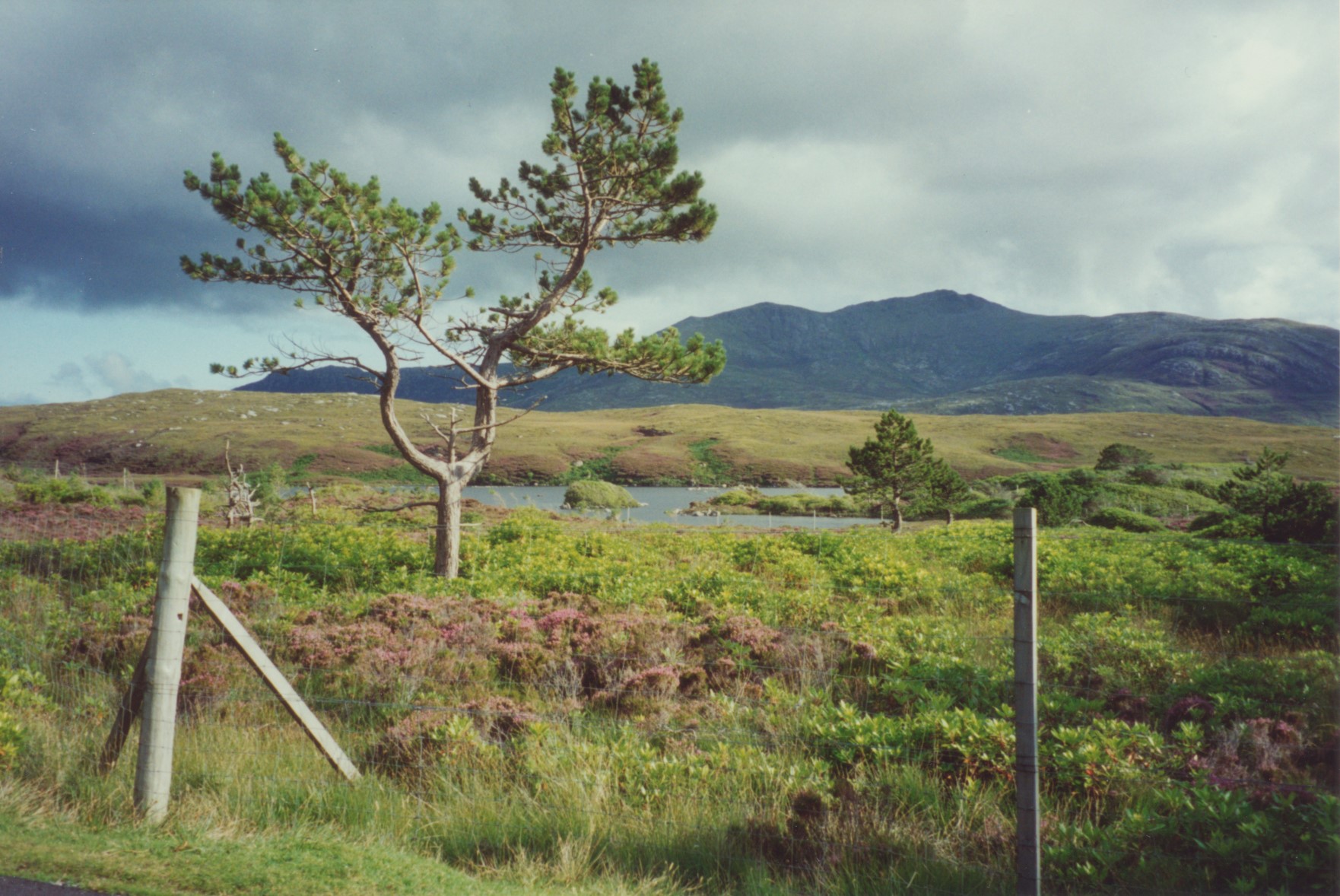
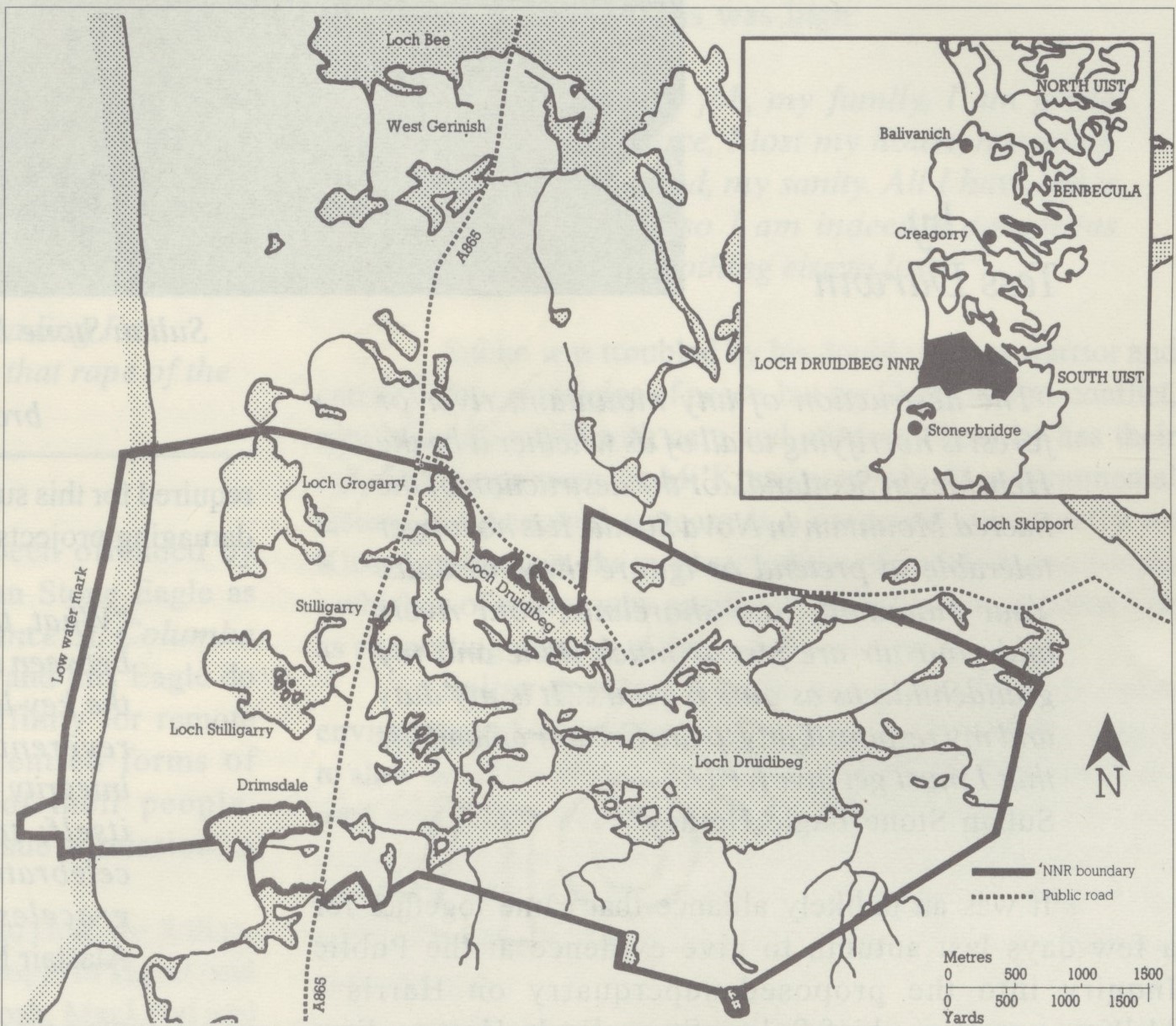
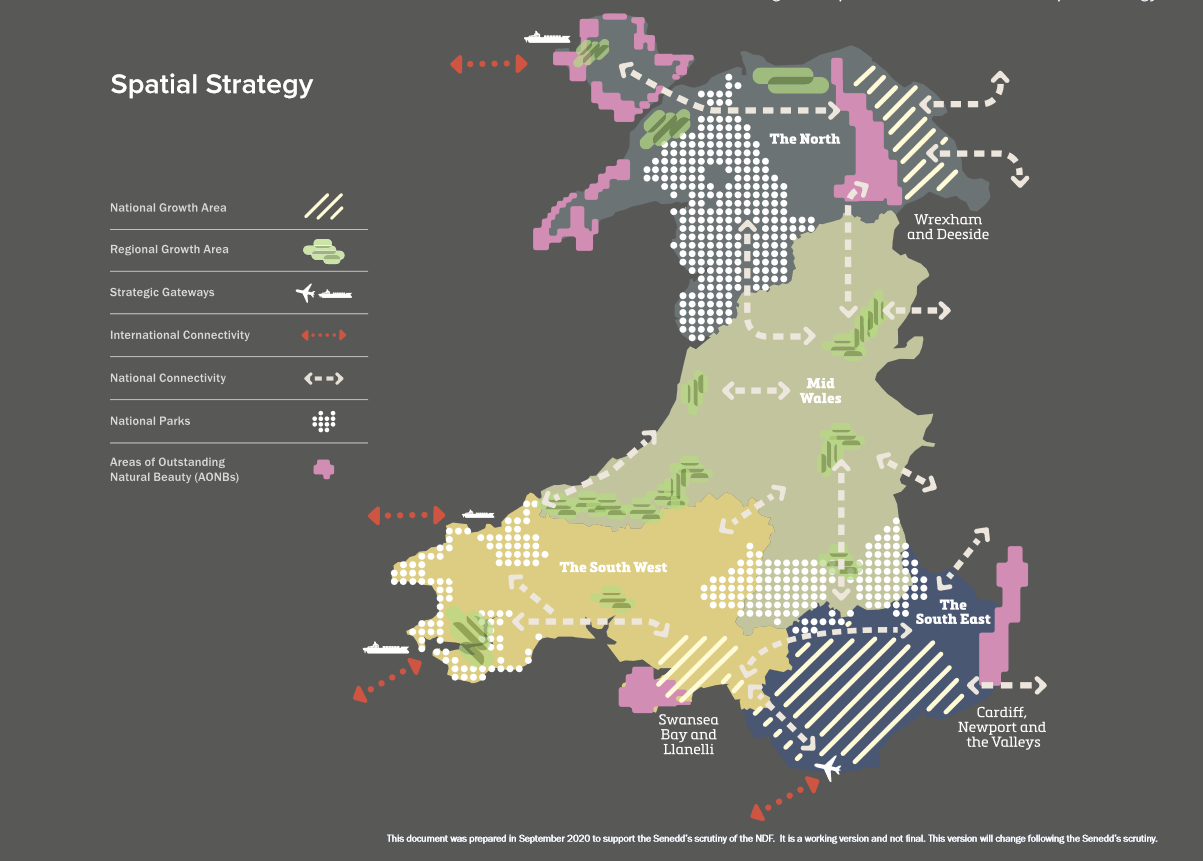
 Reflecting on the emergency measures introduced in March to cope with the COVID-19 pandemic, the columnist Neal Ascherson observed, “The state is back.” And “the longer the virus emergency lasts,” he pointed out, “the more the memory of the pre-virus world begins to grow unreal, unconvincing. Now, unmistakably, there’s a feeling that ‘things will never be the same after it’s over’ and ‘we can’t go back to all that’.”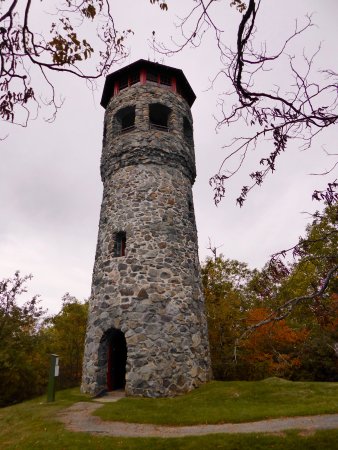

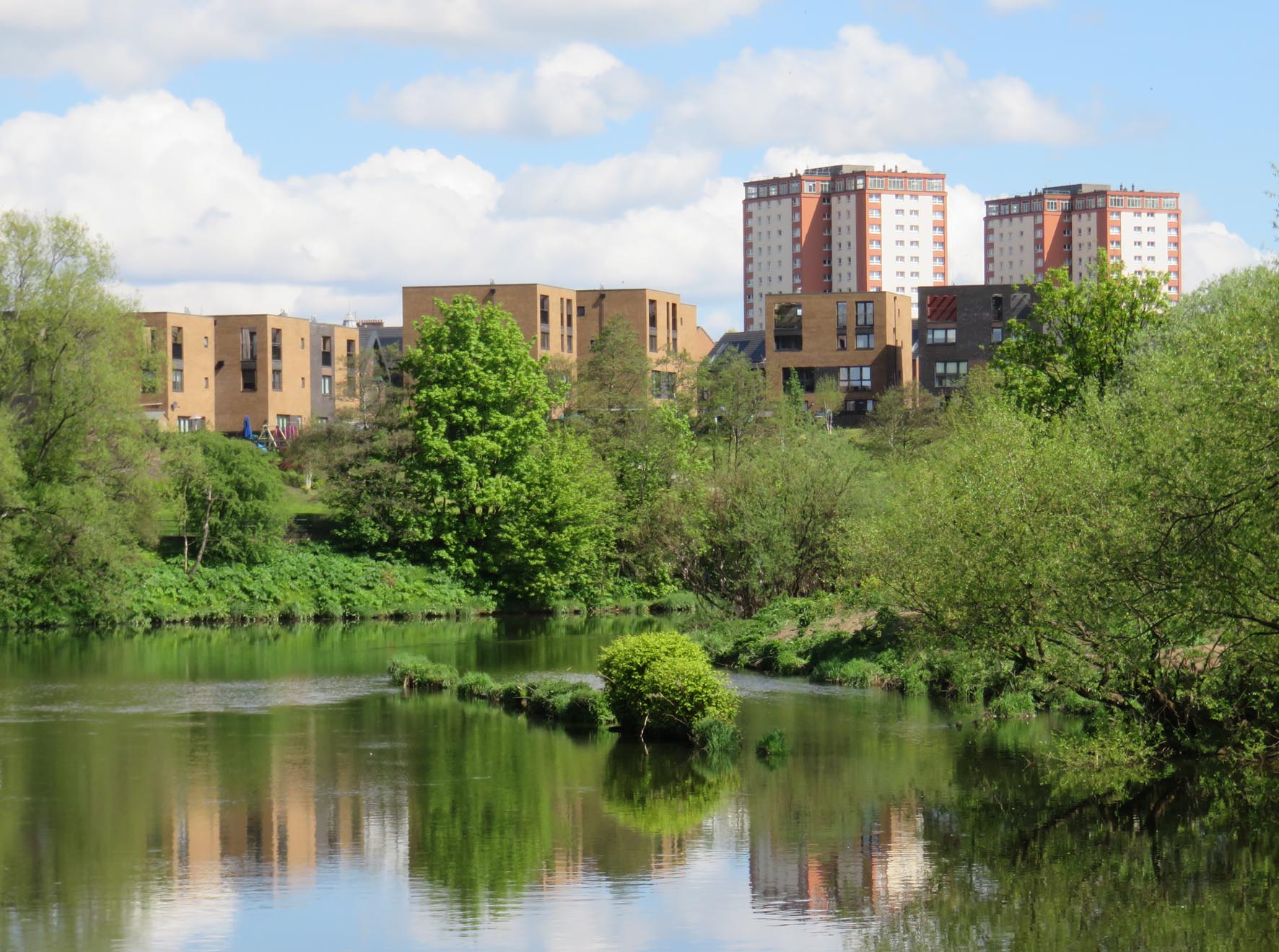
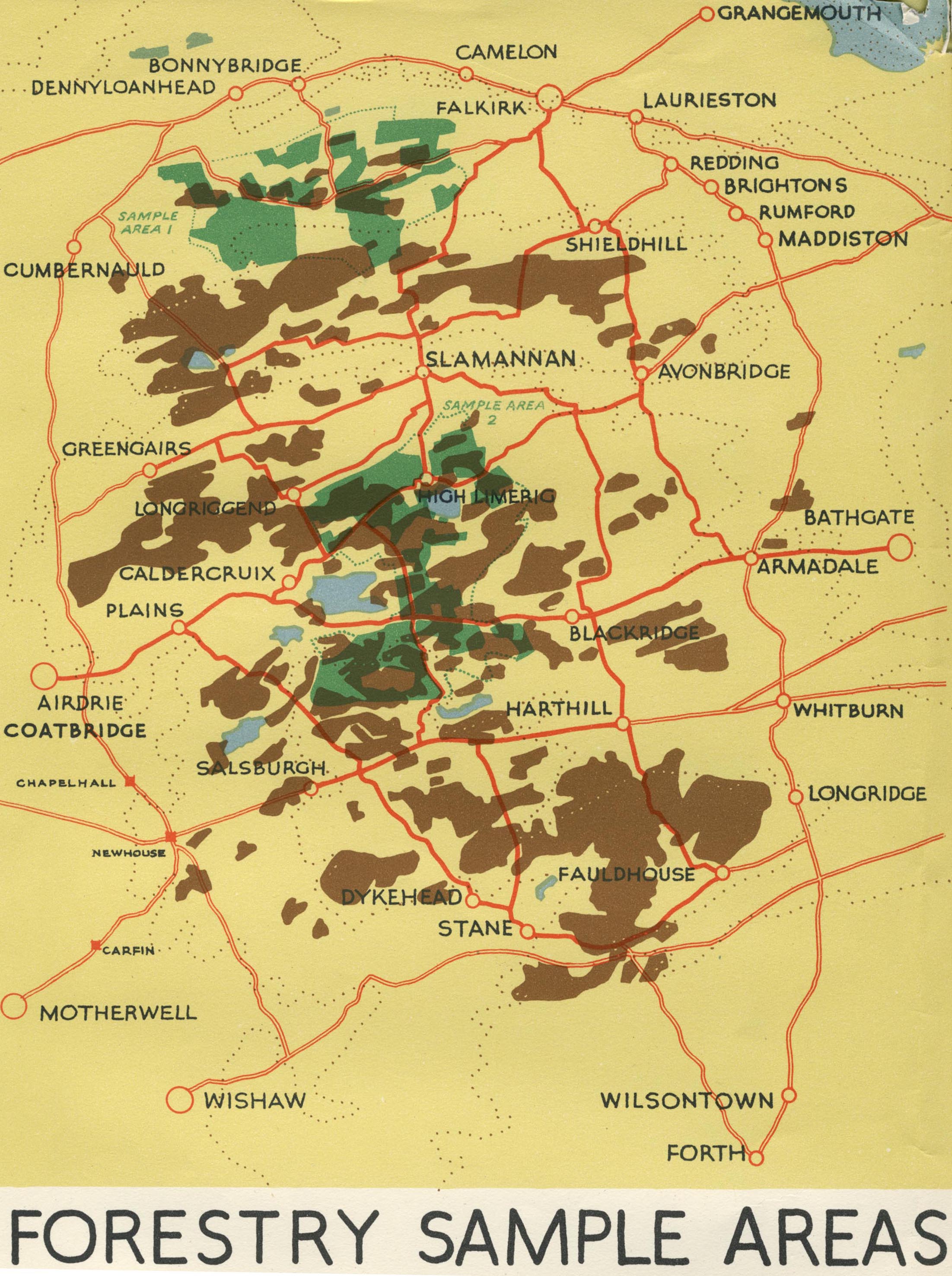

 By Erceldoune