• Thomas Learmonth o Erceldoune

By Erceldoune

~ Graeme Purves

By Erceldoune

Category Archives: The Land o Cakes

Strategic Planning and the Importance of Regional Agency

04 Tuesday Apr 2017

Posted by Graeme Purves in The Land o Cakes

≈ Leave a comment

Tags

National Planning Framework, regional agency, regional development plans, Scotland, strategic planning

For a small country, Scotland is regionally diverse, and it has a strong tradition of planning at the regional level dating back to the 1940s.  Under Tom Johnston, Scotland’s wartime administration initiated the preparation of three major regional plans covering the most populous parts of the country to guide post-war reconstruction. The regional planning tradition established at that time has persisted through successive reforms of local government under Governments of different political complexions, with a particularly strong strand of continuity in Glasgow and the Clyde Valley.  From the 1970s, and for a period of more than 30 years, the statutory vehicle for strategic planning at the regional level was the structure plan.  Since 2006 it has been the strategic development plan.
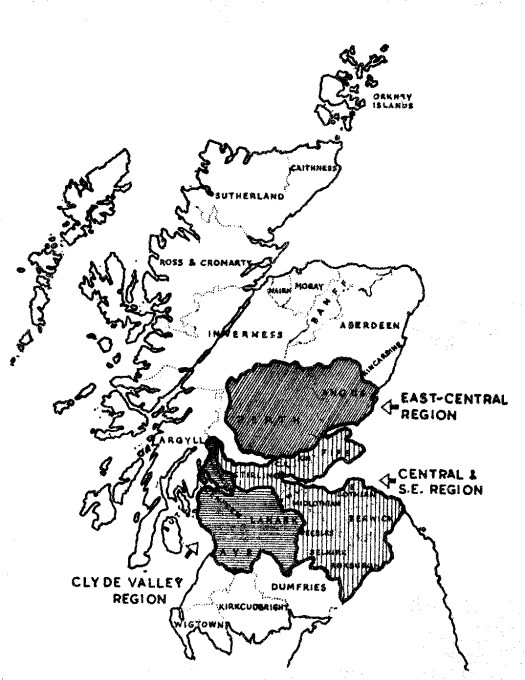
regions

The first generation of regional plans

The Scottish Government’s consultation on the future of the planning system, Places, People and Planning proposes that strategic development plans should be removed from the system, with regional planning priorities henceforward set out in the National Planning Framework (NPF).  The current review of the planning system was initiated in 2015 by the then Cabinet Secretary for Social Justice and Communities, Alex Neil.  The initial questions posed by the review reflected the familiar neoliberal narrative of creative and dynamic private enterprise held back by the bureaucracy and inefficiency of the public sector and suspicion remains that it was initially driven by a desire to ease the regulatory burden on volume housebuilders.

The abolition of regional development plans is something a number of major housebuilders have called for, perhaps in the belief that they will get a more
sympathetic ear from Ministers than from local politicians.  There is little evidence from the submissions made to the independent Review Panel that their removal has wider support and no very clear rationale has been offered for it.  The argument deployed by the independent Review Panel points to the need to strengthen delivery mechanisms, not remove regional development plans.

The reason the Scottish Government gives for proposing the removal of strategic development plans is that the effort put into the procedures for preparing them leaves little time to work actively on delivering them.  If that is the concern, then a more obvious solution would be to adopt the approach proposed for local development plans and review them every 10 instead of 5 years.  The main reason that strategic development plans have tended to lose momentum in recent years is that the regional strategies which had been worked out on their first or second iteration remained substantially valid, but the planners who created them have found themselves locked into a statutory process of review when their time would have been better spent on delivery.

The Government’s consultation paper recognises the importance of co-ordinating development and infrastructure at the regional level and proposes that planners should continue to work together at the regional scale to help shape spatial priorities and develop strategies and delivery programmes.  However, it is unsatisfactorily vague about how strategic priorities are to be determined at regional level and how spatial strategies for the regions are to be prepared and agreed.  The consultation paper refers to strategic planners “helping to shape” regional spatial priorities (para. 1.11) and local authorities “helping to develop” regional strategies (para.1.13).  The use of the word “helping” seems to hint that regional priorities and the content of regional strategies might ultimately be decided elsewhere, particularly as they are to be articulated in the National Planning Framework.  Is the Government hinting that regional priorities and strategies are ultimately to be determined by Ministers at national level, with the role of regional planners being no more than delivering on the strategies set out in the NPF?

It needs to be acknowledged that the one-size-fits-all approach of the city region model of strategic planning ushered in by the 2006 Act failed to reflect Scotland’s geographical diversity.  Not all of Scotland’s diverse regions are focused on cities.  The consultation paper’s proposals for partnerships which reflect regional geographies could offer opportunities for Ayrshire, the Highlands and Islands and the South of Scotland in particular.  The opportunity to rationalise boundaries for spatial, transport and land use planning should certainly be taken.  However, if this is not to be another exercise in centralisation, the Government needs to think more carefully about how policy-making capacity and agency are to be retained and strengthened at the regional level.

The National Planning Framework has been a valuable innovation, setting out a long-term vision and identifying developments of national importance.  However, we should be wary of the assumption that we will make it more effective by loading more and more onto it.  There is a danger that charging it with responsibility for setting not just national but also regional priorities could have rather the opposite effect, making the NPF unwieldy and top-heavy, and at risk of collapsing under its own weight.  The fate of the regional tier of government in England should be instructive.  Its association with what was seen as a remote and bureaucratic approach to strategic housing land allocation played an important part in its demise.  A top-heavy and over-bearing NPF would quickly fall out of favour.

Scotland has an important regional dimension which needs to be reflected properly in our planning system and strategic housing land allocation is one of the key functions which needs to be discharged at regional level. Central government lacks the knowledge and capacity to undertake that task successfully and the political tensions which would be created by pursuing that course could seriously undermine delivery.  Disowning the implications strategic decisions on housing taken centrally would prove an attractive way for politicians to gain local popularity.
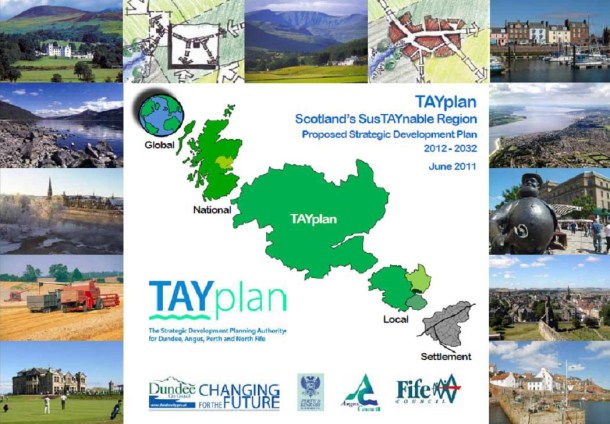
Tayplan

Tayplan 2011

Instead of centralising strategic capacity at national level, we should be celebrating Scotland’s regional diversity and ensuring that our regions have the agency to play to their strengths.  That the Scottish Government recognises the sense of that is at least implied by the policy initiatives it is pursuing in relation to greater autonomy the island authorities and a new enterprise and skills agency for the South of Scotland.  It needs to apply the same thinking to the reform of the planning system.  In the more populous parts of the country, we need to nurture the role of our cities as the economic and cultural capitals of their respective regions.  We need to make closer links between strategic planning and cities policy, with strategic development plans accorded a key role in the delivery of city deals.  We should be very wary of turning our backs on a tradition of regional agency in strategic planning which has served Scotland well for over seventy years.

____________________________________________________________________________________________

A version of this article was published in Bella Caledonia on 19 March 2017.

Scotland’s Homes Fit for Heroes

04 Saturday Feb 2017

Posted by Graeme Purves in Reviews, The Land o Cakes

≈ Leave a comment

Tags

Garden Cities, Garden Suburbs, Homes Fit for Heroes, Housing in Scotland, Lou Rosenburg, Working Class Housing

scotlands-homes-fit-for-heroes

Scotland’s Homes Fit for Heroes: Garden City Influences on the Development of Scottish Working Class Housing 1900 to 1939 by Lou Rosenburg (2016), The Word Bank

Lou Rosenburg’s book makes a very valuable contribution to our understanding of the evolution of working class housing provision in Scotland in the early part of the 20th Century.  It is meticulously researched, well written, attractively laid out and generously illustrated with photographs, plans and period artwork.

The book explores the form and design influences on the 240,000 houses built by Scottish local authorities between 1919 and 1939, with a particular focus on those built under the Town Planning (Scotland) Act 1919, the Coalition Government’s response to the wartime demand for ‘Homes fit for Heroes’.  The new housing schemes were strongly influenced by the English arts and crafts forms of the garden cities movement.  Cottages became the preferred form of provision as traditional tenements fell out of favour because of their association with overcrowding and insanitary conditions.  However, habit and budgetary constraints often led to compromise and a native form of garden suburb development emerged, incorporating distinctively Scottish elements such as pavilion-style tenements and four-in-a-block cottage flats.

Before the First World War, a number of cottage developments influenced by garden suburb principles had been pioneered by local authorities and public utility societies.  During the War, the need to accommodate civilian defence workers led to significant new developments at a number of strategically important locations, including Rosyth, Gretna, Greenock, Glengarnock and Invergordon.

By 1925, 25,000 houses had been completed under the 1919 Act, only a fraction of the 120,000 units which the Ballantyne Commission had estimated to be required in 1917.  Shortages of labour and materials meant that local authorities and public utility companies were unable to achieve the construction levels required.  Despite the generous subsidies made available by central government, high construction costs meant that rents were generally set at levels which were beyond the means of poorer households.  In the mind of officialdom, the ability to pay rent quickly became a more important consideration than war service.

Rosenburg’s painstaking scrutiny of valuation rolls has identified some 300 schemes developed under the 1919 Act.  These are very widely distributed throughout Scotland, with a remarkable 30% outside burghs. Many are of outstanding quality. Some of the most charming examples were built in small settlements in rural areas, often by county councils.  While the contribution of public utility societies was modest, a significant garden cottage scheme was developed by the Kinlochleven Village Improvement Society to provide accommodation for employees of the British Aluminium Company, and the Scottish Veterans’ Garden City Association built nearly 200 houses in small developments across Scotland.

A welcome aspect of Rosenburg’s book is the information he provides on the work of officials such as William E. Whyte, politicians such as John Wheatley and Jean Mann and architects such as Joseph Weekes and John A.W. Grant. The personal contributions to the improvement of housing conditions of figures such as these deserves to be more widely recognised.

With the Scottish Government consulting on the reform of the planning system, Scotland’s Homes Fit for Heroes provides a timely reminder of a period when Government felt confident enough to drive forward improvements in the form and quality of new housing.

_________________________________________________________________

This review first appeared as a blog on the Built Environment Forum Scotland website on 11 January 2017.

The Trouble with Wilderness

15 Sunday Jan 2017

Posted by Graeme Purves in The Land o Cakes

≈ 2 Comments

Tags

Highland Clearances, Landscape, Murray Robertson, Scottish Natural Heritage, Scottish Planning Policy, Wild Land, wilderness

robertson-core-wild-land

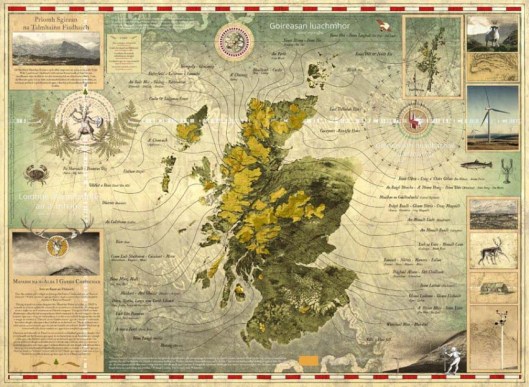
The ‘The Artist Traveller’ exhibition at the Royal Scottish Academy includes a series of pen and ink and digital pigment prints by artist Murray Robertson on the theme of wild land and wilderness.  The centre-piece is a digital pigment print map of Scotland showing the Core Areas of Wild Land identified by Scottish Natural Heritage (SNH), with a legend and annotations in Gaelic.  The work is titled Priomh Sgìrean na Talmhainn Fiadhaich II in Gaelic.

Robertson’s works were originally developed during a visual arts residency at Sabhal Mòr Ostaig on the Isle of Skye in 2015 and invite questions about the perceptions and values we bring to debates about Scotland’s land and landscapes and concepts such as “wild land” and “wilderness”.

SNH published a new map of ‘Core Areas of Wild Land‘ in June 2014. It has been given an important status as a basis for decision-making on development by being referenced in Scottish Planning Policy (para. 200).  This incorporation into policy was primarily a response to concerns about the potential impacts of large commercial wind farms on sensitive rural landscapes, but there are fears that the broadly restrictive terms of the policy (para. 215) could inhibit almost any development activity over large parts of the Highlands, effectively preventing economic diversification and community renewal.  Critics like Rob Gibson, the former MSP for Caithness, Sutherland and Ross and Convener of the Rural Affairs Committee in the last Parliament, have pointed out that many of the areas now described as core wild land were previously populated and believes that what has been mapped is “Clearances country”.

In December 2016, Scottish National Heritage published a common statement on Landscape and the Historic Environment prepared for the Scottish Historic Environment Forum by a working group comprising Historic Environment Scotland, the National Trust for Scotland and SNH.  The document seeks to offer a ‘shared vision’ of the historic dimension of Scotland’s landscapes.  This latest exhibition of Murray Robertson’s work reminds us that Scotland’s land and landscapes remain contested territory.

The ‘The Artist Traveller’ exhibition runs at the Royal Scottish Academy until Sunday 29 January 2017.

_________________________________________________________________

A version of this article was published by Bella Caledonia on 16 January 2017.

A Garden for Granton’s Renaissance!

18 Sunday Sep 2016

Posted by Graeme Purves in The Land o Cakes

≈ Leave a comment

Tags

community renewal, community well-being, EDI Group, Granton Castle Walled Garden, Granton Waterfront

fgwg-september-2016

Proposals by the Friends of Granton Castle Walled Garden

The EDI Group has appointed architects to prepare a new masterplan for the Granton Waterfront and on 15 August the Friends of Granton Castle Walled Garden met with them to share their ideas on the restoration of the Renaissance garden as a focus for community renewal.

Afterwards, landscape architect Ellie Clarke facilitated workshops at which the Friends agreed the features of their proposal for a community garden.  These will be presented to the EDI Group Management Team at a meeting on 5 October.

On 8 September, the Petitions Committee of the City of Edinburgh Council considered a petition organised by the Friends calling on the Council to support them in opening the garden for sustainable uses which promote community well-being.  The Committee decided to refer the matter to the Council’s Economy Committee, which will consider it at its meeting on 22 November.

Meanwhile, Granton Castle Walled Garden features as the focus for a local walk in More North Edinburgh’s Hidden Gems, a guide to six short walks in Pilton, Muirhouse, Granton and Drylaw produced by the Pilton Community Health Project.

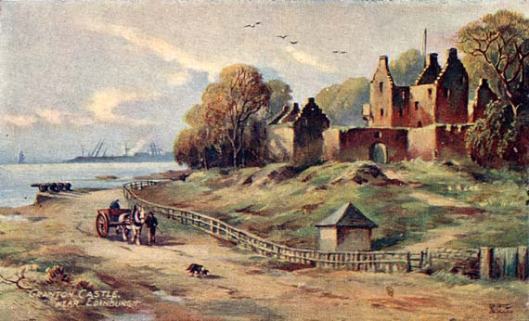
granton-castle-postcard

Image courtesy of Peter Stubbs, EdinPhoto

An illustrated article on How Granton Lost its Castle was published in the May/June issue of Edinburgh Life. A more detailed article by Gillean Paterson entitled Echoes in the Garden: the last days of Granton Castle features in the Autumn 2016 issue of Scottish Local History.

What will happen to the England-Scotland border following Brexit?

28 Thursday Jul 2016

Posted by Graeme Purves in Spatial Planning, The Land o Cakes

≈ Leave a comment

Tags

Brexit, cross-border collaboration, open borders, Scotland-England border

This piece by Professor Keith Shaw of Northumbria University provides a valuable perspective on the prospects for collaboration across the Scotland – England border following the EU referendum result. The point he makes about collaborative opportunities in areas such as rural development, farming, tourism and renewable energies being dependent on EU investment and support is very important. But overall, I think his conclusions are too gloomy. Scotland, the Republic of Ireland, Northern Ireland and progressive forces in England share a common interest in maintaining open borders and building effective mechanisms for cross-border collaboration within these islands. These are the objectives on which we must make common cause in shaping the ultimate outcome of the Brexit vote.

ESRC's avatarESRC blog

Between 2013 and 2015, the ESRC funded a seminar series examining the changing relationship between Scotland and the North East of England. While the series highlighted the many challenges facing the North East’s economic fortunes in the context of an even more powerful neighbour north of the border, it also explored the opportunities provided by the Scottish independence campaign – and the aftermath of the 2014 referendum – to forge new, creative, cross-border collaborations between two ‘close friends’ united by common bonds and shared traditions.

Keith ShawHere Professor Keith Shaw, of Northumbria University, who led the seminar series, speaks about the effect on the relationship between Scotland and the North East of England and forthcoming potential outcomes following Brexit.

One of the collaborative opportunities identified – and subsequently taken up – in the ESRC seminar series ‘Close Friends’? Assessing the impact of greater Scottish autonomy on the North…

View original post 794 more words

A Farm Scene

25 Monday Jul 2016

Posted by Graeme Purves in The Land o Cakes

≈ 1 Comment

Tags

animal husbandry, art, farming, Scottish Borders

Farm Scene

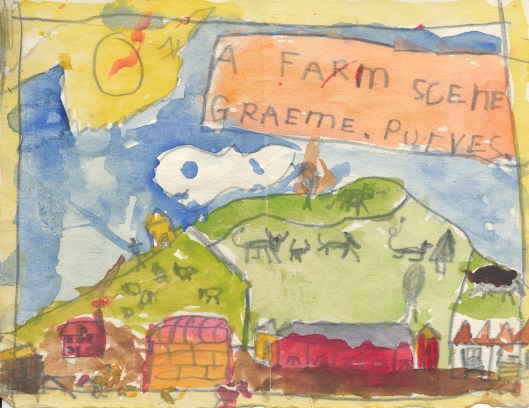
What is almost certainly my oldest surviving artwork has been discovered in a shoe box in West Edinburgh. What say you, Fiona Bruce?

Thought to date from around 1962, the painting provides evidence of an early interest in rural themes and the striking topography of the scene suggests connections with the Borders. The fact that the black bull is in a separate field on the extreme right of the picture indicates some knowledge of the practical challenges of animal husbandry, possibly acquired from a grandfather.

Corporate Edinburgh’s Secret Garden

29 Tuesday Mar 2016

Posted by Graeme Purves in The Land o Cakes

≈ Leave a comment

Tags

built heritage, City of Edinburgh Council, community gardens, EDI Group, Granton Castle Walled Garden, walled gadens, Waterfront Edinburgh Ltd.

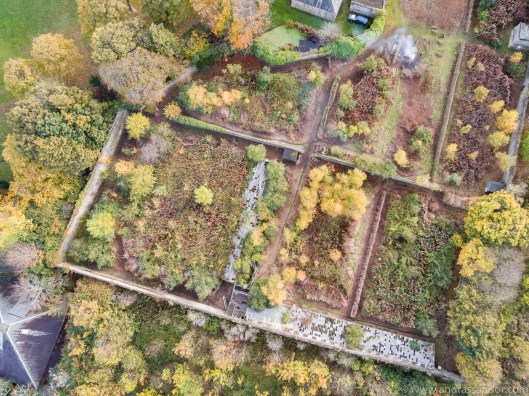
Granton Garden - Autumn 2015

Granton Castle Walled Garden

In North Edinburgh, a community-based campaign is fighting to prevent one of Scotland’s oldest surviving walled gardens from being lost to a luxury housing development.  The Friends of Granton Castle Garden want to restore it to use as a community garden.

The late-Medieval walled garden could be more than 500 years old.  It survived the demolition of Granton Castle in the 1920s and continued in use as a market garden until relatively recent times.

Some 10 years ago, the garden was acquired by Waterfront Edinburgh Ltd., a company wholly owned by the City of Edinburgh Council, to add to its wider portfolio of land in the Granton Waterfront redevelopment area.

In December 2003, Waterfront Edinburgh had submitted applications for planning permission to erect a residential development of 17 luxury houses within the walled garden.  The company’s original proposal was for a gated development, but the security gates were subsequently dropped from the scheme.  In October 2004, the Council’s Development Management Sub-Committee agreed to grant planning permission subject to a legal agreement in relation to affordable housing and a financial contribution towards education infrastructure.  A draft legal agreement was prepared in 2008 but the economic crash intervened.  The agreement was never concluded and planning permission never issued.

Despite the garden being identified as open space in the Council’s Open Space Audit and the Edinburgh City Local Plan, Waterfront Edinburgh remains intent on building luxury housing on the site. In January 2015, the EDI Group, of which Waterfront Edinburgh is a part, revived its interest in the development.  The Council’s Planning Department erroneously informed Historic Scotland that the planning applications relating to the garden had been withdrawn along with others for adjacent sites, but EDI managed to keep them alive on the basis that the Council had previously been minded to consent.  The Council considered the proposals under its procedure for dealing with legacy planning applications, which requires them to be re-assessed in the light of more up-to-date development plans, changes to policies and revisions of guidance.

There have been a number of important changes in policy and guidance since Waterfront Edinburgh’s proposals were first considered by the City Council.

In 2014, the Scottish Government revised Scottish Planning Policy (SPP) which now states that decisions should have regard to the principles for sustainable land use set out in its Land Use Strategy.  One of these principles is that where land is highly suitable for a primary use such as food production, this value should be recognised in decision-making.  The SPP also states that decisions should be guided by the need to protect, enhance and promote access to cultural heritage, including the historic environment.

A resurvey undertaken by Historic Scotland in the light of evidence of a history dating back to 1479 led to its listed status being upgraded from Category C to Category B in July 2015.  Historic Scotland also issued new planning guidelines on historic gardens and designed landscapes in 2015.

The emerging Strategic Development Plan Open Space Strategy identifies the garden as a key location for action to create a network of connected green spaces in North Edinburgh.

Value to the Community

A driving force in the Friends of Granton Castle Garden is its Chair, Kirsty Sutherland, who is a horticultural consultant.  Under her leadership, the campaign has developed an impressive momentum, winning the support of organisations as diverse as the Pilton Community Health Project, North Edinburgh Arts, Nourish, Edible Edinburgh, Scotland’s Garden and Landscape Heritage, Common Weal and Edinburgh College of Art.  Research by the Friends has uncovered a great deal of new information on the history of Granton Castle and its garden and an initial survey of the garden’s walls has been undertaken with the assistance of Historic Environment Scotland staff under the Scotland’s Urban Past scheme.

Granton Castle Walled Garden is an irreplaceable resource and one of the few areas of deep, unpolluted, well-tilled soil in the area.  The surviving apple trees at Granton are prolific fruiters and their stock has made an important contribution to apple cultivation across Edinburgh.

The garden could be an asset of great value to North Edinburgh and the city as a whole if it were to be restored as a community garden.  With the establishment of the Friends of Granton Castle Garden, there is now an organisation with the skills, capacity and commitment to make that happen.  The Friends have engaged with EDI with a view to gaining access to the garden to undertake survey work and an archaeological investigation.  They have also indicated an interested in purchasing the garden.

Corporate Dilemma

On Wednesday 13 January, EDI’s Operations and Finance Director, Eric Adair, wrote to Kirsty Sutherland to inform her that the EDI Group was withdrawing its legacy planning applications to develop housing on the garden site. However, he indicated that the EDI Group remains committed to developing the site for housing and intends to submit a new planning application in the future. The Friends of Granton Castle Walled Garden is pressing forward with its campaign to restore it as a working garden under community ownership, but the EDI Group is currently declining to meet with the Friends to discuss options.

A development of luxury houses would benefit very few people and make no significant contribution to meeting the city’s housing needs.  There is no need for the garden to be developed for housing, as it is surrounded by large areas of vacant post-industrial land which is much more suitable.

EDI has made it clear that its preference for a housing development in the walled garden is based entirely on financial considerations, the sale return on a niche housing development being much higher than sale for restoration as a working garden.  Awkwardly for the City Council, doing the right thing now will call into question the wisdom of Waterfront Edinburgh’s purchase of the walled garden for development in the first place.

There is no compelling rationale for sacrificing a unique civic asset to luxury housing, but a real risk that it will be lost to the citizens of Edinburgh as a result of the narrow perspective of the City Council’s commercial arm.  The Chair of the EDI Board is the SNP councillor for Inverleith, Gavin Barrie.  Other members of the Board are the Labour councillor for Leith, Gordon Munro and the Conservative councillor for Inverleith, Iain Whyte.  It must be hoped that the city’s politicians will see the merit of giving greater weight to the interests of the community than sparing the blushes of their development company.

_________________________________________________________________

A version of this article was published in Bella Caledonia on 10 January 2016.

If you are a resident of Edinburgh, you can sign the petition to save Granton Castle Walled Garden here.

Can We Restore Civic Consciousness and Public Enterprise?

19 Saturday Dec 2015

Posted by Graeme Purves in The Land o Cakes

≈ Leave a comment

Tags

civic consciousness, Community Planning, Culture, entrepreneurial state, housing delivery, public enterprise, Review of the Scottish Planning System


The Scottish Government’s Programme for Government for 2015-16 announced a Review of the Scottish Planning System to identify “the scope for further reform with a focus on delivering a quicker, more accessible and efficient planning process, in particular increasing delivery of high quality housing developments.”

Crawford Beveridge

Crawford Beveridge

In mid-September, the Cabinet Secretary for Social Justice and Communities, Alex Neil, announced that review would be undertaken by a three person panel chaired by Crawford Beveridge, the other members being Petra Biberbach of Planning Aid Scotland (PAS) and John Hamilton of the Scottish Property Federation.  The omission of any qualified planner from the panel ruffled the feathers of the profession in Scotland.

The remit of the review is broader than initially announced, focusing on 6 key issues:

  • development planning;
  • housing delivery;
  • planning for infrastructure;
  • further improvements to development management;
  • leadership, resourcing and skills; and
  • community engagement.

However, the suspicion remains that the primary purpose of the review is to ease the regulatory burden on volume house builders.

Leadership and Resources

Not listed first in the panel’s remit, but of crucial importance, is the question of leadership and resources.  If we are to get the best from our planning system, the Scottish Government needs to set out a vision for future development which is inspiring and empowering rather than simply sticking with the narrow and increasingly tired narrative on speedy and efficient delivery.

The challenges we face around delivering development are frequently attributed to deficiencies in the planning system, but to rely solely on that explanation is to take far too narrow a view.  Technical fixes alone will not provide a solution.  We need a broader revival of civic consciousness and public enterprise and that means culture change.

We have lost the civic vision which informed and inspired burgh development in previous generations and new development in our towns and cities is too often seen in narrow commercial terms.  Since the financial crisis in 2008, public policy has, understandably, been strongly focused on the delivery of development as a means of promoting economic recovery.  We should now be looking to move beyond that to a broader perspective on development and urban renewal, one which embraces not only its economic and commercial benefits, but also its importance in social and cultural terms.  Consensus can only be built if there is a vision people can buy into.  Scottish Ministers should be giving a lead by promoting a revival of civic consciousness.

There is widespread concern that cuts in public expenditure are reducing the capacity of local authorities to lead, innovate and initiate projects in the public realm and depriving planning authorities of the expertise they need to assess development proposals with implications for the historic or natural environment.  The planning service is asked to deliver on a wide range of public interest agendas.  It needs to be adequately resourced if we are to achieve our aspirations for new development in terms of scale, quality, social well-being and climate change targets.  An increase in planning fees could certainly make a contribution towards that.

Community Empowerment

There is abundant evidence of community spirit and a desire to be active in making our towns and cities more socially and environmentally rewarding places.  We see that in the demand for allotments, the proliferation of community festivals, markets and orchards, phenomena such as urban gardening, and the growing interest in community ownership of a wide range of public assets.  Some elected representatives see civic activism as a threat to their authority and officialdom finds it difficult to engage with it in a positive way.  Sometimes local authority responses to attempts to develop the potential of community assets can be very negative.  But I suspect that resource constraints and community expectations will drive things in a more enlightened and positive direction.   Planning authorities and their officials need to get better at working in partnership with communities to realise the economic, social and cultural potential of local assets.  Confidence will grow with experience.

It is high time we repudiated the outdated corporate model of community planning imposed by the Local Government (Scotland) Act 2003 and replaced it with one which is genuinely focused on communities and reflects the community empowerment agenda.  The efforts to improve links and communication between spatial and community planning are to be welcomed, but if we see the challenge solely in these terms we are in danger of simply making planners more complicit in a top-down and technocratic approach to community development which falls short of contemporary needs.

Housing Delivery

Craighall Road 002

Flats under construction in Edinburgh

The questions about housing delivery posed by the review reflect the perspective of volume housebuilders and appear to assume the continuation of a private-sector led model which has been failing to deliver since the crash of 2008.  That model cannot meet the social aspirations which animated public debate during and after the independence referendum.  The public sector should play a more active and assertive role in the delivery of strategically important development and place-making, as it does widely on the Continent.  It should be prepared to intervene in the land market to assemble the sites required and then provide the necessary supporting infrastructure, funding the process from the uplift in land values.

Underpinning the current review is the familiar neoliberal narrative of creative and dynamic private enterprise held back by the bureaucracy and inefficiency of the public sector. The economist Mariana Mazzucato has very effectively debunked that narrative in her book ‘The Entrepreneurial State’, and the Scottish Government has been enlightened enough to appoint her to its Council of Economic Advisers.  Let us hope the current review will lead to a reinvigorated planning system empowered to play an important role in building the constructive partnership between public and private sectors which is essential to a successful social democracy.

The Scottish Government is hosting an online forum on the review of the planning system.  The review panel is expected to submit its report to Scottish Ministers in March.


This article first appeared in Bella Caledonia on 30 November 2015.  I gave oral evidence to the panel undertaking the Review of the Scottish Planning System on 23 February 2016.

The Scottish Play as Garbled Glaurfest

04 Wednesday Nov 2015

Posted by Graeme Purves in The Land o Cakes

≈ Leave a comment

Tags

Justin Kurzel, Macbeth, Marion Cotillard, Michael Fassbender, William Shakespeare

Fassbender - Macbeth

Michael Fassbender as Macbeth

I finally caught up with Justin Kurzel’s ‘Macbeth‘, and it is a real pig’s breakfast – Noggin the Nog meets Once Upon a Time in the West!

The scenery is bleakly magnificent, but Kurzel succeeds in making it look more like a wet weekend in the Greenland of Erik the Red than 11th Century Scotland. Battles take the form of mud-wrestling with dirks in Braveheart warpaint.  Michael Fassbender and most of the rest of the cast toy with versions of mumbled Lowland demotic. Sadly, nobody seems to have told Marion Cotillard, who delivers her lines theatrically in mannered Shakespearean English, hurriedly gabbling her way through her first crucial scene as if she were worried about missing her bus. Sean Harris seems to base his performance as Macduff on the insight that his character’s name rhymes with gruff.

As a mere thane, Macbeth appears to live in a flimsy shanty town in the middle of a Highland peat bog. After he becomes king, he and his missus are able to move into an elegant castle in the high Norman style. ‘More than enough motive for murder there I would have thought.

On the positive side, Lynn Kennedy, Kayla Fallon, Seylan Baxter and Amber Rissmann make a good job of the weird sisters, steering well clear of cackling crone clichés.  And David Hayman puts in a good performance as Lennox, a man careful to stay on the right side of power.

Where Kurzel meddles with Shakespeare’s tale, it is not for the better.  Why would even a deranged Macbeth have Macduff’s wife and children taken to his castle and publicly burnt at the stake, a fate reserved for witches and heretics?  Shakespeare wisely has them dispatched at a distance by the king’s henchmen.  “The Thane of Fife had a wife. Where is she now?”  Kurzel’s reworking of the story leaves Lady Macbeth with little room for doubt.  And if Macbeth were anachronistically ensconced within the sturdy keep of a Normanised Dunsinane, why would he abandon the strength of that position to fight Macduff on open ground outside?

Orson Welles and Akira Kurosawa have both made better jobs of filming the Scottish play.

Why the Climb Down on Offshore Ownership of Land?

31 Monday Aug 2015

Posted by Graeme Purves in The Land o Cakes

≈ 1 Comment

Tags

accountability, Land Reform, offshore tax havens, Transparency

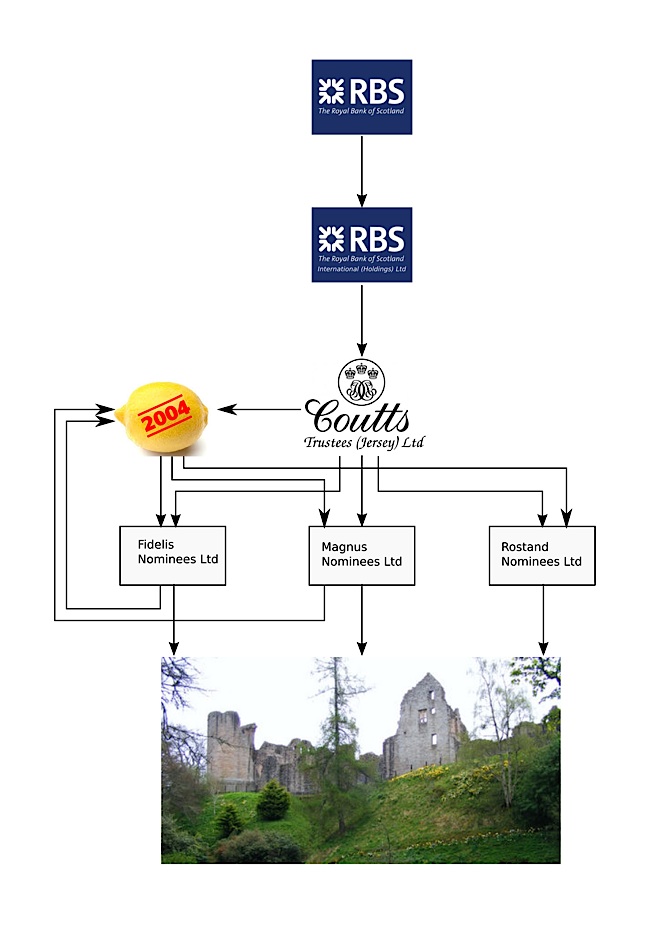
The conviction of gamekeeper George Mutch for the illegal killing of a trapped goshawk on the Kildrummy Estate in Aberdeenshire earlier this year drew attention to the tangled web of offshore shell companies which help to obscure its beneficial ownership.

kildrummy_ownership_670

Kildrummy’s Channel Island Puzzle

The lack of transparency, traceability and accountability engendered by such convoluted ownership arrangements was one of the issues addressed by the Land Reform Review Group.  In May 2014, the Group reported that “a practical step that could be taken in Scots law would be to make it incompetent to register title to land in the Land Register in any legal entity not registered in a member state of the EU” (Part 2, paragraph 9).

The Scottish Government consulted on this matter in December 2014 and the analysis of responses noted that 79% of respondents agreed that restricting the type of legal entities that can take ownership or a long lease over land would help improve the transparency and accountability of land ownership in Scotland and that 82% agreed that in future land should only be owned or held on a long lease by individuals or by a legal entity formed in accordance with the law of a Member State of the EU.

Despite strong evidence of public support for reform, no such measure has been included in the Land Reform (Scotland) Bill.  The explanation provided in the Policy Memorandum accompanying the Bill is that it might have led to more land being held by trusts whose beneficiaries may not be known.  This argument is weak and unconvincing.  The question of ownership by trusts is a distinct matter which should be pursued on its own merits.  The challenges involved in addressing that issue do not justify abandoning action on ownership by offshore corporate entities.  As land reform campaigner Andy Wightman has pointed out, “by insisting that the parent company is registered in the EU, the primary purpose of ensuring transparency and accountability is significantly enhanced through the public identification of Directors with legal responsibility, through the enhanced availability of information available via annual returns, and through the liability of EU registered companies to disclose beneficial ownership under EU law.”

It is difficult to know what the real reason for the climb down by the Scottish Government might be.  The concerns expressed by the minority opposed to the measure are hardly show-stoppers.  Some raised the trust issue and others suggested that it might deter inward investment, pointing to anecdotal evidence that Norwegian, Swiss and Middle Eastern owners had spent significant sums on holdings to the benefit of the rural economy.  There would, of course, be nothing to prevent anyone, whatever their nationality, from registering their title in the name of a company registered in an EU member state.

Scottish politics was energised and radicalised by the Independence Referendum and the great influx of new members experienced by Yes-supporting parties last autumn reflected a popular desire for real and substantial reform.  There will be widespread disappointment that the SNP Government has abandoned an important land reform measure on such a flimsy pretext.  It is to be hoped that the Scottish Parliament will subject this matter to thorough scrutiny during the passage of the Bill.


UPDATE

On Tuesday 1 September the Scottish Government offered a new reason for its decision not to pursue the Land Reform Review Group’s recommendation on offshore ownership. Michael Gray reported that a Scottish Government spokesperson had told CommonSpace that “as corporate transparency is not consistent across Europe it was found that complex corporate structures could still obscure ownership and, therefore, the LRRG’s proposal would not actually increase transparency.”  Unfortunately, this doesn’t bear scrutiny either (note how the possibility of “could” conveniently morphs into the certainty of “would not” in the course of the sentence!).  The fact that the level of corporate transparency varies across the EU does not mean that the LRRG’s proposal would not increase transparency. The requirements of even the least exacting of EU states offer significantly more transparency than those of offshore tax havens.

55.953252 -3.188267
← Older posts
Newer posts →

Subscribe

  • Entries (RSS)
  • Comments (RSS)

Archives

  • March 2025
  • March 2022
  • December 2021
  • March 2021
  • November 2020
  • August 2020
  • May 2020
  • February 2020
  • February 2019
  • October 2018
  • August 2018
  • May 2018
  • April 2018
  • July 2017
  • April 2017
  • February 2017
  • January 2017
  • September 2016
  • July 2016
  • May 2016
  • March 2016
  • December 2015
  • November 2015
  • August 2015
  • June 2015
  • May 2015
  • November 2014
  • October 2014
  • August 2014
  • July 2014
  • June 2014
  • May 2014
  • April 2014
  • March 2014
  • June 2013

Categories

  • Frank Mears
  • Reviews
  • Spatial Planning
  • The Land o Cakes
  • Travellers' Tales

Meta

  • Create account
  • Log in

Blog at WordPress.com.

  • Subscribe Subscribed
    • By Erceldoune
    • Join 29 other subscribers
    • Already have a WordPress.com account? Log in now.
    • By Erceldoune
    • Subscribe Subscribed
    • Sign up
    • Log in
    • Report this content
    • View site in Reader
    • Manage subscriptions
    • Collapse this bar
 

Loading Comments...