
Tags
Celtic Revival, Decadence, E.A. Hornel, fin-de-siècle, Ireland, Jessie M. King, John Duncan, Margaret Macdonald, Maurice Maeterlinck, Patrick Geddes, Robert Louis Stevenson, Romance, Scotland, Scottish Culture, William Sharp

by Michael Shaw, Edinburgh University Press (2019)
Michael Shaw is a Lecturer in Scottish Literature at the University of Stirling. He has previously written on Home Rule and the Celtic Revival and identity in the writing of William Sharp. This book is based on his doctoral research on Scotland’s fin-de-siècle cultural revival at the University of Glasgow which he completed in 2015. It is a ground-breaking piece of scholarship.
In a masterly survey of the cultural scene in fin-de-siècle Scotland, Shaw uncovers concerns with cultural defence and revivalism comparable with those of the Irish Revival in the work of a range of writers, artists and designers, including Robert Louis Stevenson, Violet Jacob, Margaret Macdonald, Charles Rennie Mackintosh, Jessie M. King, and John Duncan. Though contemporary critics recognised and commented in this phenomenon, recognising in it a desire to resist the increasing cultural and intellectual dominance of London and reassert Scotland’s distinctive cultural identity internationally, it has received little examination since.
Shaw’s assessment challenges the assumption widespread in Scottish literary criticism that Scotland developed a cultural revival comparable with that of Ireland only in the 1920s, with the emergence of writers such as Hugh MacDiarmid and Edwin Muir. The Scottish literature of the 1890s has been widely associated with anti-national and anti-international insularity and dominated by the small-town parochialism of the Kailyard school. Shaw shows that many Scottish writers, artists and intellectuals of the period were discontent with what they perceived to be the increasing marginalisation of Scottish identity and responded by making a concerted effort to defend and revive Scottish literature and art.
Shaw identifies Patrick Geddes as a key figure in this national reawakening. His book begins with Victor Branford’s review of the Spring issue The Evergreen: A Northern Seasonal published by Patrick Geddes and Colleagues in 1895. Branford is explicit that the magazine sought to stimulate a revival of Scottish national art and literature and reanimate Scotland’s European connections in the context of a wider Celtic Renascence.
Elizabeth Sharp wrote that the projects which Geddes promoted from his base in Edinburgh’s Lawnmarket were intended ‘to arrest the tremendous centralising power of the metropolis of London’ and to ‘restore to Scotland something of its old pre-eminence in the world of thought’. Geddes set out his theory of cultural revivalism in an essay entitled ‘The Scottish Renascence’ in the first issue of The Evergreen. While he laments the neglect of Scottish history and culture and the decline of Scottish literature, he sees signs of cultural awakening in the vigour of the Glasgow School of artists, an emerging literature of locality, a ‘renascent’ Scottish architecture and efforts towards the renewal in Edinburgh’s Old Town. He equates this Scottish Renascence with a growing interest in Celtic art, literature and tradition.
But Shaw is quick to point out that there was much more to Scottish cultural revivalism in this period than Geddes and his projects. In Glasgow, Charles Rennie Macintosh was calling for a ‘more national’ architecture and the Glasgow School was exploring Scottish vernacular architecture and Celtic design traditions. In theatre, Glasgow’s Scottish National Players and the Scottish Repertory Theatre took inspiration from developments in Dublin. And there was active contact and exchange between Edinburgh and Glasgow, with cultural activists and artists in the two cities drawing inspiration from each other.
As well as asserting the significance of revivalism in the Scotland of the 1890s, Shaw explores the similarities and tensions between the Scottish and Irish revivals. He examines how dissident fin-de-siècle styles, ideas and movements such as arts and crafts, decadent neo-paganism and symbolism influenced its expression. He also acknowledges the competing understandings of Celtic identity in Scottish and Irish contexts. Geddes saw Scotland as home to two distinct Celtic traditions: a Fingalian Highland Celtic tradition and an Arthurian Lowland tradition. At the same time, the authenticity of Edinburgh’s Celtic revival was contested by the authors such as Neil Munro and Andrew Lang, and John Davidson rejected it completely. The cultural defeatism of William Sharp’s Celtic Twilight writings in the guise of Fiona Macleod was anathema to Irish nationalists.
Shaw points out that although cultural revivalism looked to folklore, mythologies, histories and crafts in its efforts to resist national assimilation and often placed itself in opposition to industrial modernity, it wasn’t necessarily antithetical to modernity. Several fin-de-siècle revivalists were concerned with reconciling modernity with the continuance of national tradition.
Among the movements Shaw examines in his exploration of Scotland’s fin-de-siècle cultural scene are decadence and symbolism. Stuart Kelly has argued that in late nineteenth century Presbyterian Scotland, ‘where restraint and gravity became cardinal virtues,’ it was impossible for the excessiveness, indulgence and ‘fecklessness’ of decadence to take root. Shaw rejects this assessment, offering evidence that Scottish revivalist literature and art were often inspired by the styles and ideas of decadent writers, artists and thinkers across Europe, and often influenced those abroad.
While decadence is usually seen as a manifestation of individuation and therefore inherently ‘anti-national’, Shaw argues that it could comfortably make common cause with national revivalism in opposition to the narratives of stadial progress and improvement congenial to the elites of Europe’s great powers. In Scotland and Ireland, the space within which cultural nationalism and decadence most clearly intersected was the Celtic Revival. The Irish writer W.B. Yeats and the Scottish author and critic William Sharp are significant in this context.
As Shaw points out, Celticism in Ireland and Scotland can be seen as a reaction to a cultural identity imposed by writers such as Matthew Arnold, who characterised the Celt, in contrast to the factual, masculine and rational Saxon, as intuitive, fey, feminine and politically ineffectual. While Arnoldian Celticism could be deployed to accommodate Ireland and Scotland within Union and Empire, its stereotypes were also embraced and appropriated by writers like Yeats and Sharp for the purpose of national revival.
In his first chapter, Shaw explores the work of Robert Louis Stevenson and other Scottish romance revivalists. He argues that several of Stevenson’s works were proto-Celticist and proto-decadent and that the adventure romance genre provided a useful vehicle for interrogating Victorian social and cultural assumptions and promoting national cohesion. He points out that although Scottish writers of the Romance Revival such as Stevenson, Arthur Conan Doyle, Andrew Lang, J.M. Barrie, Violet Jacob and John Buchan all wrote about Scotland and many formed friendships with each other, there has never been sustained consideration of them as a loose, vibrant group, responding to Scottish and other contexts.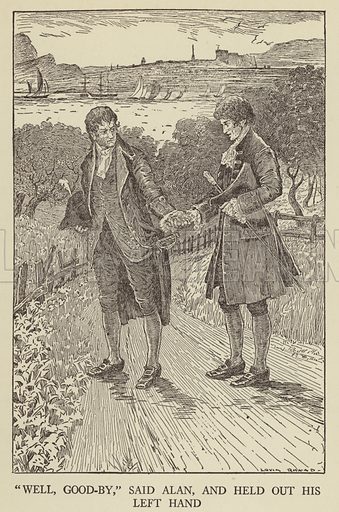
Arnold’s Celtic and Saxon stereotypes had important implications for Scotland because they reinforced the notion of a clear ethnic and cultural division between the Celtic Highlands and Saxon Lowlands. Shaw argues that a desire to challenge this narrative and the supposed inferiority and backwardness of Celtic culture was an important impulse behind Stevenson’s novels Kidnapped (1886) and Catriona (1893). He also points out that the scepticism about stadial progress, deep suspicion of mercantile modernity and sympathy with traditional cultures to be found in The Master of Ballantrae (1889) and Stevenson’s South Sea writings align him with the emerging decadent movement. Stevenson was admired by writers of decadence such as Wilde, Gide and Mallarmé for more than his long hair and velvet jacket.
Colin Kidd has argued that the narrative of a marked Celtic-Saxon ethnic divide inhibited the development of nationalism in nineteenth century Scotland. Shaw counters that by the fin-de-siècle that narrative was being actively challenged, pointing out that:
“Across murals, paintings, prose writings and poetry in fin-de-siècle Scotland, we find cultural revivalists turning to Scotland’s Celtic pagan inheritance.”
And, of course, much of that inheritance is shared with Ireland. Shaw argues that one of the most striking examples of Scottish cultural revivalism is John Duncan’s mural sequence in the common room at Ramsay Garden in Edinburgh. The Dundonian symbolist John Duncan was one of Patrick Geddes’ close collaborators, curating the art content of the Summer Meetings at University Hall and contributing illustrations to The Evergreen. The murals were painted by Duncan according to a scheme devised by Geddes. Taken together, they present an unorthodox narrative of Scottish history, featuring a unique assemblage of mythical and educational heroes, arranged chronologically. The sequence begins with the Celtic pagan warriors Cúchulainn and Fionn, followed by The Taking of Excalibur, featuring King Arthur, Merlin and Morgan Le Fay. The arrival of Christianity is represented by St. Mungo. With becoming modesty, Geddes described it as ‘the vastest and most elaborate Celtic illumination in the modern world.’

The Riders of the Sidhe (1911), by John Duncan
Shaw argues that Duncan’s Anima Celtica, which appeared in the Spring issue of The Evergreen, asserts a continuity between Celtic mysticism and Jacobitism and the enduring power of the Celtic past to inspire Scottish culture. Duncan went on to produce a number of significant works inspired by pagan Celtic mythology. His painting The Riders of the Sidhe (1911) is almost certainly inspired by Yeats’s poem ‘The Hosting of the Sidhe’ (1899).
One of the European cultural revivalist movements on which Shaw focuses is the Young Belgians. Their central figure was Maurice Maeterlinck, a Fleming who wrote in French. Maeterlinck became one of the key symbolist writers in fin-de-siècle Europe’, and his efforts were to earn him the Nobel Prize for Literature in 1911. His circle, La Jeune Belgique, formed a movement to assert their Belgian identity, which they felt was compromised by increasing cultural homogenisation and the metropolitan pull of Paris. One writer who saw parallels with Scotland’s situation was the critic William Sharp. Sharp, who was Geddes’ partner in The Evergreen and editor of the Celtic Library series published by Patrick Geddes and Colleagues, was one of the first writers in Britain to review and translate the work of the Young Belgians, promoting them as a model for Scottish cultural revivalists.

Jessie M. King’s design for Maurice Maeterlinck’s The Death of Tintagiles (American edition)
Scottish artists who took inspiration from Maeterlinck included Jessie M. King, whose illustration of a scene from Pelléas and Mélisande was exhibited in the Scottish Rooms of the Venice Biennale in 1889 and Margaret Macdonald, whose The Seven Princesses (1906) is now displayed in the Vienna Museum of Applied Art. King also executed cover designs for five Maeterlinck plays published by Gowans and Gray in Glasgow and London between 1903 and 1909.
An influence which proved more generally appealing than the work of the Belgian writers was the art of Japan. While much has already been written about japonisme in Scotland, Shaw’s focus is on its relationship to the construction of national identity. Scotland’s Japanese connections developed within the context of the British Empire and its involvement in the modernisation and industrialisation of Japan. As early as 1866, Japanese students were being sent to Glasgow to study naval architecture. Japonisme, Shaw suggests, was attractive to Scottish cultural revivalists who were comfortable with industrial modernity but had concerns about a form of modernity which demanded the abandonment of traditional national or ethnic cultures.
Two Scottish artists strongly influenced by Japanese art were the Glasgow Boys E.A. Hornel and George Henry. Shaw argues that while the subject matter of their The Druids – Bringing in the Mistletoe (1890), which appears on the cover of his book, is Celtic, the painting makes several references to Japanese culture. He sees the depiction of the trees against an oddly white background and the moon against a rich blue sky as reminiscent of Japanese prints and points out that gilt gold details are common in oriental art. Hornel and Henry subsequently visited Japan in 1893, and Hornel contributed the illustration Madame Chrysanthème to the Autumn issue of The Evergreen in 1895.
One of Shaw’s most important conclusions is that the vibrancy, diversity and international engagement of cultural activity in fin-de-siècle Scotland calls into serious question the claims by later figures, notably Hugh MacDiarmid, that the period was defined by parochialism and sentimentality. He argues that many of the international connections established by Scottish writers and artists in the 1890s anticipated modernist developments and suggests that MacDiarmid’s need to emphasise the innovation and originality of the Scottish Renaissance of the 1920s, for which he owed a direct debt to Geddes, led him to be unfairly dismissive of the generation previous to his own. MacDiarmid himself invoked La Jeune Belgique as model from which Scotland could learn. Shaw argues that the Belgian connection represents a significant strand of continuity between the Scots Renascence of the 1890s and the Scottish Renaissance of the 1920s.
Shaw’s book is a treasure trove of fascinating information about the concerns and international influences which animated the cultural scene in late nineteenth century Scotland. He amply demonstrates that the Scotland of that period was not the provincialized and insular country it subsequently suited others to claim.
The hardback book is handsomely produced with 13 colour plates. Given that it is such an important work, it is regrettable that the exigencies of academic publishing have resulted in it being priced at a hefty £80.00, with no cheaper paperback option. That makes it less accessible to the general reader than its merit demands. Readers who are quick of the mark may, however, be able to obtain a copy at a lower price in one of the publisher’s periodic flash sales.
This article was published in Bella Caledonia on 3rd April 2020.
 By Erceldoune