Tags
Celtic Cultures, Deer, Goddesses, Hunting, Myth, Pastoralism, Scottish Culture, Sheep, Wildwood
THE BONE CAVE: A JOURNEY THROUGH MYTH AND MEMORY, by Dougie Strang, Birlinn Limited, Edinburgh, 2023
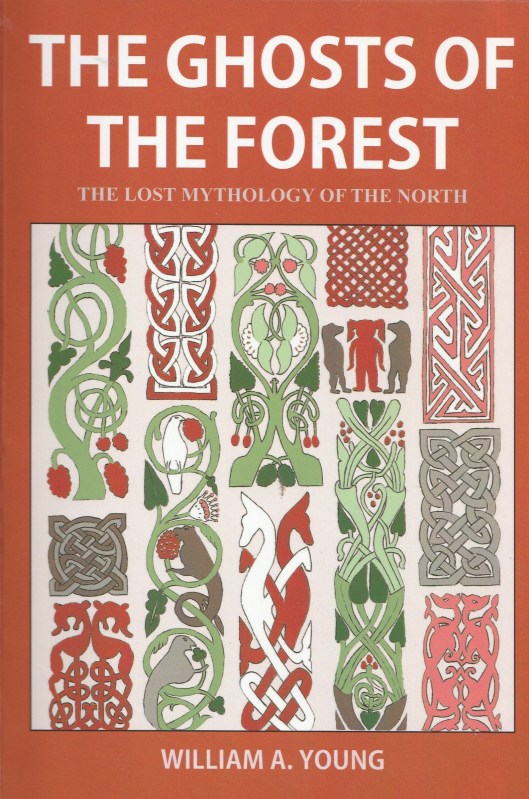
THE GHOSTS OF THE FOREST: THE LOST MYTHOLOGY OF THE NORTH, by William A. Young, Inter-Celtic, Edinburgh, 2022
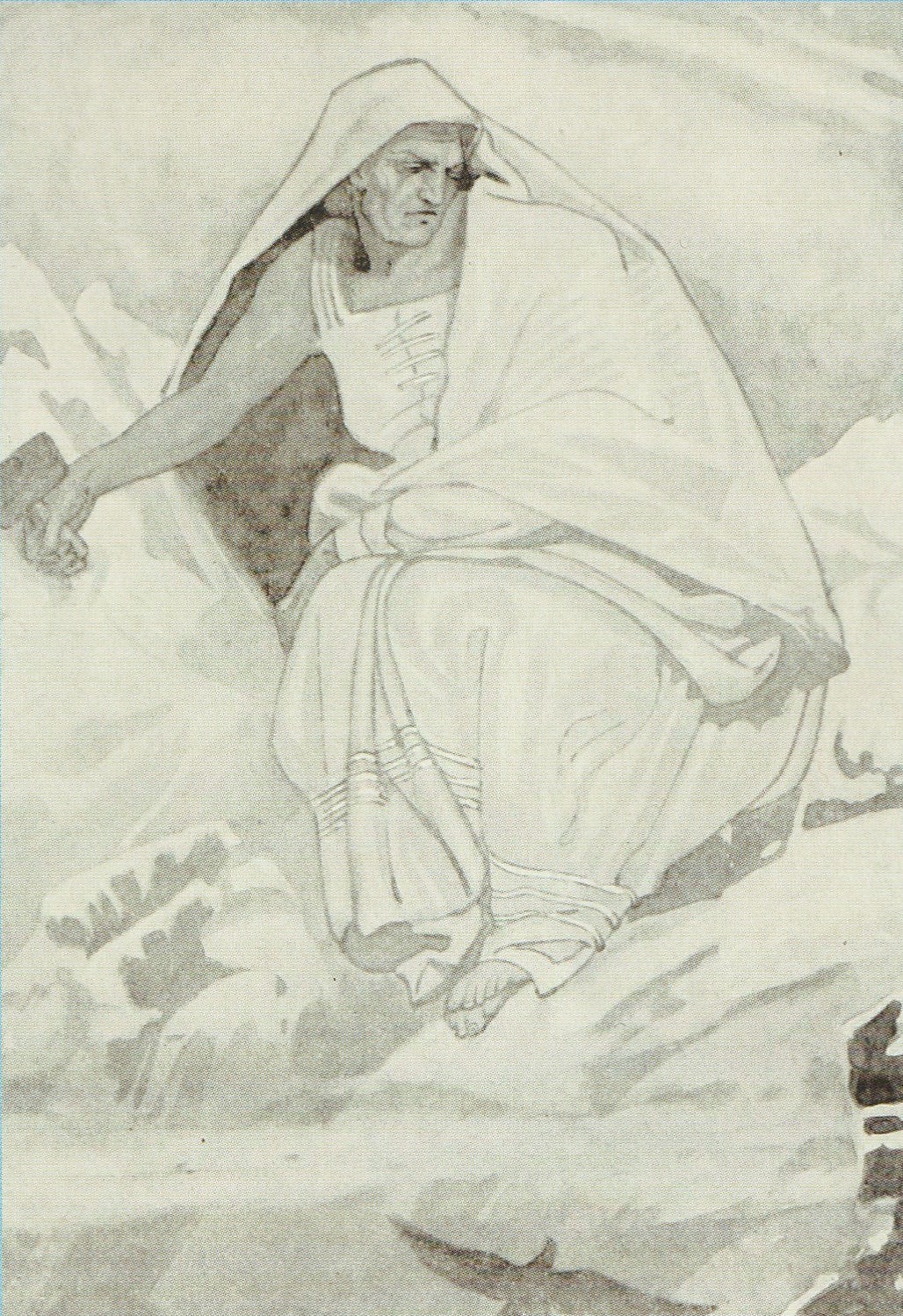
In Scottish, Irish and Manx Gaelic myth, the Cailleach is a divine hag and ancestor associated with the creation of the landscape and with the weather, especially storms and winter. In Scotland she is known as Cailleach Bheurra, or Beira, Queen of Winter. In her dramatization of Hans Christian Andersen’s The Snow Queen, staged as the Christmas play at the Lyceum Theatre in Edinburgh in December, Morna Young conflates the characters of Beira and the Snow Queen. For Dougie Strang, the Cailleach is also a goddess associated with deer and the hunt, and it is tales of this aspect of her persona that he pursues on a long-distance walk through the mountains of the West Highlands. She is a goddess of a heroic, hunter-gatherer society living in a landscape much more heavily forested than ours today, and in the stories her demise is often associated with the change to a pastoral economy.

In the Highlands, the arrival of large-scale sheep farming is strongly associated with the Clearances of the 18th and 19th centuries. In the Southern Uplands there was an earlier ‘coming of the sheep.’ In the high medieval period, while monks and clerics in Britain and Britanny were busy weaving Arthurian romances from earlier Celtic tales, the great Border monasteries were grazing huge flocks on the surrounding hills. The Borders of the 12th and 13th centuries were booming, economically and culturally. Berwick was Scotland’s largest port. My own Purves ancestors were part of the influx of Flemings drawn to the Borders by the thriving wool trade with the Low Countries.
The origins of Scottish literature are often traced to Thomas Learmonth of Ercildoune who lived in Earlston in Berwickshire in the 13th Century. In the ballad of Thomas the Rhymer he encounters the Queen of Elfland while resting under the Eildon Tree.
‘She led three greyhounds on a leash,
Seven hunting dogs ran by her side,
She bore a horn about her neck,
And under her belt full many an arrow.’
The Queen is in search of quarry. In The Ghosts of the Forest, his exploration of the mythology of the post-Roman Brythonic kingdoms to the North of Hadrian’s Wall, William A. Young suggests that she may have her origin in the Hellenistic goddess Diana the Huntress, or a Celtic equivalent. A shrine to Diana has been discovered at the Roman camp of Trimontium, just below the Eildon Hills.
The ballad of Thomas the Rhymer clearly draws on earlier Brythonic myths and legends. Young argues that among them are the tales relating to the sixth century character Lailoken, who, like Thomas, acquires the gift of prophecy. In his book Scotland’s Merlin: A Medieval Legend and its Dark Age Origins Tim Clarkson explores the role of Lailoken as a prototype for the composite figure of Merlin in Arthurian romance. The Lailoken of Vita Merlini Silvestris is a man so traumatised by guilt and horror at the scale of the slaughter he witnesses at the Battle of Arthuret in 573 that he retreats to the Great Wood of Caledon, where he lives as a wild man. He is a pagan, adhering to the old religion and a traditional relationship with the land. But the world he inhabits is changing. Towards the end of his life he seeks the sacrament from Bishop Kentigern of Glasgow, the leading cleric of the Kingdom of Strathclyde, and meets his threefold death near Drumelzier, at the hands of a gang of shepherds.
These two books provide us with valuable insights into the cultures that created Scotland’s Celtic mythologies, and the ways in which our relationship with the land of Scotland have changed over the centuries. In the Highlands and Southern Uplands, the coming of the sheep brought profound ecological changes, symbolised by the loss of the Great Wood of Caledon. The production of woollen cloth at scale in the Low Countries, and later in Yorkshire, Lancashire and on the Tweed, set us on the path to industrialisation and all its consequences. The sheep economy has contributed to patterns of ownership and management which impoverish the land and estrange us from it to this day. In our time, the hunt is not undertaken by Celtic heroes under the supervision of powerful goddesses. It has become an exclusive pastime of the super-rich.
A version of this article was published in Bella Caledonia on 18th January 2024: https://bellacaledonia.org.uk/2024/01/18/the-cailleach-the-wildwood-and-the-coming-of-the-sheep/
 By Erceldoune