• Thomas Learmonth o Erceldoune

By Erceldoune

~ Graeme Purves

By Erceldoune

Tag Archives: strategic planning

Planning and Post-COVID Recovery

11 Tuesday Aug 2020

Posted by Graeme Purves in Spatial Planning, The Land o Cakes

≈ Leave a comment

Tags

COVID-19, Economic Recovery, Scotland, Scottish Government, strategic planning, Wellbeing Economy

Entrepreneurial StateReflecting on the emergency measures introduced in March to cope with the COVID-19 pandemic, the columnist Neal Ascherson observed, “The state is back.”  And “the longer the virus emergency lasts,” he pointed out, “the more the memory of the pre-virus world begins to grow unreal, unconvincing.  Now, unmistakably, there’s a feeling that ‘things will never be the same after it’s over’ and ‘we can’t go back to all that’.”

That feeling has arisen before.  The trauma of the Great War led to the demand for ‘homes fit for heroes’ and the construction of good quality working class housing by local authorities right across Scotland, under the Housing and Town Planning (Scotland) Act of 1919.  It arose again after the Great Depression.  The ‘reconstruction planning’ which came to the fore after the Second World War was originally a response to Scotland’s experience of industrial depression and mass unemployment.  Professor Douglas Robertson has drawn my attention to a film which captures the aspirations and vision of the time.  Wealth of a Nation was one of seven documentaries made by Films of Scotland for the 1938 Empire Exhibition in Glasgow, under the supervision of John Grierson.  It looks forward to better housing and social facilities, modern industrial estates, improved transport infrastructure, electrical power from the glens, and a National Park readily accessible to the population of West Central Scotland.

In April, the Scottish Government charged an independent advisory group chaired by Benny Higgins with providing expert advice on economic recovery from the COVID-19 crisis.  Their report, entitled Towards a Robust, Resilient Wellbeing Economy for Scotland, was submitted to the Scottish Government in June.  On 5 August, the Scottish Government responded to the Advisory Group’s recommendations in a document entitled the Economic Recovery Implementation Plan.

Some of the recommendations in the Higgins Report are very much in tune with the thinking of the UK2070 Commission established under the chairmanship of Lord Kerslake to address regional inequalities across the United Kingdom.  The Advisory Group calls for an investment-led recovery.  It recognises the need to address regional disparities in Scotland and advocates a regionally focused model of economic development.  However, unlike the Commission, it fails to make the necessary connections between economic development, strategic spatial planning and the strengthening of local government.  Planning is portrayed as a regulatory impediment to recovery, part of the problem rather than an important part of the solution.

The Scottish Government’s Implementation Plan places emphasis on housing and infrastructure; decarbonising and greening the economy; economic and social renewal; and changing the way we work and travel.  These are all areas where planners at national and local levels can contribute valuable skills and expertise.  Regrettably, the Scottish Government neglects to recognise that fact.

Instead, the Implementation Plan follows the lead of the Advisory Group in seeing planning as a barrier to recovery.  The Scottish Government’s commitments on Planning are ‘to carry out a comprehensive review of national planning policies and an extension of permitted development rights’; and an exploration of ‘the options to alleviate planning restraints.’  We are not told what these ‘restraints’ might be, but we can be fairly certain that bad developments in the wrong places will neither assist recovery nor contribute to wellbeing.

Neither reviewing national planning policy nor tinkering with permitted development rights will make any significant contribution to economic recovery.  They will simply be a counter-productive distraction when the skills and energies of planners should be fully focused on measures to promote economic and social recovery.

Businesses large and small face huge challenges as a result of the COVID-19 pandemic.  Brexit will shortly deliver a further blow. It is entirely appropriate that measures to sustain and support them through and beyond the current crisis should be at the heart of the Scottish Government’s economic recovery plan.  But the Higgins Report adheres to a discredited neoliberal narrative which seeks to portray the public sector as a barrier to rather than an essential partner in recovery.  It seeks to set the public and private sectors in opposition to each other, when their roles are complementary.  A successful recovery plan requires the building of a broad consensus on the way forward, not divisive rhetoric.  The Scottish Government’s Council of Economic Advisers includes the former Chief Medical officer, Sir Harry Burns, who has long promoted the Wellbeing agenda, and Marianna Mazzucato, the champion of the entrepreneurial state. Katherine Trebeck is a leading advocate of the Wellbeing Economy based in Scotland.  The Advisory Group on Economic Recovery would benefit from their wise counsel.

The Scottish Government’s Economic Recovery Implementation Plan indicates that the fourth National Planning Framework (NPF4) will be brought to Parliament in September 2021.  It also intends that the Regional Land Use Partnerships which will be introduced from 2021 should have a role in regional economic development and meeting climate change goals.  The Scottish Government needs to develop a positive narrative which explicitly identifies Planning as an important agent of recovery, setting out the important contribution planners can make to delivering housing, creating better places, developing district and communal heating systems, economic and social renewal, improving infrastructure, and changing the way we work and travel; and explaining the roles the National Planning Framework and Regional Land Use Partnerships will play in providing a strategic spatial policy context for that work.


This article first appeared as a Built Environment Forum (BEFS) blog on 10 August 2020.


Can Scotland’s Parliament be persuaded to champion Regional Agency?

30 Thursday Aug 2018

Posted by Graeme Purves in The Land o Cakes

≈ Leave a comment

Tags

City Region Deals, Clydeplan, Planning (Scotland) Bill, regional agency, Scotland, Scottish Government, Scottish Parliament, Strategic Development Plans, strategic planning

Clyde Gateway

New housing in the Clyde Gateway – identified as a flagship area for urban renewal in the Glasgow and the Clyde Valley Structure Plan 2000

When the Scottish Parliament begins Stage 2 of the consideration of the Planning (Scotland) Bill in mid-September, one of the issues for debate will be the future of strategic planning.  The Scottish Government intends that the Bill should remove the statutory requirement to prepare strategic development plans for the four city regions of Glasgow, Edinburgh, Aberdeen and Dundee/Perth.  Green MSP Andy Wightman has tabled an amendment to the Bill which would have the effect of retaining that provision.

In its evidence to the Local Government and Communities Committee in March, Clydeplan, the strategic development planning authority for the Glasgow city region, made a robust and persuasive case that the statutory provision for strategic planning at the regional level should be retained.  It pointed out that strategic planning had been central to the regeneration of Glasgow and the Clyde Valley through periods of significant structural change over a period of 70 years.  Strategic development plans for the area had been an effective component of the planning system, guiding local plans and decision-making, demonstrating the value of joint working and the commitment of constituent local authorities and wider stakeholders over an extended timescale.

Clydeplan pointed out that in England a statutory duty to co-operate had not proved to be a sufficiently effective tool for addressing cross-boundary regional issues, while in 2015 the Planning (Wales) Act had introduced strategic development plans for Cardiff, Swansea and the A55 Corridor, based on the model which currently exists in Scotland.  To remove strategic development plans in Scotland would run counter to prevailing best practice in planning internationally, particularly in Europe, where there has been a move towards planning at the scale of integrated functional regions reflecting housing markets, travel-to-work and economic catchment areas as part of the drive to deliver sustainable development.

Like others who gave evidence to the Committee, Clydeplan expressed concern that the Scottish Government’s intention that the role of local authorities in strategic planning should be reduced to assisting with the preparation on the National Planning Framework would lead to an undesirable level of centralisation, undermining the collaborative partnerships which have been working successfully at the regional level up until now.

Clydeplan argued that rather than removing an important mechanism of regional agency, the Scottish Government should be enhancing and building upon existing strategic development plan processes and their established governance and joint-working structures in rolling out a regional partnership model across the country.

In its Stage 1 report on the Bill in May, the Local Government and Communities Committee noted significant concerns about the future of regional spatial planning, which it noted had “a long history in Scotland and has attracted interest and commendation from elsewhere.”  It concluded that it was not clear from the evidence heard that removing the current provisions for strategic development plans would lead to simplification, to streamlining, to cost savings or to more effective planning at a regional scale.  It recommended that the current statutory framework for regional planning should not be repealed unless a more robust mechanism is provided to that currently proposed in the Bill.

In its response to the Local Government and Communities Committee, the Scottish Government doubled down on its determination to remove the statutory underpinning of strategic planning at the regional scale.  Rather than setting out its case for centralising strategic planning at the national level, the Government fell back on the argument that what it proposes is in line with the recommendations of the independent review panel established in 2015, and reiterated its assertion that the change is required to simplify and streamline the system.  Little was offered in terms of the more robust mechanism the Committee was looking for.  The Government simply undertook to amend the Bill at Stage 2 to introduce a clearer duty for local authorities to work together in strategic planning, something which, as Clydeplan has already pointed out, has not worked particularly well in England.

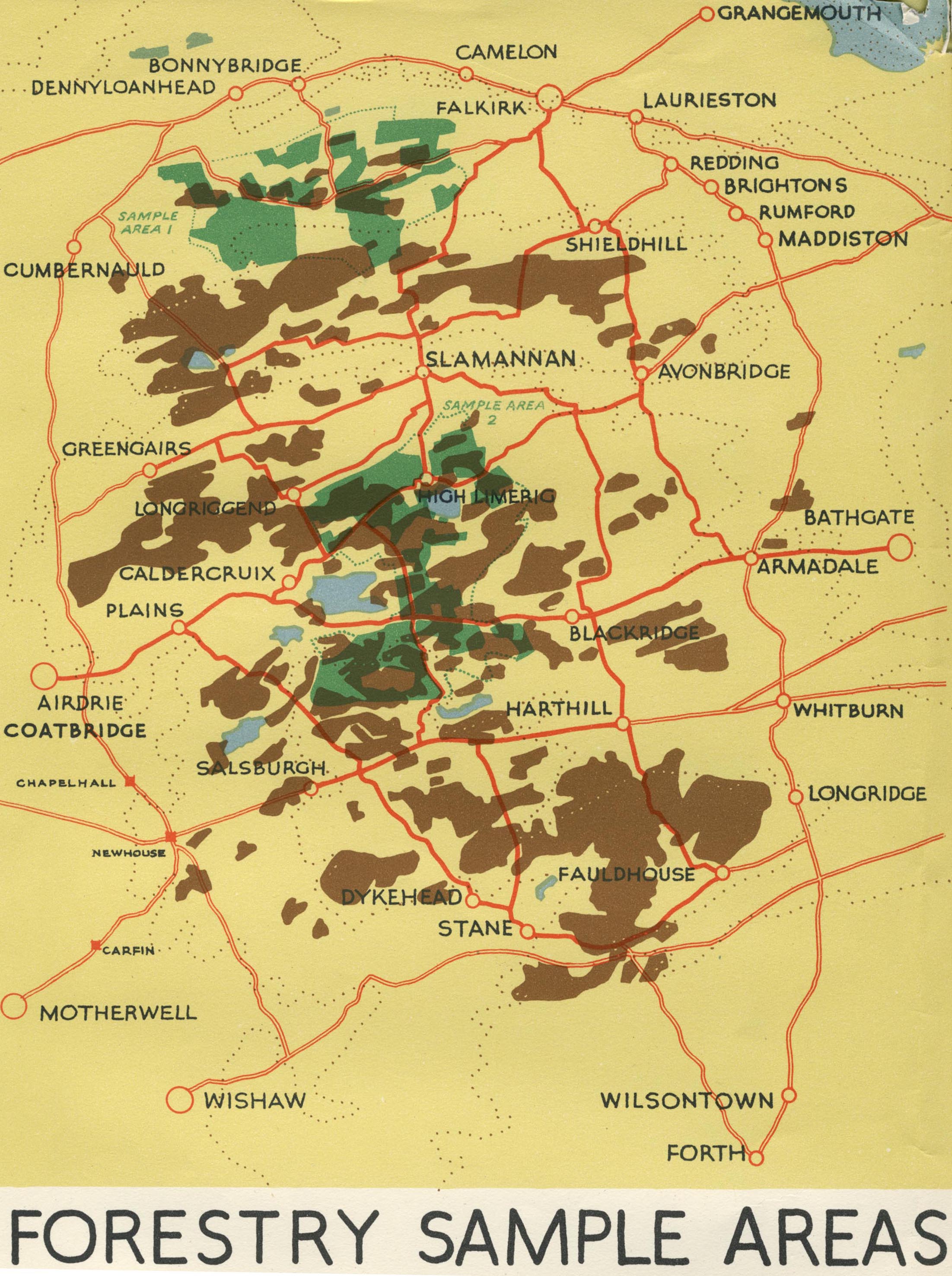
Slamannan Plateau

 The Central Scotland Green Network and the Central Scotland Forest have their origins in the proposals for strategic environmental improvement and reforestation contained in the Clyde Valley Plan (1946) and the Regional Plan for Central and South-East Scotland (1948).

In an article published in Bella Caledonia in March 2017, I outlined the regional planning tradition established under the wartime administration of Tom Johnston and how it had evolved over the subsequent 70 years.  The Scottish Government states that it respects the long history of regional spatial planning in Scotland, but argues that the context has changed dramatically since regional plans emerged in the post-war period and even in the period since the 2006 Act.  It neither explains in what way the context has changed, nor why that change renders strategic development plans obsolete.

As recently as 2014, the Scottish Government accepted the findings of a review of the strategic development plan system by Kevin Murray Associates which concluded that “the system is still bedding in, it is not broken, nor is its potential yet fully optimised.”  It is not clear what has caused it to have such a dramatic change of mind.  A number of developers called for the abolition of strategic planning in their submissions to the independent review panel, but the sector was not unanimous on the matter and there was no broad groundswell of support for the change.

The case which the independent review panel made for the abolition of regional development plans was scant and far from persuasive.  It acknowledged that the city-region remains a critical scale for planning, but argued that the role of planners at the regional level should be confined to the co-ordination of development with infrastructure delivery in accordance with the strategy set out in the Scottish Government’s National Planning Framework.  No rationale was offered for the incorporation of regional strategy into a document with a national focus prepared under the direction of Scottish Ministers.  The centralisation and loss of regional agency involved were simply not addressed.

There is a suspicion that the Scottish Government’s desire to do away with strategic development plans stems from its preference for mediating its relationships with local authorities on development matters through City Region Deals, untrammelled by the discipline of strategy. The process of preparing strategic development plans is subject to statutory requirements in relation to public consultation, environmental assessment and examination.  The process of City Region deal-making is much less transparent and less open to scrutiny.  SNP politicians appear only recently to have become concerned about the opportunities it might afford for pork-barrelling.

A range of civic and professional organisations have expressed concern about the Scottish Government’s intention to remove the statutory requirement to prepare strategic development plans and the Government seems disinclined to provide the robust alternative which the Local Government and Communities Committee is looking for.  It is to be hoped that safeguarding the regional agency which has contributed so positively to Scotland’s development over the last 70 years is a cause which can command a majority in our Parliament.

____________________________________________________________________________________________

This article was published in Bella Caledonia on 15 August 2018

Strategic Planning and the Importance of Regional Agency

04 Tuesday Apr 2017

Posted by Graeme Purves in The Land o Cakes

≈ Leave a comment

Tags

National Planning Framework, regional agency, regional development plans, Scotland, strategic planning

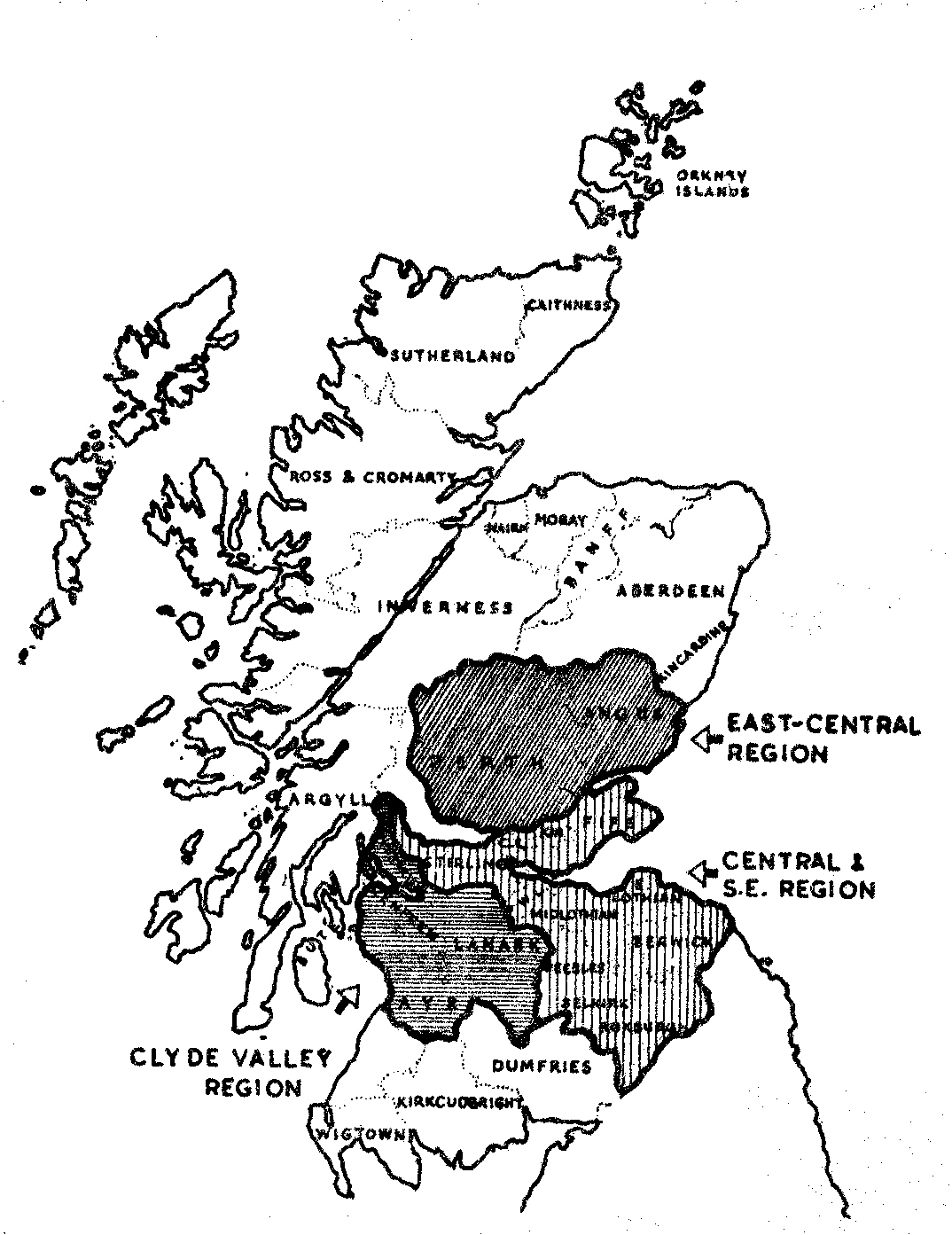
For a small country, Scotland is regionally diverse, and it has a strong tradition of planning at the regional level dating back to the 1940s.  Under Tom Johnston, Scotland’s wartime administration initiated the preparation of three major regional plans covering the most populous parts of the country to guide post-war reconstruction. The regional planning tradition established at that time has persisted through successive reforms of local government under Governments of different political complexions, with a particularly strong strand of continuity in Glasgow and the Clyde Valley.  From the 1970s, and for a period of more than 30 years, the statutory vehicle for strategic planning at the regional level was the structure plan.  Since 2006 it has been the strategic development plan.

regions

The first generation of regional plans

The Scottish Government’s consultation on the future of the planning system, Places, People and Planning proposes that strategic development plans should be removed from the system, with regional planning priorities henceforward set out in the National Planning Framework (NPF).  The current review of the planning system was initiated in 2015 by the then Cabinet Secretary for Social Justice and Communities, Alex Neil.  The initial questions posed by the review reflected the familiar neoliberal narrative of creative and dynamic private enterprise held back by the bureaucracy and inefficiency of the public sector and suspicion remains that it was initially driven by a desire to ease the regulatory burden on volume housebuilders.

The abolition of regional development plans is something a number of major housebuilders have called for, perhaps in the belief that they will get a more
sympathetic ear from Ministers than from local politicians.  There is little evidence from the submissions made to the independent Review Panel that their removal has wider support and no very clear rationale has been offered for it.  The argument deployed by the independent Review Panel points to the need to strengthen delivery mechanisms, not remove regional development plans.

The reason the Scottish Government gives for proposing the removal of strategic development plans is that the effort put into the procedures for preparing them leaves little time to work actively on delivering them.  If that is the concern, then a more obvious solution would be to adopt the approach proposed for local development plans and review them every 10 instead of 5 years.  The main reason that strategic development plans have tended to lose momentum in recent years is that the regional strategies which had been worked out on their first or second iteration remained substantially valid, but the planners who created them have found themselves locked into a statutory process of review when their time would have been better spent on delivery.

The Government’s consultation paper recognises the importance of co-ordinating development and infrastructure at the regional level and proposes that planners should continue to work together at the regional scale to help shape spatial priorities and develop strategies and delivery programmes.  However, it is unsatisfactorily vague about how strategic priorities are to be determined at regional level and how spatial strategies for the regions are to be prepared and agreed.  The consultation paper refers to strategic planners “helping to shape” regional spatial priorities (para. 1.11) and local authorities “helping to develop” regional strategies (para.1.13).  The use of the word “helping” seems to hint that regional priorities and the content of regional strategies might ultimately be decided elsewhere, particularly as they are to be articulated in the National Planning Framework.  Is the Government hinting that regional priorities and strategies are ultimately to be determined by Ministers at national level, with the role of regional planners being no more than delivering on the strategies set out in the NPF?

It needs to be acknowledged that the one-size-fits-all approach of the city region model of strategic planning ushered in by the 2006 Act failed to reflect Scotland’s geographical diversity.  Not all of Scotland’s diverse regions are focused on cities.  The consultation paper’s proposals for partnerships which reflect regional geographies could offer opportunities for Ayrshire, the Highlands and Islands and the South of Scotland in particular.  The opportunity to rationalise boundaries for spatial, transport and land use planning should certainly be taken.  However, if this is not to be another exercise in centralisation, the Government needs to think more carefully about how policy-making capacity and agency are to be retained and strengthened at the regional level.

The National Planning Framework has been a valuable innovation, setting out a long-term vision and identifying developments of national importance.  However, we should be wary of the assumption that we will make it more effective by loading more and more onto it.  There is a danger that charging it with responsibility for setting not just national but also regional priorities could have rather the opposite effect, making the NPF unwieldy and top-heavy, and at risk of collapsing under its own weight.  The fate of the regional tier of government in England should be instructive.  Its association with what was seen as a remote and bureaucratic approach to strategic housing land allocation played an important part in its demise.  A top-heavy and over-bearing NPF would quickly fall out of favour.

Scotland has an important regional dimension which needs to be reflected properly in our planning system and strategic housing land allocation is one of the key functions which needs to be discharged at regional level. Central government lacks the knowledge and capacity to undertake that task successfully and the political tensions which would be created by pursuing that course could seriously undermine delivery.  Disowning the implications strategic decisions on housing taken centrally would prove an attractive way for politicians to gain local popularity.

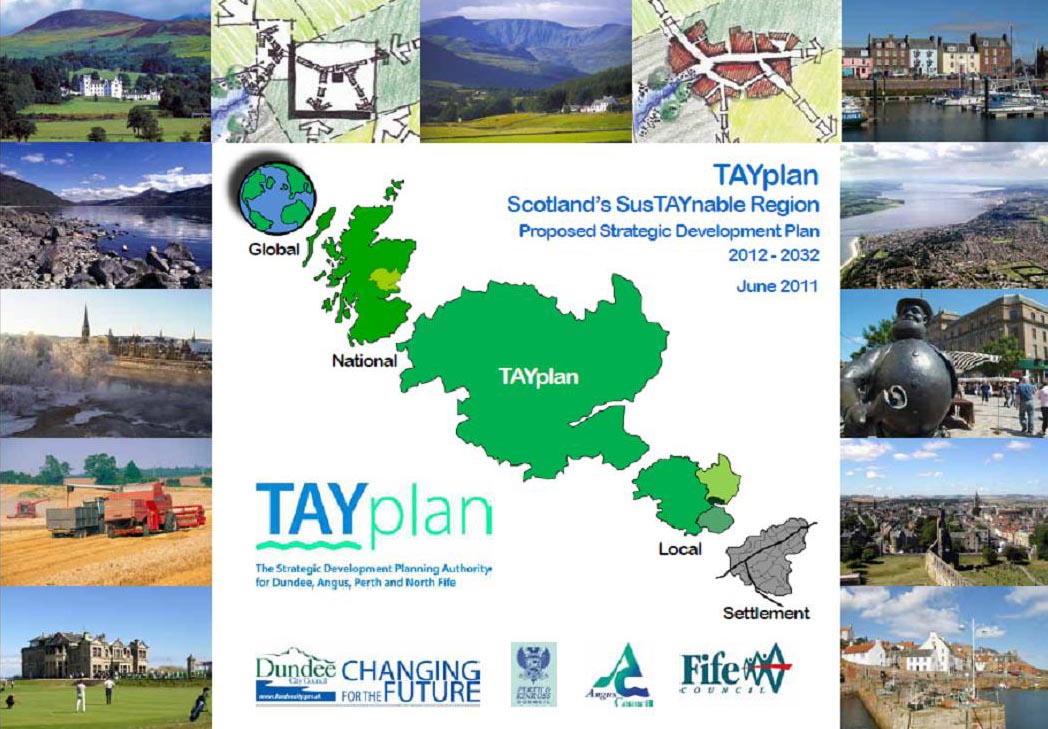
Tayplan

Tayplan 2011

Instead of centralising strategic capacity at national level, we should be celebrating Scotland’s regional diversity and ensuring that our regions have the agency to play to their strengths.  That the Scottish Government recognises the sense of that is at least implied by the policy initiatives it is pursuing in relation to greater autonomy the island authorities and a new enterprise and skills agency for the South of Scotland.  It needs to apply the same thinking to the reform of the planning system.  In the more populous parts of the country, we need to nurture the role of our cities as the economic and cultural capitals of their respective regions.  We need to make closer links between strategic planning and cities policy, with strategic development plans accorded a key role in the delivery of city deals.  We should be very wary of turning our backs on a tradition of regional agency in strategic planning which has served Scotland well for over seventy years.

____________________________________________________________________________________________

A version of this article was published in Bella Caledonia on 19 March 2017.

Subscribe

  • Entries (RSS)
  • Comments (RSS)

Archives

  • March 2025
  • March 2022
  • December 2021
  • March 2021
  • November 2020
  • August 2020
  • May 2020
  • February 2020
  • February 2019
  • October 2018
  • August 2018
  • May 2018
  • April 2018
  • July 2017
  • April 2017
  • February 2017
  • January 2017
  • September 2016
  • July 2016
  • May 2016
  • March 2016
  • December 2015
  • November 2015
  • August 2015
  • June 2015
  • May 2015
  • November 2014
  • October 2014
  • August 2014
  • July 2014
  • June 2014
  • May 2014
  • April 2014
  • March 2014
  • June 2013

Categories

  • Frank Mears
  • Reviews
  • Spatial Planning
  • The Land o Cakes
  • Travellers' Tales

Meta

  • Create account
  • Log in

Blog at WordPress.com.

  • Subscribe Subscribed
    • By Erceldoune
    • Join 29 other subscribers
    • Already have a WordPress.com account? Log in now.
    • By Erceldoune
    • Subscribe Subscribed
    • Sign up
    • Log in
    • Report this content
    • View site in Reader
    • Manage subscriptions
    • Collapse this bar
 

Loading Comments...