A report from 1994 on work to restore an eccentric estate plantation on an exposed site in the Western Isles for educational and amenity purposes. Scottish Natural Heritage ‘de-listed’ Loch Druidibeg as a National Nature Reserve in 2012, though it remains a Special Protection Area and a Site of Special Scientific Interest. It is now owned by local community-owned company Stòras Uibhist and managed as a community nature reserve in partnership with RSPB Scotland.
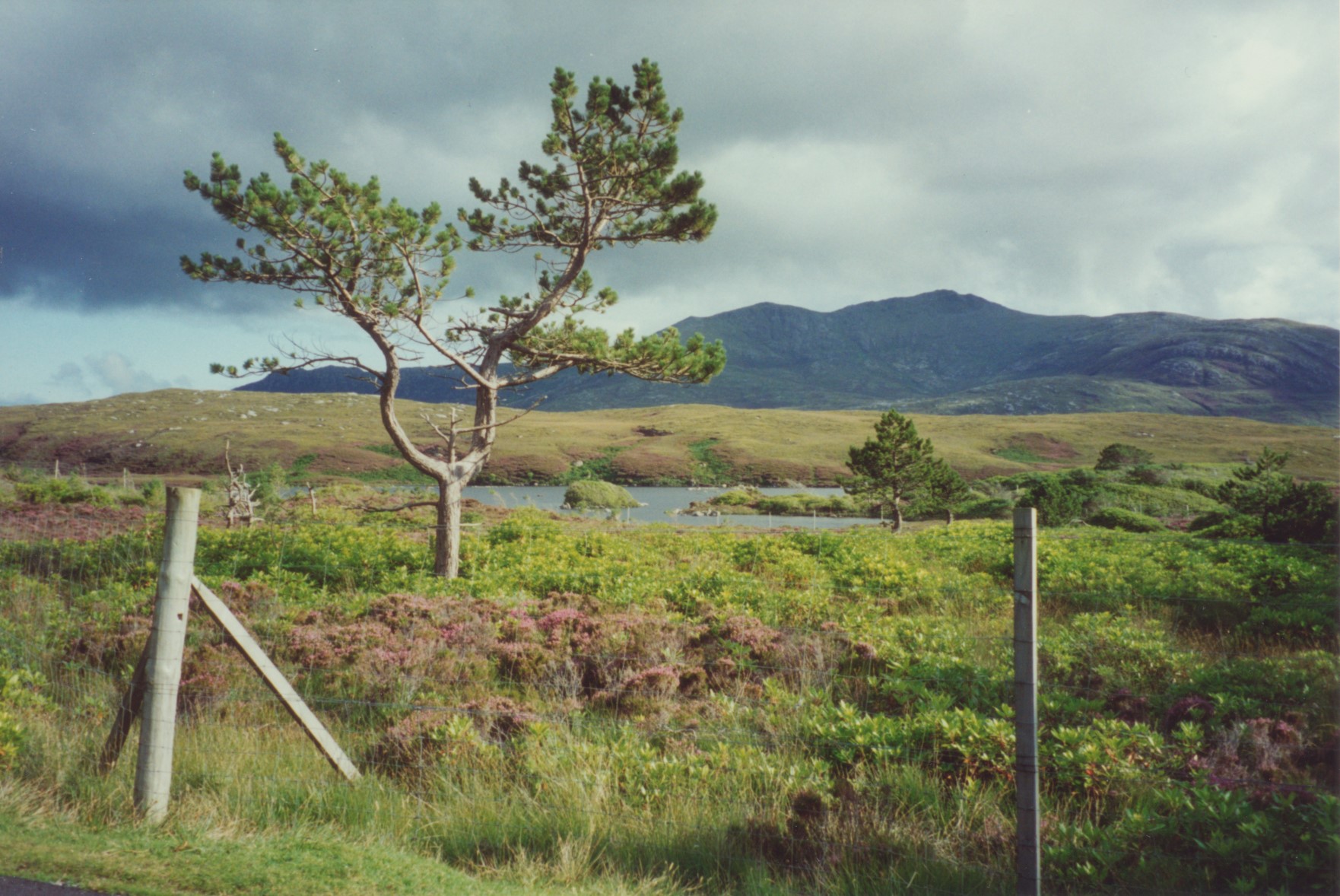
The western seaboard of the Outer Hebrides offers what must be one of the most challenging environments for woodland restoration in Scotland. The very high levels of exposure on the Atlantic coast severely limit the potential for tree growth. Over the centuries, the low scrub woodland which once covered the islands has been almost entirely removed. Climatic conditions, burning and intense grazing pressure have prevented regeneration and today native trees are restricted to a handful of locations on the rugged but more sheltered East Coast where a few woodland remnants survive in burn gorges, on islands in lochans or on inaccessible crags. Now the first steps are being taken to restore something of what has been lost. Scottish Natural Heritage Area Officer, Gail Churchhill, has prepared plans for the restoration of a neglected plantation on the Loch Druidibeg National Nature Reserve for educational and amenity purposes.
Loch Druidibeg Reserve
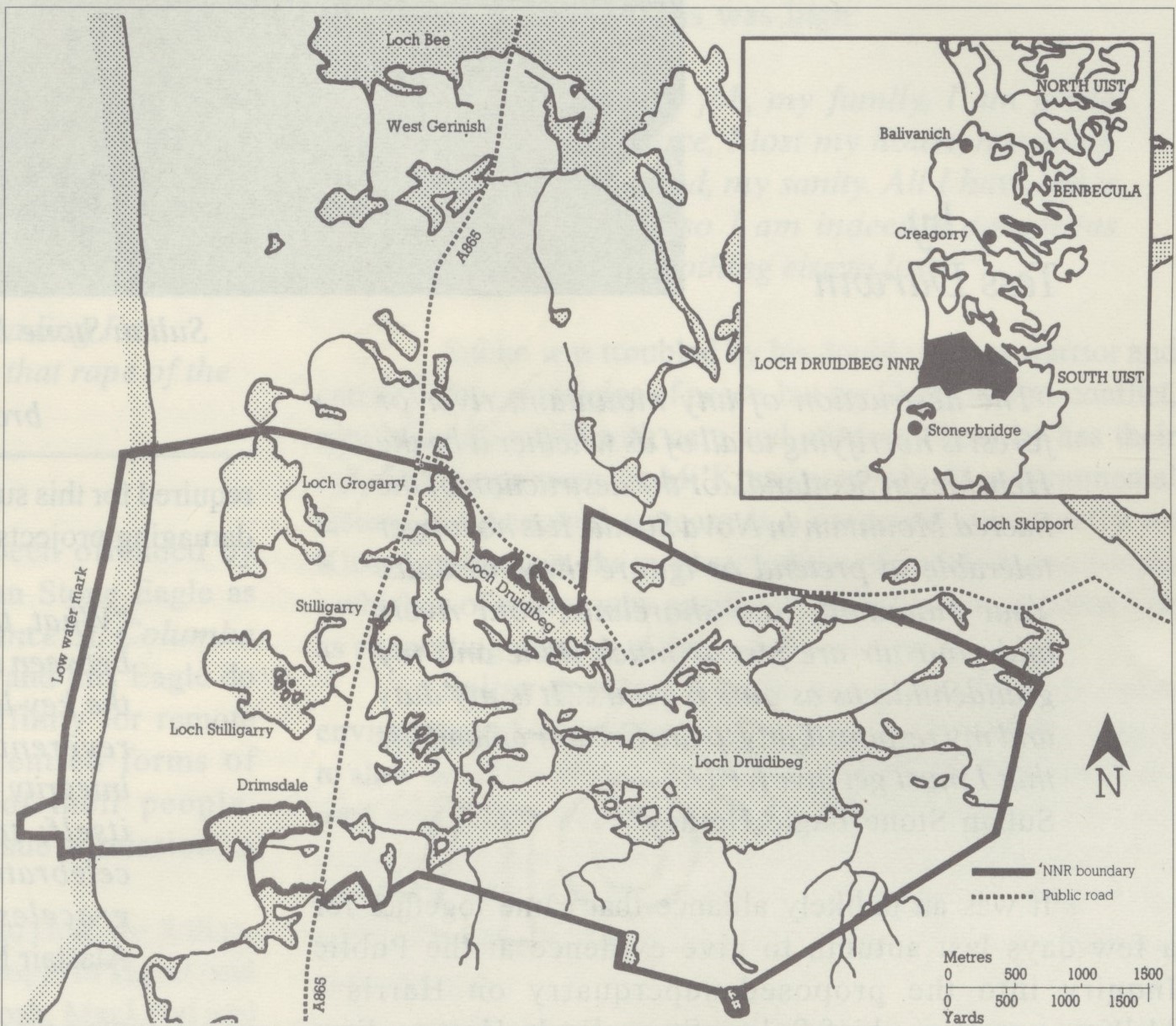
The Loch Druidibeg Reserve in the north-west of South Uist stretches for four miles inland from the Atlantic coast, encompassing a complex of shallow lochs and surrounding moorland. It provides an excellent example of the progressive gradation from the lime-rich machair of the coastal plain to the acid moorland of the interior. The Reserve was established in 1958 to protect an important breeding site for greylag geese and is a valuable habitat for many types of waterfowl.
The plantation was established prior to the creation of the Reserve as policies for an estate lodge which was never built. It contains an eccentric mix of Lodgepole Pine, Scots Pine of unknown provenance, Sitka spruce, Chile pine, Norway maple and Rhododendron ponticum. In the intervening period native species such as birch, alder, hazel, rowan and aspen have been planted or become established and it is now an important site for woodland birds which are otherwise scarce in the Hebrides.
Local crofters enjoy grazing rights on the Reserve and in 1975 red deer of Rum stock were reintroduced to the island by South Uist Estates. In the 1980s, Scottish Conservation Project volunteers were contracted by the Nature Conservancy Council to erect a deer fence to protect the plantation from grazing pressure.
The Rhododendron Problem
The presence of Rhododendron ponticum on the site presents SNH with a severe and intractable management problem. As elsewhere on the West Coast, the species has proved extremely invasive. It has already engulfed large areas of the plantation and is spreading onto adjacent land and some of the islands in Loch Druidibeg. In September, a team of a dozen SCP volunteers began “rhoddy bashing” in the northern part of the plantation. It is hoped that sufficient funds can be found to maintain the momentum and Gail Churchill will be keeping a careful photographic record to monitor progress.
The plantation is a popular spot with local people and visitors (particularly when the rhododendrons are in flower in early summer!) and for children brought up in a treeless landscape it has a particular appeal. The emphasis is therefore on enhancing its educational and amenity value rather than on ecological restoration in its purest sense. The exotic tree species will be left in place and the rhododendrons will not be eradicated altogether. The intention is to alter the balance in favour of native tree species within the plantation itself and prevent further encroachment onto the surrounding moorland.
Community Involvement
The plantation will figure prominently in SNH’s local educational programme and community participation in its management will be encouraged. School parties will be able to visit to learn about woodland ecology and local children will be involved in planting more native trees. The only local sources of native seed are the few woodland fragments on the eastern side of the island and SNH is currently negotiating to protect one such site (an SSSI) by fencing off part of a gorge on the southern slopes of Beinn Mhor.
This article was published in Reforesting Scotland 12 in Spring 1995.
 By Erceldoune